The Municipal Cemetery of Castro-Urdiales, originally the "Cementerio
municipal de Ballena de Castro-Urdiales", stands on a beautiful peninsula
facing the Cantabrian Sea.
About the Cemetery
The Municipal Cemetery of Castro-Urdiales was
designed between 1885 and 1888 by Alfredo de la Escalera y
Amblard (a diocesan and provincial architect)
in an eclectic style, recalling the classical language
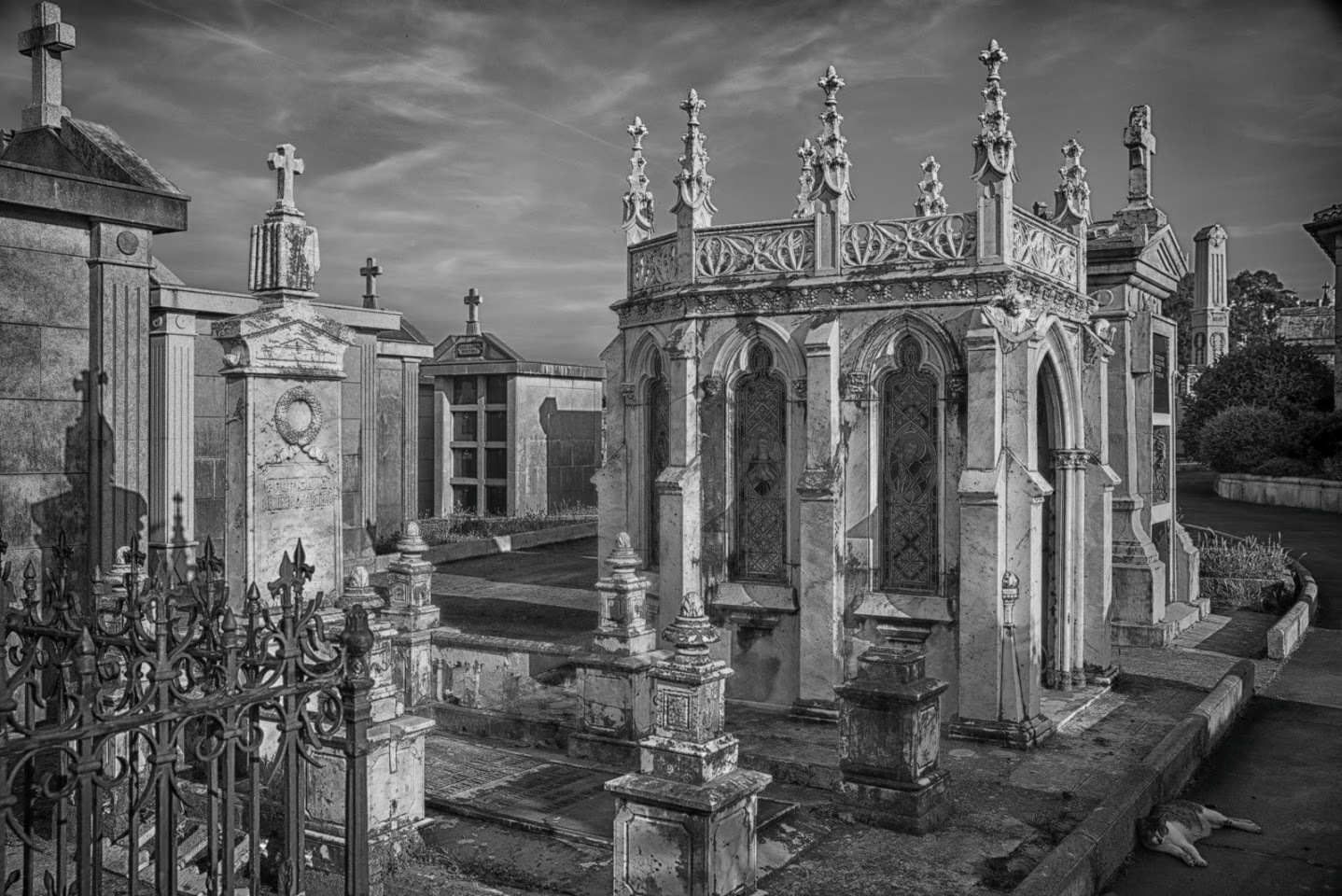
which was applied in the construction of funeral chapels, pantheons, and
niches. The Cemetery was a part of the local urban
expansion of the late nineteenth century and was characterized
by the urban structure that distributed the cemetery in blocks and streets, imitating the city of the living.
The location of the cemetery is spectacular. It is like an enclave raised
above the sea on a small peninsula, endowed with the
best territorial conditions so that it was "well ventilated" and
could not harm "public health".
The Municipal Cemetery of Castro-Urdiales is one of the
most notable examples of Spanish funerary architecture and represents
an exemplary case of urban development. It brings together a set of funerary
monuments of exceptional quality in different styles such as
neoclassic, eclecticism, neo-medievalism, modernism, gothic, and art deco.
For this reason, it has received two national awards - for the
best cemetery and the best funeral monument in 2016 and 2017 respectively.
It has also been protected since February 14, 1994, with the legal
figure of Asset of Cultural Interest (BIC).
Cemetery significance

What is most striking about the Municipal Cemetery of Castro-Urdiales is
its funerary architecture, its natural setting on a peninsula facing the
Cantabrian Sea and whose views outline the heritage site of
Castro-Urdiales with its Santa María Church, its castle and lighthouse and
the Santa Ana hermitage. For this, they name it colloquially as an
open-air museum.
The Cemetery is a patrimonial element that is unique also for collecting
the history of the civilian population of Castro-Urdiales, since its name
"Ballena" (Eng. "whale") refers to the importance of fishing and the
maritime activity of the city. On the other hand, it represents the
economic boom of the 20th century that is manifested in the sumptuous
pantheons of the bourgeois class that emerged in the modern town of
Castro-Urdiales. In fact, it is one of the few Spanish cemeteries that has
so many pantheons designed and projected by famous architects.
Today the cemetery is an important part of local cultural heritage
that the population has been learning to value through numerous activities
at the cemetery.
Important monuments at the Cemetery
Within the walls of the Cemetery lie the remains of illustrious figures from
local, regional, and national history, such as the regionalist architect
Leonardo Rucabado and the great musician and composer Arturo Dúo Vital.
There was another tomb that belonged to Francisco Bedoya, the last
anti-Francoist guerrilla in Cantabria. In 1979, due to the numerous claims
of the family, his remains were transferred to the Ciriego de Santander
cemetery. It is noteworthy that while he was buried in Castro-Urdiales, he
always had natural flowers on his grave.
There is another simple pantheon for the castreños who died in American
lands who went there in search of better fortune or adventure, which reads:
"For the castreños who expired on American lands with their souls placed in
the Castro of their loves, I fervently ask you for a prayer so that God
grants them an eternal rest. José Ibarra Hornoa dedicates this memory to
them. May 1951".
Some of the other important graves and monuments at the Cemetery are:
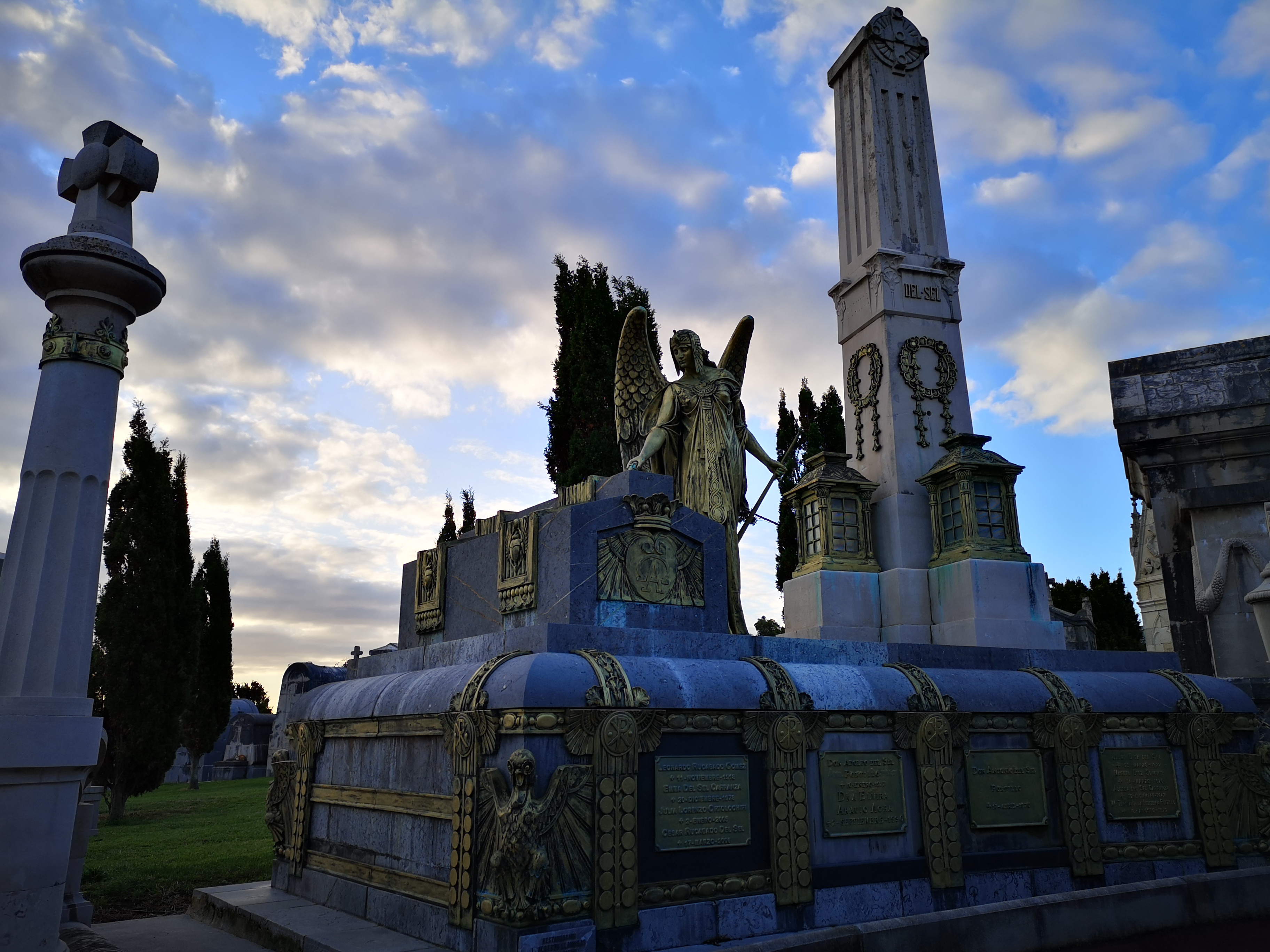
- Sel Family Pantheon (1911)
- Artiñano Family Pantheon (1890)
- Isidra del Cerro Pantheon (1890-1900)
- Lavin Family Pantheon (1907)
- Baranda y Goya Family Pantheon (1908)