Showing posts with label environmental sustainability. Show all posts

WDEC 2025 in Slovenia

Model grave plantings at Pobrežje Cemetery in Maribor, Slovenia
As part of the Week of Discovering European Cemeteries 2025, Slovenian cemeteries showcased sustainable practices that turn memorial spaces into living gardens of peace and reflection.

About the initiative

In cooperation between the Chamber of Public Utilities of Slovenia (ZKGS) and the Association of Significant Cemeteries in Europe (ASCE), various cemeteries in Slovenia have responded to the invitation to participate in this year's Week of Discovering European Cemeteries, which was held under the common theme "Gardens of 80", commemorating 80 years of peace since the end of World War II and contributing to the goal 16 of the UN 2030 agenda.

The following section summarizes selected activities organized by participating cities across the country.

Maribor

As part of WDEC 2025, the company Pogrebno podjetje Maribor, presiding member of ASCE, organized a series of events at Pobrežje Cemetery in Maribor. The program featured a flower bed exhibition with 80 sustainable plants symbolizing decades of peace, as well as a display of eight sustainably arranged model graves at the cemetery entrance, also part of the European initiative Meetings in the Gardens 2025.

A special cultural event with renowned writer, playwright, and storyteller Tone Partljič highlighted cemeteries as places of stories and memory. His engaging lecture and guided tour of Pobrežje Cemetery offered a unique perspective on history, heritage, and remembrance. Furthermore, schoolchildren explored history in an interactive way through a guided educational day.

Pobrežje Cemetery in Maribor Pobrežje Cemetery in Maribor Pobrežje Cemetery in Maribor Pobrežje Cemetery in Maribor Pobrežje Cemetery in Maribor Pobrežje Cemetery in Maribor Pobrežje Cemetery in Maribor Pobrežje Cemetery in Maribor Pobrežje Cemetery in Maribor

Ljubljana

The company ŽALE Javno podjetje, d. o. o. prepared two model grave plantings at Žale Cemetery in Ljubljana, using drought-resistant plants that require less maintenance and water. In addition, one grave was specially designed in line with this year’s theme, Gardens of 80.

These installations reflect ŽALE’s commitment to sustainable cemetery management and the promotion of environmentally responsible practices. Through such efforts, ŽALE contributes to raising awareness of the ecological potential of cemeteries and their role in supporting peace, remembrance, and cultural heritage.

Žale Cemetery in Ljubljana Žale Cemetery in Ljubljana Žale Cemetery in Ljubljana

Domžale, Mengeš, Moravče

The company JKP-Prodnik carried out model grave plantings at the cemeteries in Domžale, Mengeš, and Moravče, using resilient perennials such as bergenia, rose, and heuchera. These plantings not only enhanced the visual appeal of the cemeteries but also supported water conservation and easier maintenance, serving as an example of good practice in sustainable cemetery management.

In addition, they emphasized that cemeteries are not only places of mourning and remembrance, but also play an important role in preserving cultural heritage. With thoughtful landscaping and green design, cemeteries can become attractive public spaces for visitors while promoting environmentally responsible practices.

Cemetery Domžale Cemetery Moravče Cemetery Mengeš

Tržič

In Tržič, the company Podjetje Komunala Tržič d.o.o. undertook a comprehensive redesign of the ash scattering area at Kovor Cemetery. Aging cypress trees were replaced with 40 evergreens chosen for their disease resistance and neat appearance. Additionally, 20 roses were planted to provide continuous bloom and rich forage for bees throughout the season without the need for chemical treatment.

The existing grassy surface was replaced with turf, and an automated irrigation system was installed in the cemetery park area.  All these measures contribute not only to the visual appeal of the cemetery but will also improve the ability to preserve greenery in the cemetery in a more controlled, efficient, and sustainable way.

Kovor Cemetery in Tržič Kovor Cemetery in Tržič

Murska Sobota

At Murska Sobota Cemetery, the company Komunala, javno podjetje, d.o.o. Murska Sobota planted nine trees to green the area, provide shade, and support a more sustainable and welcoming environment. Species such as hornbeam, ginkgo, and Japanese cherry were carefully chosen for their resilience, with mulching and watering basins installed to aid their growth.

Additionally, a historic grave dating back to 1921 was restored using resilient, sun-tolerant plants already on site. These plants were carefully cleaned, trimmed, and preserved, while the surrounding surface was covered with a layer of fine mulch to help retain moisture. This low-maintenance planting promotes biodiversity, providing a welcoming refuge for small animals, insects, and other wildlife.

Murska Sobota Cemetery Murska Sobota Cemetery Murska Sobota Cemetery Murska Sobota Cemetery Murska Sobota Cemetery

Idrija

At Idrija Cemetery, the company Javno podjetje Komunala Idrija d.o.o. carried out the replanting of six graves of soldiers who fell during World War II. These graves are located along the pedestrian path leading to the cemetery entrance, making them a visible and respectful reminder of the area's wartime history.

The graves were replanted with drought-resistant perennials, and the thoughtful landscaping contributes not only to the visual dignity of the site but also to its role as a place of remembrance and local heritage.

Idrija Cemetery Idrija Cemetery Idrija Cemetery Idrija Cemetery Idrija Cemetery Idrija Cemetery Idrija Cemetery

Kranj

At the city cemetery in Kranj, the company Komunala Kranj d.o.o. created a model grave planting using low-maintenance, drought-resistant plants such as Campanula carpatica, Scaevola, and Dorotheanthus. The image below shows the condition of the grave before and after the redesign.

With this pilot project, the company aims to demonstrate how small, thoughtful choices in grave design can contribute to a more sustainable cemetery environment and to inspire visitors and families to adopt more environmentally friendly practices. 

City cemetery in Kranj

WDEC 2024 at the Montjuïc Cemetery

WDEC 2024 at the Montjuïc Cemetery
Cementiris de Barcelona has organized a special exhibition which presents their efforts to mitigate environmental impacts.

The issue of climate change

This year's Week of Discovering European Cemeteries highlights the important issue of climate change through various events and activities, showcasing different ways in which cemeteries and their visitors can contribute to reducing environmental impact.

According to the United Nations, climate change refers to long-term changes in temperatures and weather patterns, which can result from natural causes or human activities.

The acceleration of climate change is driven by the emission of “greenhouse effect” gases generated by the combustion of fossil fuels. Adapting to these new conditions is very difficult for both nature and human societies.

Exhibition at the Montjuïc Cemetery

WDEC 2024 at the Montjuïc Cemetery

Cementiris de Barcelona has organized an exhibition installed at the Montjuïc Cemetery, which presents the initiatives they have undertaken to mitigate these negative effects and the measures adopted to reduce environmental impact. All visitors and schools participating in cultural visits and educational activities at the Montjuïc Cemetery will attend this exhibition.

In June 2024, Cementiris de Barcelona will hold a special conference to delve deeper into these issues. Throughout the year, they will also take this exhibition to most other cemeteries in Barcelona.

Environmental sustainability at the Old Cemetery San Pietro

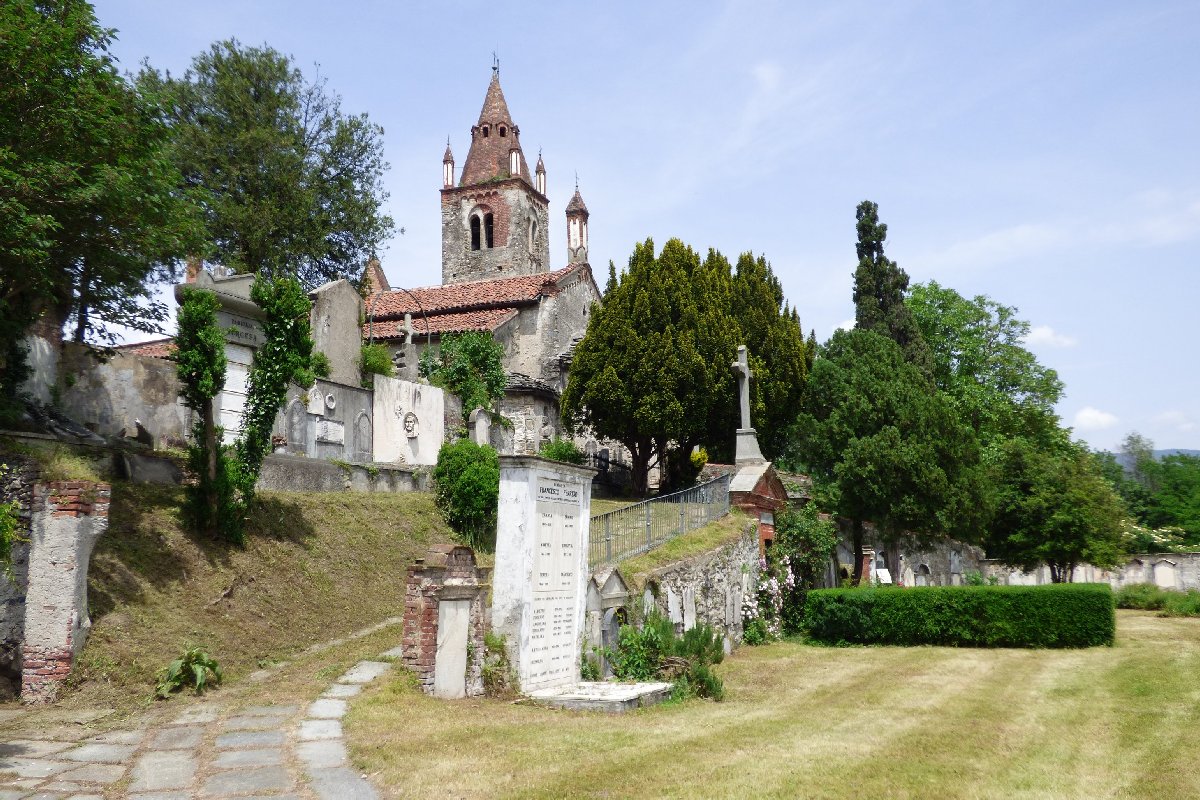
Old San Pietro Cemetery in Avigliana, Italy
The Association Friends of Avigliana preserves and promotes the cultural, historical, and environmental significance of the Old Cemetery San Pietro in Avigliana, Italy through various projects.

About the cemetery

The Old Cemetery San Pietro, created as it was customary close to the homonymous church (an 11th century masterpiece of Romanesque art), experienced vicissitudes and history of the Sabaudian Avigliana. Well-known as a burial site since the 1500s, it remained unchanged until the early 1900s. 

Below are some of the recent activities at the cemetery related to the environment, which the Association Friends of Avigliana is giving their devoted attention to.

Creation of a QR Code

In 2023, the Association Friends of Avigliana created a QR Code assisted path, leading visitors through both the cemetery and the church.

This sustainability-oriented project aims to provide guided visits without the use of paper brochures. It is being regularly updated by adding new information.

As for the cemetery guide, it consists of three parts: history, brief stories regarding characters from Avigliana and botanic heritage.

Botanic park

This nature path focuses on some plants and shrubs of particular botanical interest present in the cemetery.

We can see a beautiful tilia-tree (Tilia Vulgaris) lined walkway leading to the cemetery entrance.

This year the Association Friends of Avigliana is aiming to install a fully sustainable solar lighting system along this walkway. 

Wooden sculpture from dried cypress

Untill a few years ago, a nice cypress (Cupressus Sempervirens) was part of the cemetery’s greenery.

Unfortunately, climate change caused it to dry out. The Association Friends of Avigliana, in agreement with the Municipality, decided to transform it into a wood sculpture. On April 2nd, 2023, this work was inaugurated in the presence of the sculptor Mr Luca Germena, the mayor Mr Andrea Archinà and the President of the Association Mr Silvio Amprino. This is how the cypress lives on, and with its expression of peace and calmness invites to look at the sky with hope.

This work of art has no name, so visitors can interpret it their own way.

Here is the sequence of events:

You can find the entire original article HERE.

WDEC 2024: Environmental sustainability and climate change

WDEC 2024: Environmental sustainability and climate change
This year's WDEC will focus on cemeteries' dedication to environmental sustainability and fight against climate change.

Climate change is the consequence of global warming of the Earth and the overall increase in temperature caused by the toxic emissions generated in human activities.

European cemeteries are determined allies in the common fight against climate change. They have been working for years on its mitigation through a wide range of actions and initiatives that demonstrate a strong commitment to the environment. Common measures to reduce environmental impact include:

  • responsible use of fossil energies and water,
  • progressive incorporation of renewable energy sources,
  • respect for the plant and fauna biodiversity of our enclosures,
  • enhancement of native vegetation,
  • responsible waste management,
  • progressive electrification of vehicle fleets.
This year's Week of Discovering European Cemeteries, scheduled from 24 May to 2 June, will try to highlight the important issue of climate change through various events and activities and showcase different ways in which cemeteries and their visitors can contribute to reducing environmental impact.

Share your activities

We invite you to send programs, photos and other materials of your planned activities during WDEC 2024 to admin@significantcemeteries.org. We will be happy to publish them on the ASCE website and our social networks.