Showing posts with label ASCEresearch. Show all posts

Funeral arrangements for minorities and migrants

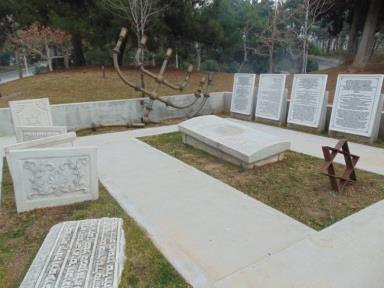
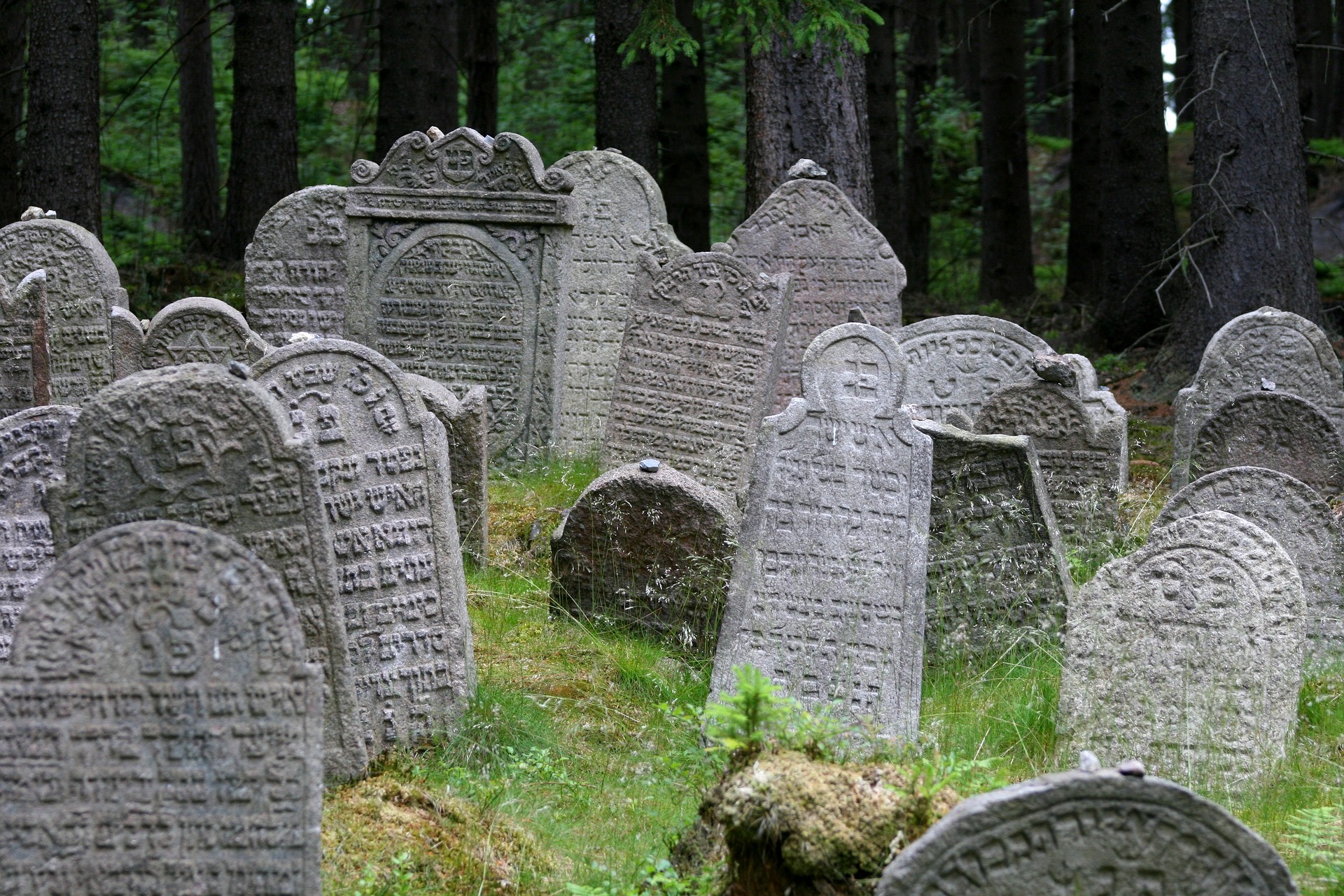
Jewish Cemetery
Short presentation of the project "Cemeteries and Crematoria as public spaces of belonging in Europe: a study of migrant and minority cultural inclusion, exclusion and integration".

About the research

This HERA-funded CeMi project has researched the issue of cemeteries and crematoria not being inclusive enough regarding minorities and migrants in a modern multicultural Europe. The aim was to find possible solutions for this situation and present lessons for policy makers, politicians, and stakeholders at all levels, that will help to build more inclusive and heritage-sensitive communities.

The study was carried out on the example of 6 European countries: Ireland, Luxembourg, the Netherlands, Norway, Scotland, and Sweden but it could certainly be applied to many other countries in Europe and the world.

You can find out more about the project at this LINK.

Presentation of the results

A public presentation of the study will be held on November 17, 2022, from 1.00 to 2.30, at the Netherlands House for Education and Research (NETH-ER), 22, rue d'Arlon, 1050 Brussels.

The presentation will include the final report on funeral arrangements for minorities and migrants in the aforementioned countries as well as some recommendations for future improvements.

The individual articles are available HERE.

The number of places at the presentation is limited so registration is required.

Animation video about this topic

Researchers worked with animator Stacy Bias to provide an overview of different religious and secular practices in cemeteries and crematoria. The animation video seeks to highlight that the enablement of different ritual and spatial requirements is important for the provision of inclusive public cemeteries and crematoria.


*The cover image is symbolic. Source: Pixabay

Urban cemeteries as public spaces: comparison of the Norwegian and Russian case studies

Contemporary cemeteries are intriguing examples of “in-between” places with no clear cut between public and private, civic and personal.
Nordre cemetery in OsloVćr Frelsers cemetery in Oslo

Planners and policy makers often see urban cemeteries as utilitarian burial grounds. However, evidence from different countries demonstrate that their role is more complex. The findings of a Norwegian research projects “Green Urban Spaces – the role of the cemetery in multicultural and interreligious urban contexts” (2014-2017) show that the cemeteries in Oslo are actively used for recreation and perceived by many of their users as green places of restoration. Is such cemetery multifunctionality just a Norwegian phenomenon or we can find similarities in other cultures?

Østre cemetery in OsloFor the comparison, this paper brings empirical evidences from Vvedenskoe cemetery (opened in 1771) in the Russian capital in Moscow. The study partly replicates the above-mentioned Norwegian study adapted to the context of Moscow and employs systematic observations of people’s activities, participant observations and interviews with cemetery visitors. Among many other cemeteries in Moscow, I chose Vvedenskoe cemetery for this study because of its close proximity to housing areas, physical layout with two entrances and comparatively wide alleys and mature vegetation.

Vvedenskoe cemetery in Moscow

Vvedenskoe cemetery in MoscowThe results show that people come to Vvedenskoe cemetery not only to visit their relatives’ graves, although it is the main activity there and more common comparing to the Norwegian case. Thanks to the big amount of heritage graves and special spiritual atmosphere Vvedenskoe cemetery is an attractive place for excursions, especially focused on arts and history. For many of the interviewees this cemetery was included into their everyday life as a place for strolling and reflections, which is similar to the findings from Oslo. Another important aspect for the visitors is the greenery of Vvedenskoe cemetery, which provides an opportunity of the contact with nature for the local residents. The Norwegian researchers had similar observations in case of Oslo. While the range and frequency of recreational activities in Vvedenskoe cemetery is lower than in the studied cemeteries in Norway, the findings clearly show that its role in the city is not limited to the utilitarian functions of a burial ground.

So far academic research of the role of urban cemeteries was focused on Northern Europe and North America and cross-cultural comparative cemetery research almost does not exist, except very few examples. In times of globalisation, cemeteries are among very small number of urban places, which are so culturally and contextually dependent and vary greatly from country to country. On the contrary, to many comparative studies in other fields, which aim to find generalised knowledge and best practices, comparative cemetery research cannot have the same goal because of the importance of the local context. However, I believe that it can give deeper and more nuanced understanding of a cemetery as a phenomenon and its potential. Policymakers and practitioners around the world are starting to acknowledge cemeteries’ multifunctional potential which is especially relevant for fast growing cities with increasing demand for green spaces, such as Oslo and Copenhagen. 

About the author

Pavel Grabalov is a PhD Candidate at the Faculty of Landscape and Society of the Norwegian University of Life Sciences (NMBU). He holds a Master’s degree in Urban Studies from Malmö University (2017) and has interests in urban planning and people-environment interaction. His current PhD project focuses on the role of cemeteries in contemporary densified cities. Pavel’s research aims to build new interdisciplinary knowledge on urban cemeteries as a special type of public spaces, using case studies from Scandinavian and Russian cultural contexts.

The above article has been prepared for the ASCE Conference 2019 in Ghent, Belgium. The article-related presentation is available HERE.

You can read more about Pavel Grabalov’s academic research on new cemetery policies in Oslo and Copenhagen in: Pavel Grabalov, Helena Nordh, “’Philosophical park’: Cemeteries in the Scandinavian urban context”, Social Studies, Vol. 17:1, https://journals.muni.cz/socialni_studia/article/view/13559

Book: On the Laying Out, Planting, and Managing of Cemeteries

On the Laying Out, Planting,  and Managing of Cemeteries
A special pre-publication subscription offer.

About the book

This limited, numbered hardback edition of the classic "On the Laying Out, Planting, and Managing of Cemeteries", a book by J.C. Loudon with a new Foreword by James Stevens Curl, updates the 1843 original with enlarged type on quality paper. It will include Professor Curl’s annotated Introductory Essay on Loudon’s involvement with cemeteries, its Bibliography, a colour portrait of Loudon, a facsimile of Loudon’s Obituary of 1844, and an Index compiled by Auriol Griffith-Jones.

Discover more HERE.

The evolution of the landscape of the Old Jewish cemetery of Thessaloniki: an extreme case of reusage

An interesting case study about the Old Jewish cemetery of Thessaloniki in Greece that was presented at the AGM 2019.
The Old Jewish cemetery of Thessaloniki

Introduction

A landscape can change as radically as to be destroyed and reconstructed even more than once.

Such is the case of the landscape of the Old Jewish cemetery of Thessaloniki in Greece. At first, during the German occupation, the cemetery was destroyed, and afterwards, the area became a large portion of the Aristotle University of Thessaloniki (AUTH).


You can find the original poster with the case study HERE.

Author: Angelina Lagou (Student of Geography at the Harokopio University of Athens)

Book: Maciachini: un positivista eclettico

Maciachini: un positivista eclettico
The Association Amici del Monumentale announces the appearance of a new book, this time dedicated to the works of Carlo Maciachini, the architect of the Monumental Cemetery of Milan.

About the book

The volume will be officially presented at Induno Olona, birthplace of the architect, on February 2nd. Additional presentations will be held at Varese, Milan, Pavia, Busto Arsizio and Trieste since they all host works executed by him. Maciachini, un positivista eclettico (Maciachini, an eclectic positivist) is edited by Carla De Bernardi and Lalla Fumagalli, respectively president and vice-president of the Amici del Monumentale, to celebrate the 200th birth anniversary of the great architect (1818) and properly remember him on the 120th anniversary of his death.

The book is made up of numerous contributions from major professors and academics that provide key elements that highlight Maciachini’s thought and work. As a positivist, he strongly believed in scientific advancement; we owe him the crematory at the Moumentale, the first to be build in Europe. As an architect, he created the eclectic style that originally combined Byzantine, Gothic, Pisan Romanesque features in his masterpiece, the Monumentale Cemetery.

AGM 2018 conference volume

AGM 2018 conference volume
Articles from the ASCE Conference 2018 are now available for download.


➤ A very nicely designed conference volume with articles from the authors of the conference are available for download at this link.

Turin - Honours Thesis - Funeral architecture

"Funeral architecture of the Monumental Cemetery of Turin.

The Atlas of Italian Significant Cemeteries realized by UTILITALIA - SE.F.IT.

Participate in the Atlas of Italian most significant cemeteries.

Book: The Dubovac Chatolic Cemetery

The Dubovac Chatolic Cemetery
A new book presenting the art, history, and heritage of the Dubovac Catholic Cemetery in Karlovac, Croatia.

About the book

A comprehensive study and presentation of the history, important monuments, and architectural features of the Dubovac Cemetery in Karlovac is now available for download. The book was edited by Tatjana Horvatić and Marinka Mužar.

You can download the English version here and Croatian version here.

Book: The Non-Catholic Cemetery in Rome. Its history, its people and its survival for 300 years

The Non-Catholic Cemetery in Rome. Its history, its people and its survival for 300 years
The Non-Catholic Cemetery in Rome has released a richly illustrated new book that explores its 300-year history and the many lives connected to it.

About the book

The Non-Catholic Cemetery in Rome recently published a new book intitled "The Non-Catholic Cemetery in Rome. Its history, its people and its survival for 300 years".

This new book explains:

  • how the cemetery has grown from its origins in the 18th century to today’s layout, drawing on extensive new research
  • who has been buried there, with notes on over 300 of them, ranging from diplomats to dancers and from sculptors to sailors, and an index of their grave locations
  • how it has survived various threats, such as a new road and tramline due to be built across the oldest graves
  • how its active use today is reconciled with increasing numbers of visitors.

The volume contains more than 80 illustrations (many of them little known and several of them not previously published) and five maps which have been specially drawn for this book.

This book is on sales at the Visitors` Centre at the Cemetery (Via Caio Cestio 6, 00153 Roma) or online at www.cemeteryrome.it.

Book: Churchyard and Cemetery: Tradition and Modernity in Rural North Yorkshire

Churchyard and Cemetery: Tradition and Modernity in Rural North Yorkshire
By Julie Rugg, Manchester University Press, 2013

About the book

This book explores for the first time the turbulent social history of churchyards and cemeteries over the last 150 years. Using sites from across rural North Yorkshire, the text examines the workings of the Burial Acts, and discloses the ways in which religious politics framed burial management. It presents an alternative history of burial which questions notions of tradition and modernity, and challenges long-standing assumptions about changing attitudes towards mortality in England.

This study diverges from the long-standing tendency to regard the churchyard as inherently 'traditional' and the cemetery as essentially 'modern'. Since 1850, both types of site have been subject to the influence of new expectations that burial space would guarantee family burial and the opportunity for formal commemoration. Although the population in central North Yorkshire declined, demand for burial space rose, meaning that many dozens of churchyards were extended, and forty new cemeteries were laid out.

*Source: Google Books

Survey about Significant Cemeteries in Europe | Institutional Research

JFC Tourism&Management is a consulting company specialized in tourism ad territorial marketing, territorial pianification and tourism research, and offers its services to public institutions and private companies.

Book: Westerveld: a monumental journey of discovery

Westerveld: a monumental journey of discovery
An interesting book that explores the Westerveld Cemetery & Crematorium in Driehuis, Netherlands.

About the book

The memorial park of Westerveld Cemetery & Crematorium, part of "the Facultatieve Group", features many great monuments - each with its own story.

The book Westerveld: A Monumental Journey of Discovery (original title: Westerveld: Een monumentale ontdekkingstocht) discusses one hundred years of special monuments, including those of Anthony Fokker, Lex Goudsmit, Multatuli and Pim Fortuyn. The book also includes a detailed map, giving readers the opportunity to discover for themselves the special sites and beauty of Westerveld.

The book encompasses a well-thought-out selection. "That was quite a challenge, given that all our monuments are special and each has its own story to tell", said director Carla Bosua, "The monuments in the book are special because of their unique character, cultural-historical value and/or fame of the deceased. Therefore, the book includes not only classical monuments, but also very contemporary ones. And naturally describes also urn monuments”.

Book: Biografia di un cimitero italiano. La Certosa di Bologna

Biografia di un cimitero italiano. La Certosa di Bologna
The book that offers an in-depth exploration of the history, art, and cultural significance of one of Italy’s most remarkable cemeteries.

About the book

The book "Biografia di un cimitero italiano. La Certosa di Bologna" (Eng. Biography of an Italian Cemetery. The Certosa of Bologna) is the result of four years of archival research on previously unpublished documents. It is the first attempt, within the framework of studies on 19th-century European cemeteries, to reconstruct in its entirety the activity of a modern necropolis, covering a period of more than a century, from its Napoleonic origins to the First World War.

More info:

Società editrice il Mulino
+39 051256011
diffusione@mulino.it
www.mulino.it