Showing posts with label article. Show all posts

The establishment of ASCE and its significance

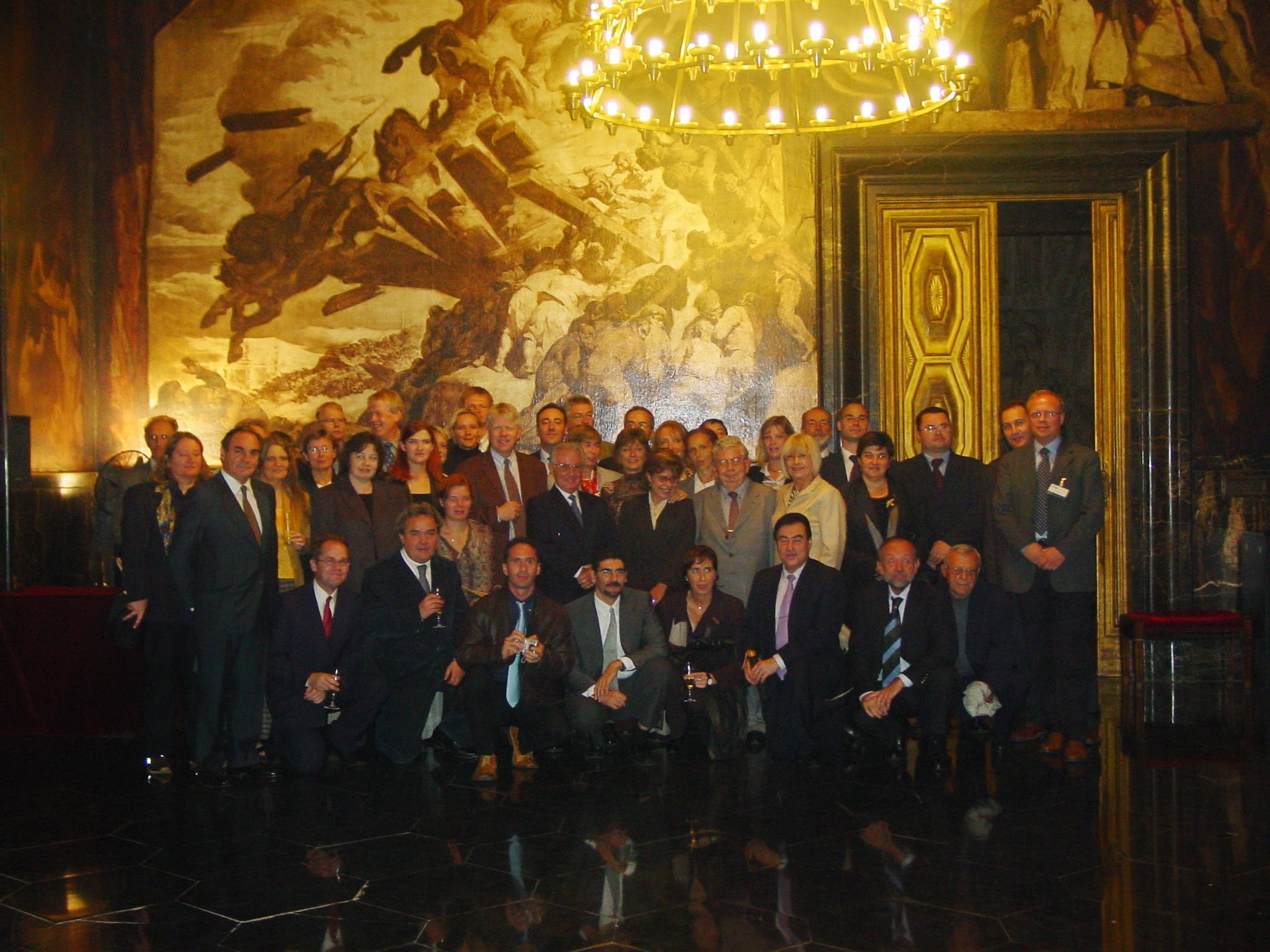
ASCE Meeting in 2003
ASCE was the first European organisation that dealt with cemeteries as a cultural asset rather than as burial grounds.

The idea of starting something new

At the end of 1999, my mixed fortunes as a civil service manager in the cultural sector who always tried to do his job with pride and competence, landed me with a job move to the Certosa di Bologna, the cemetery of my city. It was meant as a punishment but it later proved to be an extraordinary opportunity. 

When confronted with a new challenge, I would usually consider the best European examples in the field to copy them or, better, adapt them to the situation in Italy. But this time I drew a blank. I found that, sadly and inexplicably, there was no European organisation that dealt with cemeteries as a cultural asset rather than as burial grounds. I therefore resolved to set one up. 

Bringing together like-minded people

I would say that our "club", the Association of Significant Cemeteries in Europe (ASCE) is one of the first children of the internet. Indeed, I began browsing existing sites, collecting e-mail addresses, looking for a few names. Then I called a first meeting, sending invitations by e-mail. We met over dinner, on a balmy Italian evening in a beautiful street in the city centre that was closed to traffic, with a final downpour by way of blessing. It was an immediate success, so great was the need to meet among European researchers, scholars, and culturally aware officials who had realised the importance of cemeteries in the history of art and architecture, and in themselves as summaries, microcosms of the history of cities and countries. 

The following meeting, again in Bologna, saw the birth of ASCE, which succeeded in drawing together all those brilliant minds, and over these past twenty years has radically changed the public perception of burial grounds, bringing them fully into the cultural circuits, and rescuing them from the mixture of ignorance and superstition to which they had been relegated. From the outset, the contribution of Eastern European countries, at the time recently freed from Soviet rule, was extremely important.

Team effort that led to great successes

In addition to launching this association, I was its president for seven years. It was an intellectual, political and personal adventure, which to me is summed up by the friendly faces of Tamara, Ilme, Indre, Audrone, Martin, Gunnar, Anders, Maria Luisa, Giulio, Lidija and many others that I would like to meet again, under the expert guidance of Franco Sborgi, Ornella Selvafolta, Paride Caputi and Paolo Giordano.

I share with Anders the great satisfaction of receiving the Europa Nostra Award and with Maria Luisa Yzaguirre the recognition of cemeteries as a Cultural Route of the Council of Europe.

Long live ASCE!


Mauro Felicori
founder of ASCE and its first president


*You can find the original article HERE.
Achievements of ASCE in the last 20 years

20 years of ASCE through the eyes of the former president of the association Maria Luisa Yzaguirre.

The significance of cemeteries

Years ago, when we tried to transform cemeteries into cultural venues that deserve to be preserved, respected, and visited, we claimed that:

  • Cemeteries are history: We will find our past reflected there.
  • Cemeteries are art: In the time of splendor of these places, the main artists of the time left a sample of their art there.
  • Cemeteries are memory: It is there where we can find many of our references.

And we can add that Cemeteries are respect, silence, reflection, peace, poetry, nature, and much more.

Achievements of ASCE

Together and thanks to everyone's work during these 20 years we have achieved the objective for which our association was founded - European Cemeteries are visited and their heritage recognized, while remaining places of remembrance and respect for the people who rest there.

Today, our funerary precincts are included in the cultural tours of many cities. I would dare to say that they are recognized as open-air museums, and they have lost their classification as only funerary places where we experience sadness.

We can say with great satisfaction that we have managed to get European citizens to visit their cemeteries, discover the beauty of these places, and walk around them enjoying the innumerable stories that they reveal to us.

This rapprochement between the city and the Cemetery has helped on many occasions in the restoration and conservation of cemeteries, as well as in enhancing the value of the works it contains.

ASCE 20th anniversary

On ASCE turning 20 years old, I want to congratulate all the members of our Association - those who form it now and all those who have been in it in the past and who contributed to enlarging and consolidating it.

I can't close this writing without thanking ASCE for the opportunities it gave me, to meet great people, travel to new cities, develop projects, in which I still believe, that served to unite us and helped to put our Cemeteries in their rightful place.

Congratulations to all!

Maria Luisa Yzaguirre
former ASCE president

20 years of heritage, culture, knowledge and enthusiasm

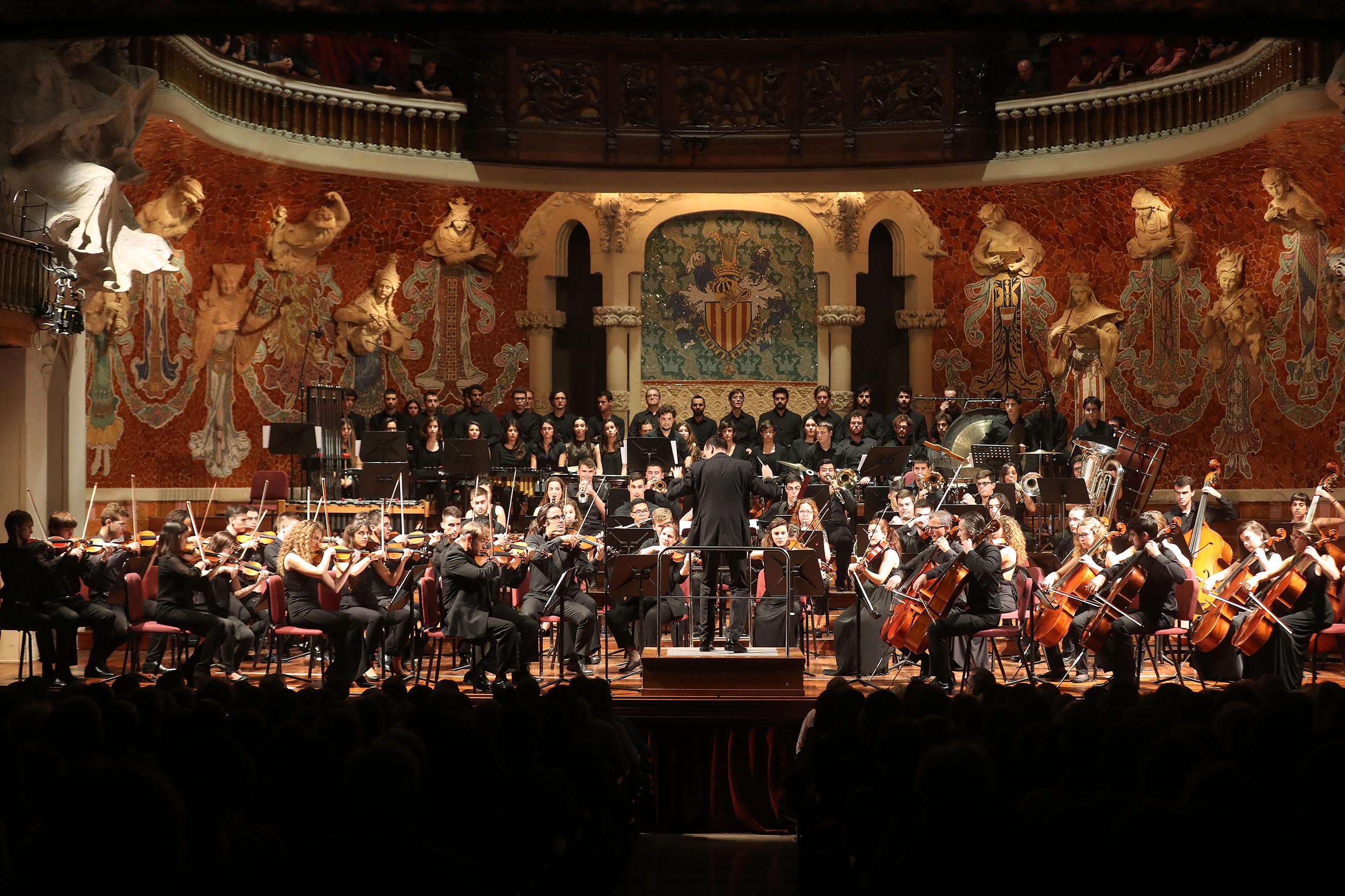
Concert at Barcelona cemetery
An interesting article about the work of ASCE and its impact on cemeteries in Barcelona.

Establishment of ASCE

In 2001, it became clear that there was a need to highlight the rich heritage of European cemeteries. Thanks to Mauro Felicori and his team, which at that time was represented by the heads of 9 European cemeteries, including Barcelona, the Association of Significant Cemeteries in Europe (ASCE) was set up with the basic aim of promoting the recognition of European cemeteries as cultural assets of exceptional importance and fostering awareness of them among citizens and the main national and European institutions.

The growing interest on the part of different cemetery managers has consolidated the project, with a total of 23 countries and 124 cities that have joined, and which today make ASCE a European association of reference. Barcelona has always been a very active member from its position in the Steering Committee and for some years holding the presidency.

The impact of ASCE on cemeteries in Barcelona

The evolution of cultural activities in these 20 years has been astonishing and exponential. The streets and squares of the different cemeteries in Barcelona have witnessed and been the setting for routes, concerts, open days, conferences, plays, musicals and, last but not least, spaces in which to show new generations the wealth that cemeteries contain.

It should be noted that the cultural change in our society has been an important factor in the opening of the cemeteries to the city as cultural spaces. Guided tours of the cemeteries are another of the city's attractions, and many people have chosen to take them and learn about the history of Barcelona from the people buried in the cemeteries or the sculptors and architects who left their works there. We would like to make special mention of the different spaces that house cemeteries, in general, considering them to be the depositories of a large part of the tangible and intangible heritage that we are obliged to preserve and pass on to future generations.

On the other hand, the possibility of establishing collaborations with different entities such as the University of Barcelona, the Miró Foundation, the Olympic Museum, among others, offers us the opportunity to carry out interesting projects together, which have subsequently served for students and scholars from different disciplines.

Our 'obsession' over the last ten years has been to open 'our open-air museums' to children, offering schools different educational activities to bring the cemeteries closer to the children so that they understand that cemeteries are spaces full of history and stories and that they should not always be perceived in a sad or negative way.

Barcelona has always wanted to be actively involved in the Association and to collaborate in the projects that have arisen, to offer the public the opportunity to get to know both Barcelona's and Europe's cemeteries more closely. Thus, in the year 2012 it was possible to collaborate in the Eucemet project by organising a photo exhibition in the Funeral Carriage Collection in the Montjuïc Cemetery. In this sense, and always pursuing the same objective of promoting the value of cemeteries and making them known to society, we believe that the ASCE's promotion of the Week of Discovering European Cemeteries (WDEC) is fundamental.


The uniqueness of European Cemeteries Route

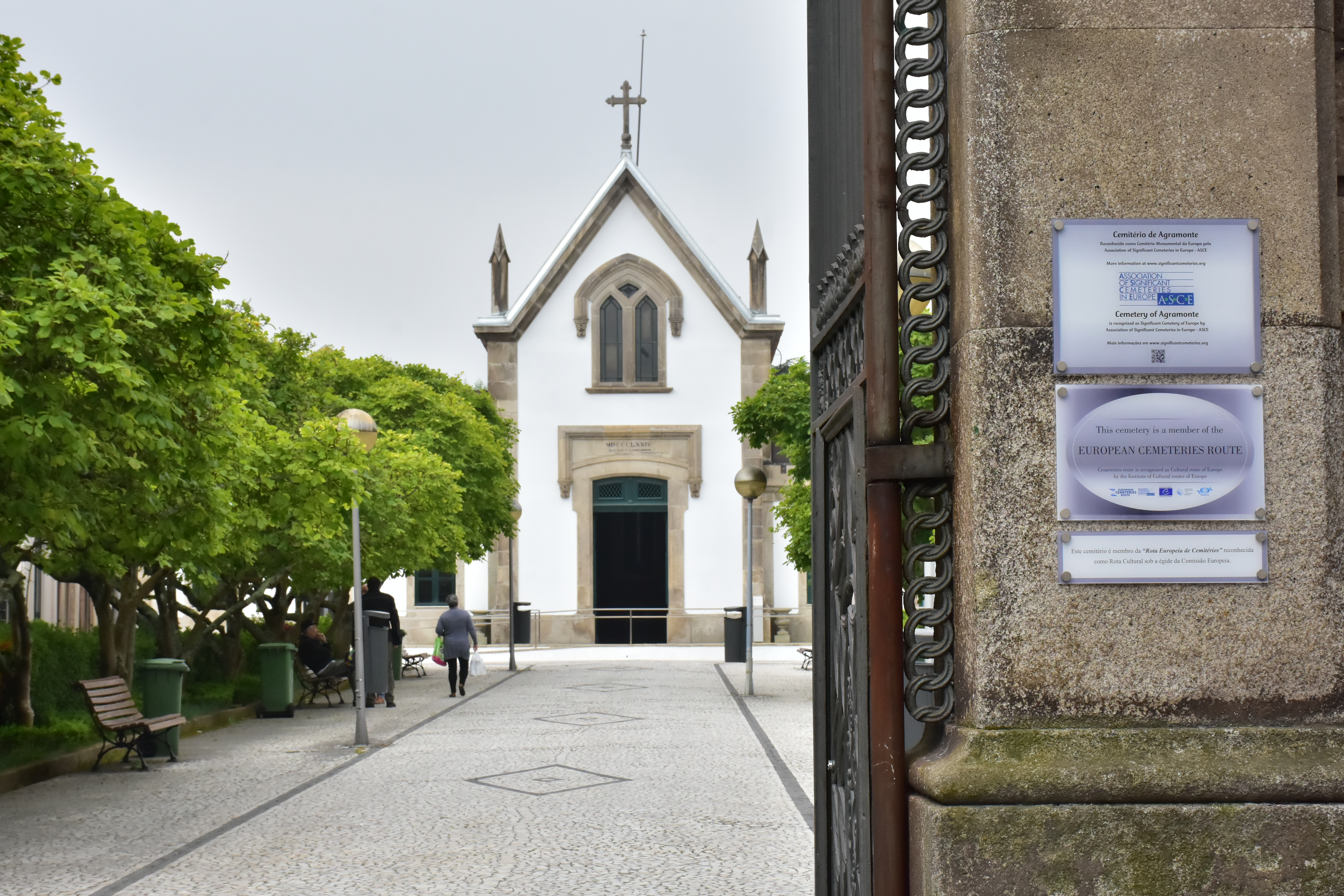
We would also like to make special mention of the European Cemeteries Route, a project developed by the Association, which is conceived as a network of cemeteries which, by opening their precincts through cultural routes, makes this important funerary heritage in Europe known in a joint way.

The itinerary generates an image with the capacity to attract tourists who are looking for alternatives to the existing offer.

We must highlight the uniqueness of this itinerary with respect to other existing ones:

  • It is an itinerary aimed at all segments of the public: citizens of the city itself, tourists, schools, groups, etc.
  • The itinerary combines culture and nature (most of the cemeteries can be considered as parks).
  • The itinerary completes the existing cultural offer in the cities and in Europe.

For them, communication tools common to all the cemeteries that take part of the route were established, as well as communication actions aimed at raising awareness of the route.

The importance of ASCE scientific committee

We do not want to end our article without making special mention of the ASCE scientific committee created expressly to supervise the Association's work plan. Members contribute their experience from different fields of work, which help to have a broader vision when proposing new projects and new cemetery inclusions.

For 20 more years of heritage, culture, knowledge, and new experiences.


Miquel Trepat Celis
General Director of Cementiris de Barcelona
Cemetery Services Management
Cemeteries of Barcelona


You can access the original article HERE.


Rediscovering the cultural importance of Greek Cemeteries

Cemetery of Skiathos (Skiathos island, Greece)
An insight into how membership in ASCE has contributed to the development and preservation of Greek cemeteries.
For the past two decades, the Association of Significant Cemeteries in Europe has gone to inspiring lengths to promote and highlight the importance of cemeteries all over Europe as part of our tangible and intangible common cultural heritage.

Skiathos, the second Municipality in Greece to become a member of the ASCE, albeit a tiny island, is home to a cemetery of great historical and artistic value. Through the inspiring leadership of the President Lidija Pliberšek, and the collaboration with the Board of ASCE, we managed to lead the way for more and more Municipalities of Greece to join or be in process of joining ASCE in the context of the European Cemeteries Route as well as to mobilise the Ministry of Culture and set a lot of different actions in motion through synergies with various bodies throughout Europe.

Skiathos’ Cemetery became a historic site, an exceptional landmark not to be missed by anyone visiting the island, even making it on the list of the “10 must-see” spots of Skiathos, according to TripAdvisor. Moreover, the local society of the island had the chance to rediscover the cultural importance of the Cemetery and its ties to not only the island’s past but the future, by strengthening the community’s bonds with the identity of Skiathos. Furthermore, promoting the significant European Cemeteries through the ASCE channels, simultaneously promotes tourism development.

Understanding the significance of European cemeteries is inextricably interwoven with understanding European culture. ASCE, a vehicle to preserve collective historical memory through protecting cemeteries, turned 20 and I personally cannot wait to see what the future hold.


Thodoris Tzoumas
Mayor of Skiathos, Greece
ASCE’s Steering Committee Member
ASCE’s Representative in Greece


You can access the original article HERE.

Urban cemeteries as public spaces: comparison of the Norwegian and Russian case studies

Contemporary cemeteries are intriguing examples of “in-between” places with no clear cut between public and private, civic and personal.
Nordre cemetery in OsloVćr Frelsers cemetery in Oslo

Planners and policy makers often see urban cemeteries as utilitarian burial grounds. However, evidence from different countries demonstrate that their role is more complex. The findings of a Norwegian research projects “Green Urban Spaces – the role of the cemetery in multicultural and interreligious urban contexts” (2014-2017) show that the cemeteries in Oslo are actively used for recreation and perceived by many of their users as green places of restoration. Is such cemetery multifunctionality just a Norwegian phenomenon or we can find similarities in other cultures?

Østre cemetery in OsloFor the comparison, this paper brings empirical evidences from Vvedenskoe cemetery (opened in 1771) in the Russian capital in Moscow. The study partly replicates the above-mentioned Norwegian study adapted to the context of Moscow and employs systematic observations of people’s activities, participant observations and interviews with cemetery visitors. Among many other cemeteries in Moscow, I chose Vvedenskoe cemetery for this study because of its close proximity to housing areas, physical layout with two entrances and comparatively wide alleys and mature vegetation.

Vvedenskoe cemetery in Moscow

Vvedenskoe cemetery in MoscowThe results show that people come to Vvedenskoe cemetery not only to visit their relatives’ graves, although it is the main activity there and more common comparing to the Norwegian case. Thanks to the big amount of heritage graves and special spiritual atmosphere Vvedenskoe cemetery is an attractive place for excursions, especially focused on arts and history. For many of the interviewees this cemetery was included into their everyday life as a place for strolling and reflections, which is similar to the findings from Oslo. Another important aspect for the visitors is the greenery of Vvedenskoe cemetery, which provides an opportunity of the contact with nature for the local residents. The Norwegian researchers had similar observations in case of Oslo. While the range and frequency of recreational activities in Vvedenskoe cemetery is lower than in the studied cemeteries in Norway, the findings clearly show that its role in the city is not limited to the utilitarian functions of a burial ground.

So far academic research of the role of urban cemeteries was focused on Northern Europe and North America and cross-cultural comparative cemetery research almost does not exist, except very few examples. In times of globalisation, cemeteries are among very small number of urban places, which are so culturally and contextually dependent and vary greatly from country to country. On the contrary, to many comparative studies in other fields, which aim to find generalised knowledge and best practices, comparative cemetery research cannot have the same goal because of the importance of the local context. However, I believe that it can give deeper and more nuanced understanding of a cemetery as a phenomenon and its potential. Policymakers and practitioners around the world are starting to acknowledge cemeteries’ multifunctional potential which is especially relevant for fast growing cities with increasing demand for green spaces, such as Oslo and Copenhagen. 

About the author

Pavel Grabalov is a PhD Candidate at the Faculty of Landscape and Society of the Norwegian University of Life Sciences (NMBU). He holds a Master’s degree in Urban Studies from Malmö University (2017) and has interests in urban planning and people-environment interaction. His current PhD project focuses on the role of cemeteries in contemporary densified cities. Pavel’s research aims to build new interdisciplinary knowledge on urban cemeteries as a special type of public spaces, using case studies from Scandinavian and Russian cultural contexts.

The above article has been prepared for the ASCE Conference 2019 in Ghent, Belgium. The article-related presentation is available HERE.

You can read more about Pavel Grabalov’s academic research on new cemetery policies in Oslo and Copenhagen in: Pavel Grabalov, Helena Nordh, “’Philosophical park’: Cemeteries in the Scandinavian urban context”, Social Studies, Vol. 17:1, https://journals.muni.cz/socialni_studia/article/view/13559

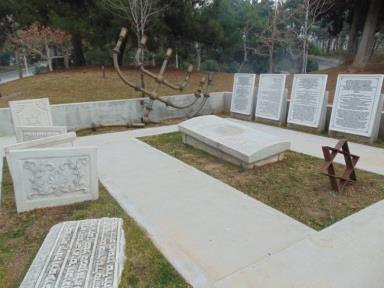
The evolution of the landscape of the Old Jewish cemetery of Thessaloniki: an extreme case of reusage

An interesting case study about the Old Jewish cemetery of Thessaloniki in Greece that was presented at the AGM 2019.
The Old Jewish cemetery of Thessaloniki

Introduction

A landscape can change as radically as to be destroyed and reconstructed even more than once.

Such is the case of the landscape of the Old Jewish cemetery of Thessaloniki in Greece. At first, during the German occupation, the cemetery was destroyed, and afterwards, the area became a large portion of the Aristotle University of Thessaloniki (AUTH).


You can find the original poster with the case study HERE.

Author: Angelina Lagou (Student of Geography at the Harokopio University of Athens)