The speech of Mrs. Lidija Plibersek can be seen at the following video:
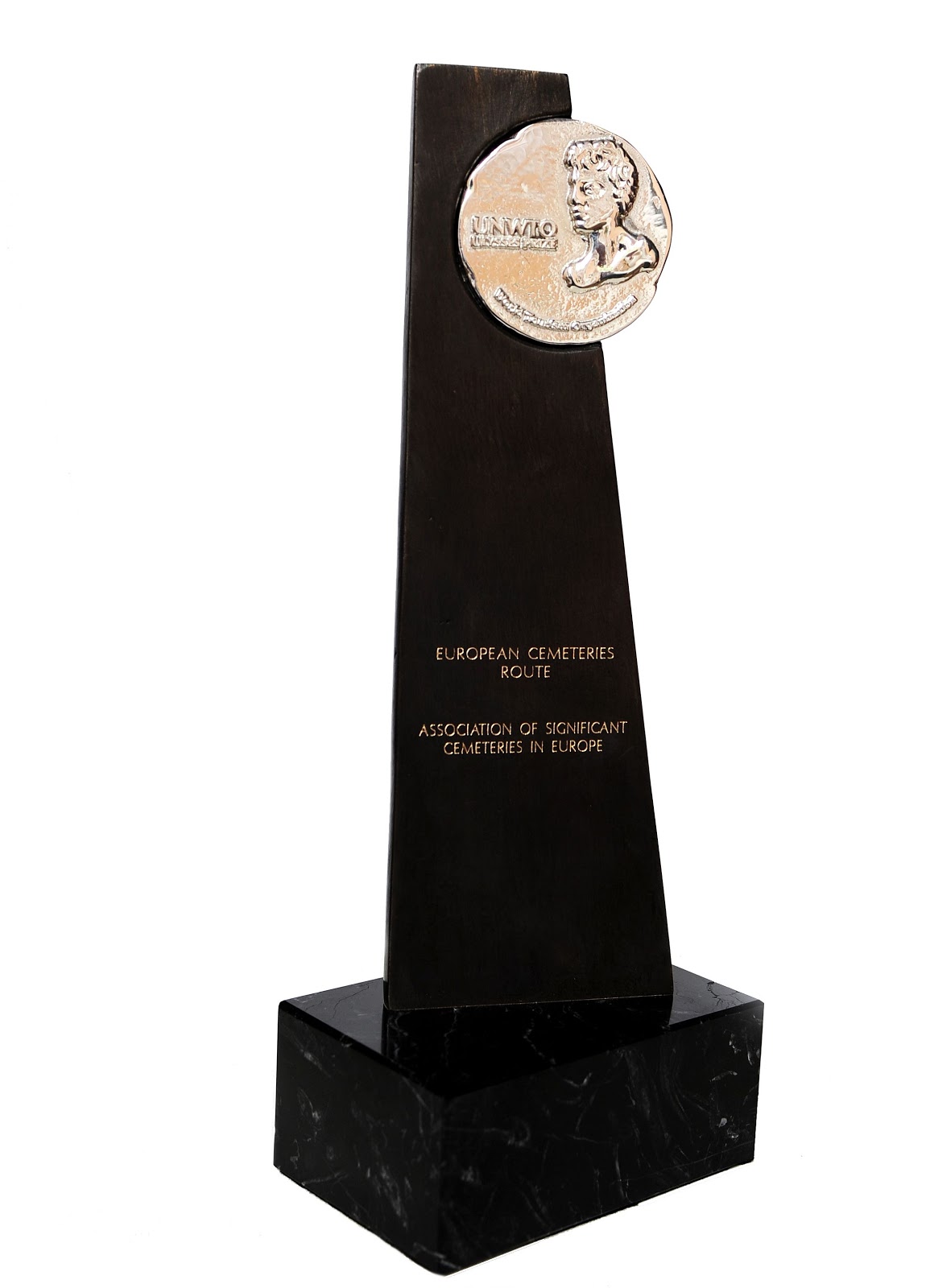
UNWTO ULYSSES AWARD to the European Cemeteries Route
On June 2, 2011, Dr. Brent Ritchie handed the UNWTO Ulysses Award to ASCE’s Vice-President, Ms.Lidija Pliberšek, in recognition of its project ‘European Cemeteries Route’. The UNWTO Ulysses Awards are granted to projects undertaken by public institutions in tourism (governmental, public-private partnerships), tourism enterprises and non-profit institutions (NGOs, civil society, etc.), which merit distinction for their innovative contributions to tourism policy, governance, and other areas of tourism, such as the environment, cooperation for development, new technologies, social corporate,...
The speech of Mrs. Lidija Plibersek can be seen at the following video:
Pobrezje Cemetery: The peace monument unveling ceremony
The Peace Monument unveiling ceremony that took place at the cemetery Pobrežje (Maribor, Slovenia) two weeks ago. With the unveiling of the Peace Monument Pogrebno podjetje Maribor concludes activities of the international project »The war graveyards at cemetery in Pobrežje«. More info about the ceremony can be found at Pogrebno podjetje Maribor website..
Olindo Guerrini (1845-1916) aka Lorenzo Stecchetti
Fabio Frassetto (1876-1953)
The monument is dedicated to the famous anthropologist Fabio Frassetto (1876-1953) and his son, killed during the Second World War. Kozala Cemetery (Rijeka, Croatia)

Kozala Cemetery Rijeka has been a city utility object since 1872, and since then the Book of Burials keeps record of all the deceased persons.
Characteristics of the Cemetery
Kozala Cemetery is the oldest communal cemetery in Rijeka and one of the oldest in Europe. The writings and last names on the graves are in several languages: Croatian, Hungarian, Italian, French, English, German and Latin. Since the beginning it was open to different religions: Catholics, Orthodox, Protestants, Jews.Cultural heritage of Kozala Cemetery
Cultural-historical heritage of Kozala Cemetery in Rijeka is enlisted as a cultural property in the Registry of cultural properties of the Republic of Croatia on the List of precautionary protected properties by the Decree of the Ministry of Culture – Cultural Heritage Protection Office of the Conservational Department in Rijeka, since 10 October 2001.By the Decree of the Ministry of Culture - Cultural Heritage Protection Office since 23 March 2006, it is enlisted in the Registry of cultural properties of the Republic of Croatia – List of protected cultural properties.
Important Mausoleums
- Mausoleum Whitehead, built in 1900, is the biggest and the grandest mausoleum in the entire cemetery. It is situated on a prominent position, on the highest point of steep, karst terrain. It was built according to a project of a Trieste architect Giacomo Zammatio. The investor Robert Whitehead was a wealthy industrialist and a well-know torpedo manufacturer.
- Mausoleum Gorup was built in 1882, according a project by the sculptor Ivan Rendić. Josip Gorup, a prominent entrepreneur and salesman in Rijeka, was the investor.
- Mausoleum Manasteriotti was built in 1884 according to Ivan Rendić`s project.
Ministry of Culture of the Republic of Croatia has included mausoleums Manasteriotti, Gorup and Whitehead under its precautionary protection since 2011.
KD Kozala
KD Kozala Ltd Rijeka provides services at City of Rijeka through maintenance of cemeteries and funeral and masonry services. It is responsible for eight cemeteries: Kozala, Trsat, Central City Cemetery Drenova, Donja Drenova, Gornja Drenova, Zamet, Draga and Sv. Kuzam. We have been a full member of ASCE (Association of Significant Cemeteries of Europe) since 2004.
Cemetery Contacts
Kozala CemeteryPetra Kobeka bb,
51000 Rijeka,
Croatia
Phone: 051/208-740
KD Kozala Contacts
Komunalno društvo Kozala d.o.o. RijekaBraće Hlača 2/a,
51000 Rijeka,
Croatia
Phone: 051/208-740
Fax: 051/514-201
Email: info@kd-kozala.hr
Berühmte Musiker
Johannes Brahms, Joseph Lanner, Ludwig van Beethoven, Wolfgang Amadeus Mozart und Franz Schubert.
Johannes Brahms, gestorben am 3. April 1897 in Wien, war deutscher Pianist und Komponist der Romantik. Joseph Lanner, gestorben am 14. April 1843 in Wien, war österreichischer Komponist und Violinist. Er gilt neben Johann Strauss Vater als Begründer des Wiener Walzers. Ludwig van Beethoven, gestorben am 26. März 1827 in Wien, war deutscher Komponist der Wiener Klassik und einer der bedeutendsten Komponisten in der Geschichte der Musik. Wolfgang Amadeus Mozart (vollständiger Name Johannes Chrysostomus Wolfgangus Theophilus Mozart), gestorben am 5. Dezember 1791 in Wien, war österreichischer Komponist. Hier steht nur ein Denkmal, seine Gebeine ruhen in einem Schachtgrab am St. Marxer Friedhof, dem ehemaligen Friedhof im 3. Wiener Gemeindebezirk. Franz Peter Schubert, gestorben am 19. November 1828 in Wien, war ein österreichischer Komponist am Übergang von der Klassik zur Romantik.
René Coltelloni
René Coltelloni | écrivain, poète
Ses poésies en langue corse nous racontent avec finesse l’histoire d’une personne, d’un lieu, ou d’un évènement. René Coltelloni s’exprime également sur des évènements qui marquent notre société. Plusieurs chanteurs et groupes de chanteurs insulaires ont choisi d’interpréter ses poésies.
Recueil de poésies : Sumeri Nuttambuli.
Recueil de poésies : Canta a Puesia (introduction de Ghjacumu Fusina)
Plusieurs de ses poésies ont été chantées :
- Ghjuvanni Menconi (U Palatinu, Scandula, Zitellu di Maniglia, Paula, L’amicu, Castagna) ;
- Diana di l’Alba (Silenziu, Imbaruffate, San Petrone) , I Messageri (Pasturellu, Sarajevo, Musiche Campagnole) ;
- A Stantara (Campagna Viva, Ghjuventù, Destinu, Tribbiera)
- I Surgenti (Qual’hé chì sà)
Poésie Scandula : interprétée par Ghjuvanni Menconi, illustrée par Joseph Lorenzi
Recueil de poésies : Sumeri Nuttambuli.
Recueil de poésies : Canta a Puesia (introduction de Ghjacumu Fusina)
Plusieurs de ses poésies ont été chantées :
- Ghjuvanni Menconi (U Palatinu, Scandula, Zitellu di Maniglia, Paula, L’amicu, Castagna) ;
- Diana di l’Alba (Silenziu, Imbaruffate, San Petrone) , I Messageri (Pasturellu, Sarajevo, Musiche Campagnole) ;
- A Stantara (Campagna Viva, Ghjuventù, Destinu, Tribbiera)
- I Surgenti (Qual’hé chì sà)
Poésie Scandula : interprétée par Ghjuvanni Menconi, illustrée par Joseph Lorenzi
La croix du souvenir
La croix du souvenir | Le programme EUCEMET
Le programme EUCEMET
Nous avons choisi la croix du souvenir pour vous parler du programme à l’origine de cette visite virtuelle. Il s’agit en effet du programme Eucemet dans le cadre du programme européen Culture.
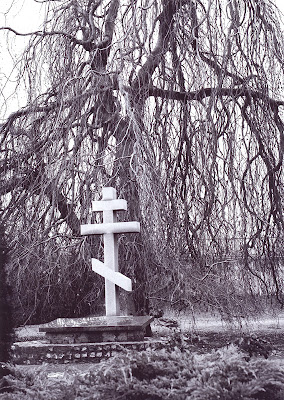
La croix du souvenir est un lieu de recueillement pour les personnes qui ne sont pas inhumées dans le cimetière.
Les cimetières, témoins de la diversité socioculturelle européenne, de l’histoire et des différents mouvements artistiques, sont des éléments de culture et de patrimoine particulièrement intéressants, constitutifs de l’héritage du territoire de l’UE et de ses citoyens. Pourtant, ils demeurent encore trop souvent ignorés, méconnus.
Les hommes, depuis la période préhistorique, ont procédé à des cérémonies et rituels d’inhumation ; ils ont développé des traditions liées à l’inhumation et au « lieu de repos », à la « dernière demeure ». Des nécropoles présentant un grand intérêt archéologique sont encore découvertes de nos jours, et les sites les plus visités et renommés du patrimoine à travers le monde sont en fait des monuments faisant référence à la mort, aux cérémonies funéraires et/ou à « l’autre monde » ... (On peut nommer par exemple quelques-uns des plus célèbres sites : les Pyramides de Gizeh et les Vallées des Rois en Egypte, le Taj Mahal en Inde).
En Europe, nombre de grands cimetières offrent une démonstration claire de l'évolution artistique du continent, principalement entre le romantisme et le modernisme (19ème et 20ème siècles) par leur structure et leur architecture (sculptures et mausolées, espaces verts, églises, etc) et sont ainsi riches d’enseignements sur le plan culturel. Quelques-uns des plus grands sculpteurs et architectes ont participé à leur édification (en utilisant une large gamme de matériaux, de pierres locales, le marbre, le fer, le bronze…), et souvent, ces constructions ont été érigées à la mémoire et à la gloire de leurs concitoyens illustres, avec pour objectif « l’immortalisation» de la vie et de l’œuvre de ces grands hommes.
En fait, les experts ne parlent pas de «tombes» mais de «monuments», et certains cimetières ont même obtenu une reconnaissance internationale (ex : le cimetière de la forêt de Stockholm, patrimoine mondial de l'UNESCO, ou le cimetière de Zale à Ljubljana, qui a reçu le Label du patrimoine européen, récemment créé par le Conseil européen des ministres de la Culture).
Les cimetières européens nous rappellent aussi les faits de notre histoire récente (épidémies, grandes famines, révolutions, guerres mondiales / civiles, etc.) ; ils sont également l’expression de notre diversité culturelle, religieuse ainsi que notre capacité d'intégration.
Sur les territoires des différents partenaires du projet EUCEMET, il existe des cimetières catholiques, protestants, anglicans, orthodoxes et juifs.
A Nicosie, on peut admirer l'ancien cimetière arménien, près de la ville fortifiée ; ce cimetière a été construit au début du 19ème siècle, par des membres éminents de la communauté arménienne arrivés en Chypre. Dans la mxême ville, un cimetière britannique a été édifié à la mémoire des soldats du Commonwealth tombés au combat.
Dans tous les villages du Nebbiu et du Cap Corse, on rencontre des mausolées et des lieux de sépulture impressionnants, luxueux, richement ornementés, construits notamment par des familles corses, nobles ou bourgeoises, des notables, ou des Corses aventureux ayant émigré vers d’autres terres et y ayant fait fortune mais tenant à être enterrés chez eux, pour dormir de leur dernier sommeil dans leur terre d’origine, lieu de naissance et lieu dernier, lieu d’éternité. Des tombeaux blancs faisant face à la mer sont inspirés de l’architecture grecque.
Carriona, le cimetière d’Avilés, construit à la fin du 19ème siècle (1887-1893), reflète également la prospérité d'un village étroitement lié à Cuba où un grand nombre de migrants asturiens avaient fait fortune.
Faisant référence aux "jardins des âmes", le titre du projet adopte volontairement une connotation poétique ; les cimetières européens ont été source d'inspiration pour
de nombreux écrivains et poètes (Paul Valéry, Le cimetière marin ; Balzac,
le cimetière du Père-Lachaise dans La Comédie Humaine…).
De nombreux cimetières européens sont identifiés aux personnalités, aux « grands hommes » qui y reposent (intellectuels, artistes, écrivains, hommes d’Etat, hommes politiques, etc), et certains épitaphes sont encore étudiés pour leur intérêt littéraire, pour leur valeur poétique, humoristique, historique.
En ce sens, nous pouvons affirmer que les cimetières européens doivent être
considérés comme des éléments majeurs du patrimoine, et qu’à ce titre, ils méritent une attention particulière et spécifique quant à leur préservation et à leur gestion.
Bien que ces monuments aient été quelque peu oubliés au cours de ces dernières années, leurs propriétaires, principalement les collectivités locales, commencent à reconnaître leur potentiel culturel, artistique, touristique et leur valeur ajoutée sur le plan économique. Ainsi, comme de nombreuses autres collectivités, la ville espagnole d'Avilés élabore actuellement un plan de gestion de ces lieux, en collaboration avec des experts de l'Université d’Oviedo.
Les partenaires du projet EUCEMET estiment que sauver ce patrimoine riche et complexe constitue un défi qui pourra être plus aisément relevé dans le cadre d’un travail de coopération, d’échange d'expériences et de bonnes pratiques, et grâce à la mise en place de projets pilotes comme la visite virtuelle qui vous est aujourd’hui proposée.
To the unknown soldiers
After The Pobrežje Cemetery was open in August 1st 1879 mostly soldiers were buried here, besides the convicts and poor people.
At the outbreak of the First World War in 1914 the Pobrežje cemetery became the central military cemetery in Maribor. The units of Austria-Hungary army (Slovenes, Germans, Czechs, Slovaks, Hungarians, Poles...) were passing through Maribor towards the front on the Balkans or the Isonzo front. Dead soldiers were left behind, many of them unknown they found their last home on the Pobrežje cemetery.
Also many Russian and Italian prisoners of war who died during the construction of factory in Ruše or of hydroelectric power station in Fala are buried here. During the Second World War besides German soldiers also the Soviet and British prisoners of war were buried here.
After the war, in the south of the cemetery, the group tomb was built and the monument erected, dedicated to the deceased partisans.
Also many Russian and Italian prisoners of war who died during the construction of factory in Ruše or of hydroelectric power station in Fala are buried here. During the Second World War besides German soldiers also the Soviet and British prisoners of war were buried here.
After the war, in the south of the cemetery, the group tomb was built and the monument erected, dedicated to the deceased partisans.
10
Czeikes arcades
The Franciscan Cemetery in Pobrežje is the youngest cemetery in Maribor.
The Franciscans came to Maribor in 1864 on the invitation of Bishop Anton Martin Slomšek and they took over the church of St. Mary Mother of Mercy as well as s Slovene perish in a former suburb of Graz. In 1900 they built a new church and monastery that in 1906 became a basilica.
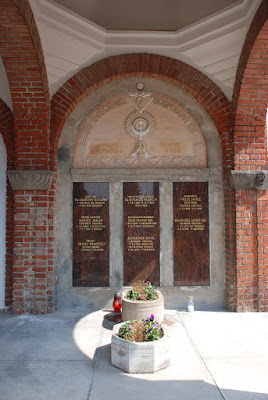
In 1927 the Franciscan parish bought some land, west of the town’s cemetery, where a new cemetery was arranged. In the middle of the cemetery a cross was erected. At the passage from the town’s cemetery to the Franciscan cemetery, two brick arcaded hallways were built in 1930, designed by the architect Maks Czeike. Those hallways consist of 18 arches under which tombs are located. The Franciscian cemetery was consecrated by Bishop Karlin in 1929.
10
The tomb of the Soviet prisoners
In 1941 and 1942 in autumn 1941 the Germans changed the former customs warehouse in Melje into the prison-camp for the soldiers from the Soviet Union.
During the winter 1994/42 around 2800 prisoners died there because of terrible sanitary conditions and brutal treatment. The Germans buried them by three in one grave in the south of the city cemetery. Their remains were put in this group tomb after the Second World War and the monument was erected.

10
La famille Cermolacce
La famille Cermolacce | Les Savalle Lemarchand
Un important quartier au village porte le nom de cette famille. D’autres quartiers à Oletta portent le nom de la maison d’une famille : Leccia, Boccheciampe, Paganacce, Salicetu etc…
Dans une maison de ce quartier on peut voir les armes de la famille (voir photo). Cette famille a été touchée par la Tuberculose. La famille s’est alliée à la famille Savalle Lemarchand (Antoinette et sa tante Juliette SAVALLE-LEMARCHAND (XIXe-XXe) école de Rouen). Ces deux artistes peintres ont été inspirées par Oletta et nous ont laissé de très belles œuvres (voir photos peintures).
Peace Monument
During the Second World War, there were around 3000 soldiers and civilians from 27 countries buried in the Pobrežje Cemetery.
Between 1941 and 1942, 1895 Soviet soldiers, who died due to inhuman treatment and horrible hygiene conditions in the prisoner camp in Melje, were buried here. 38 soldiers from Cyprus, France, Greece, Italy, New Zealand and Great Britain, who died between the years 1941 and 1945 in the large prisoner camp for allied soldiers, were also buried in the Pobrežje Cemetery.
Apart from them, 682 soldiers from Austria, Belarus, Bulgaria, Bosnia and Herzegovina, Czech Republic, Montenegro, Denmark, Croatia, Lithuania, Hungary, Macedonia, Germany,Poland, Romania, Slovakia, Slovenia, Serbia, Switzerland, Ukraine, USA and 330 civil victims of the bombing were also buried in the Cemetery in the last two years of the war.
Due to the expansion of the Cemetery to the area of the former war graves after the Second World War, and due to the exhumation of the bodies of some of the soldiers, it is difficult to say with absolute certainty, how many of those who died here still rest in the same place where they were originally buried. Most of them were reburied into the common grave at the Peace monument which was erected in memory of all the war victims without any dividing and value judgements, but only to create memories.
Apart from them, 682 soldiers from Austria, Belarus, Bulgaria, Bosnia and Herzegovina, Czech Republic, Montenegro, Denmark, Croatia, Lithuania, Hungary, Macedonia, Germany,Poland, Romania, Slovakia, Slovenia, Serbia, Switzerland, Ukraine, USA and 330 civil victims of the bombing were also buried in the Cemetery in the last two years of the war.
Due to the expansion of the Cemetery to the area of the former war graves after the Second World War, and due to the exhumation of the bodies of some of the soldiers, it is difficult to say with absolute certainty, how many of those who died here still rest in the same place where they were originally buried. Most of them were reburied into the common grave at the Peace monument which was erected in memory of all the war victims without any dividing and value judgements, but only to create memories.
10
Partisan tomb
In National Liberation War during the Second World War (1941 – 1945) a lot of partisans lost their lives around Maribor in struggles with occupants.
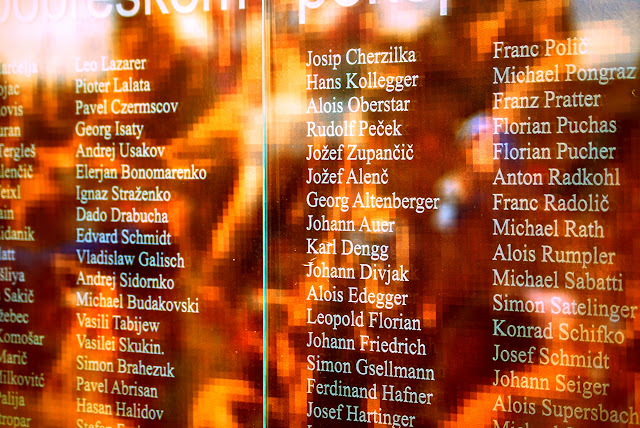
139 partisans were buried in this group tomb on the Pobrežje cemetery after the war. Four of them are still unknown, but the names of 135 partisans are cut in memorial tablets on the monument erected in 1979.
10
Eamon De Valera
14/10/1882 - 29/8/1975 | Revolutionary, MP, TD, Taoiseach and President of Ireland.
Éamon de Valera, or “Dev” as he is commonly known by the Irish, was the most significant, influential and some say divisive public figure in twentieth-century Ireland. In his lifetime of almost 100 years, he was a soldier, a revolutionary, a patriot, a political leader, a Taoiseach (Prime Minister) and a President.
Born in New York to a Cuban father and an Irish mother on the 14th October 1882, he was reared by his maternal grandmother in County Limerick. He graduated in mathematics and spent some time working as a teacher.
Having been interested in nationalist ideals from an early age, he joined the Irish Volunteers in 1913 and was Commander in Boland’s Mills during the 1916 Easter Rising in Dublin. On surrender he was sentenced to death which was commuted to life imprisonment. Initially it was thought that this was because of his American citizenship, although historians now believe that the British had realised that public opinion was swaying against them, following the initial wave of executions of the leaders of the Rising and the decision was made to halt the killings before De Valera was due to be shot.
Whatever the reason, De Valera survived and was the only rebel leader not to be executed.
On his release during the 1917 general amnesty for prisoners, De Valera was appointed President of the political party Sinn Féin and was elected to Westminster as MP for East Clare, but he abstained from taking the seat. In the 1918 General Election in Ireland, Sinn Féin swept the country.
Despite having been re-imprisoned in England under a charge of treason, De Valera was elected President when the first Dáil Éireann (Irish Parliament) sat. With the help of Michael Collins, he escaped from jail in England and returned to Ireland to take up the position.
Born in New York to a Cuban father and an Irish mother on the 14th October 1882, he was reared by his maternal grandmother in County Limerick. He graduated in mathematics and spent some time working as a teacher.
Having been interested in nationalist ideals from an early age, he joined the Irish Volunteers in 1913 and was Commander in Boland’s Mills during the 1916 Easter Rising in Dublin. On surrender he was sentenced to death which was commuted to life imprisonment. Initially it was thought that this was because of his American citizenship, although historians now believe that the British had realised that public opinion was swaying against them, following the initial wave of executions of the leaders of the Rising and the decision was made to halt the killings before De Valera was due to be shot.
Whatever the reason, De Valera survived and was the only rebel leader not to be executed.
On his release during the 1917 general amnesty for prisoners, De Valera was appointed President of the political party Sinn Féin and was elected to Westminster as MP for East Clare, but he abstained from taking the seat. In the 1918 General Election in Ireland, Sinn Féin swept the country.
Despite having been re-imprisoned in England under a charge of treason, De Valera was elected President when the first Dáil Éireann (Irish Parliament) sat. With the help of Michael Collins, he escaped from jail in England and returned to Ireland to take up the position.
More info on following links (data connection required)
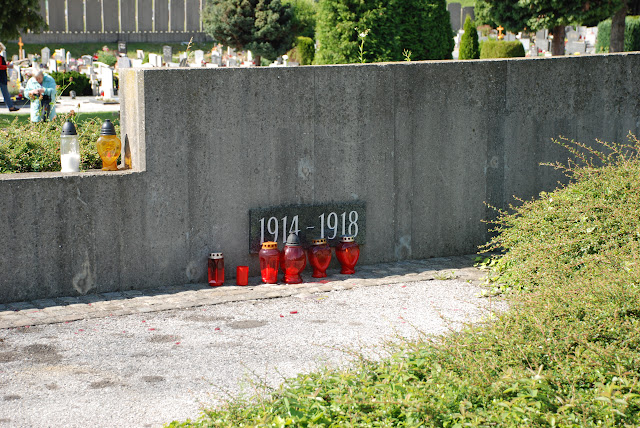
Fallen soldiers 1914 -1918
During the First World War (1914 - 1918), around thousand Austro-Hungarian soldiers, who fell in Maribor, were buried in Pobrežje cemetery.
In the beginning of the 30s of the 20th century, the soldiers‘ graves were digged up and 970 remains of the soldiers (928 with names and surnames, 42 unknown) were transferred to the joint grave, set up between 1932 and 1937. In the grave soldiers of numerous Austro-Hungarian regiments and all types of armies - infantry, cavalry, artillery, aviation and navy - are buried. Among them there are almost all Austro-Hungarian nations: Austrians, Bosniaks, Czech, Montenegrins, Croats, Italians, Hungarians, Poles, Romanians, Slovaks, Slovenians, Serbs, Ukrainians and Germans.
Apart from that the Remains of the war prisoners of the former Russian Empire, Kingdom of Serbia and Kingdom of the Italy, who died between the years 1914 - 1918 during the construction of hydroelectric power plant Fala and were buried at Pobrežje cemetery were transferred from the prisoner-of-war camp Šterntal near Kidričevo to the grave.
The mortal remains of 119 Italian war prisoners were transferred to the grave in Ljubljana in 1933. Among the prisoners of the Russian Empire army buried at Pobrežje cemetery are soldiers from Russia, Ukraine, Estonia, Lithuania, Belarus,Poland and Moldavia.
Apart from that the Remains of the war prisoners of the former Russian Empire, Kingdom of Serbia and Kingdom of the Italy, who died between the years 1914 - 1918 during the construction of hydroelectric power plant Fala and were buried at Pobrežje cemetery were transferred from the prisoner-of-war camp Šterntal near Kidričevo to the grave.
The mortal remains of 119 Italian war prisoners were transferred to the grave in Ljubljana in 1933. Among the prisoners of the Russian Empire army buried at Pobrežje cemetery are soldiers from Russia, Ukraine, Estonia, Lithuania, Belarus,Poland and Moldavia.
10
Josip Priol
Josip Priol was the leading pomologist in Slovenia, studying fruit types and diseases, fertilisation, sorting, storage and the development of new fruit varieties.
Since 1919 he had worked as a technical teacher at Viticulture and Fruit School in Maribor. After having passed the professional exam in 1924, he started teaching fruit growing (pomology) and in 1928 became the headmaster of the school. In 1946 he was appointed headmaster of the newly founded Slovene Institute for Fruit Growing in Maribor.
He organised courses for teachers of primary schools, farm masters and housekeepers. He participated at many fruit exhibitions and congresses, where he reported about his biological experiments with fruit trees.
He cultivated several varieties of apple trees, among which also the renowned Priol`s Delicious in 1967. Moreover, he published more than 250 professional articles and a number of independent publications and text books.
He organised courses for teachers of primary schools, farm masters and housekeepers. He participated at many fruit exhibitions and congresses, where he reported about his biological experiments with fruit trees.
He cultivated several varieties of apple trees, among which also the renowned Priol`s Delicious in 1967. Moreover, he published more than 250 professional articles and a number of independent publications and text books.
Pavel Turner
Patron, publicist and educator | 1842-1924
As a secondary school student he was an active member of the Slavonic Reading Club (Slovanska čitalnica), the first national society in Maribor. After he had been awarded the doctor`s degree in Strasbourg in 1873, he worked as a tutor in Budapest, Vienna and in England, where he met many writers and statesmen. He was considered one of the most educated Slovenes of that time. In 1903 he returned to Maribor. Intellectuals gathered at his estate below Kalvarija. He was a patron of many Slovene pupils, students and artists. In 1924 he bequeathed his property for grants to the then established University of Ljubljana (Turner scholarship) and his vast library to the Historical Society of Maribor.
Filip Terč
Dr. Filip Terč (1844 -1917), a doctor and beekeeper from Maribor (Slovenia) who successfully cured 543 out of his 658 of patients suffering from rheumatic diseases, is considered the father of the modern apitherapy.
Dr. Filip Terč was born in 1844 in Praporište (Czech Republic). He studied medicine in Vienna (Austria) and worked in Vienna General Hospital as a surgical assistant. He got married to Rudolfina Valenta and had a son with her. Since 1976, Dr. Terč and his family lived in Maribor, where he worked as a doctor and a teacher. He got remarried to Katarina Scherbaum and had another son and a daughter with her. He died in Maribor in 1917.
Beside medicine, Dr. Filip Terč had a big passion for bees. Working as a beekeeper encouraged him to study the beneficial effects of bee poison on patients suffering from rheumatic diseases. He published his findings in a magazine in Vienna in 1888. After this notification, Central Europe became interested in Apitherapy. The works of Dr. Filip Terč show that by his experiments and clinical observations he opened the way for the subsequent science of Allergy and Immunology.
For several years, his birthday, 30 March, has been celebrated as World Apitherapy Day.
Beside medicine, Dr. Filip Terč had a big passion for bees. Working as a beekeeper encouraged him to study the beneficial effects of bee poison on patients suffering from rheumatic diseases. He published his findings in a magazine in Vienna in 1888. After this notification, Central Europe became interested in Apitherapy. The works of Dr. Filip Terč show that by his experiments and clinical observations he opened the way for the subsequent science of Allergy and Immunology.
For several years, his birthday, 30 March, has been celebrated as World Apitherapy Day.
Subscribe to:
Posts (Atom)