Milan Monumental Cemetery (Milan, Italy)

Milan Monumental Cemetery (Milan, Italy)
The Milan Monumental Cemetery is located in an area of 250.000 mq. Inaugurated in 1866, it was designed by the architect Carlo Maciachini (1818-1899).

About the cemetery

The construction first met the hygienic and town-planning needs linked to the presence of a high number of burial places inside the town. Moreover, the Municipality wanted to give the community a representative place by joining the cult of the dead. Within its walls, Monumentale gives hospitality to graves of different cults an religions, including the sections for non-Catholics and Jews.

An open-air museum

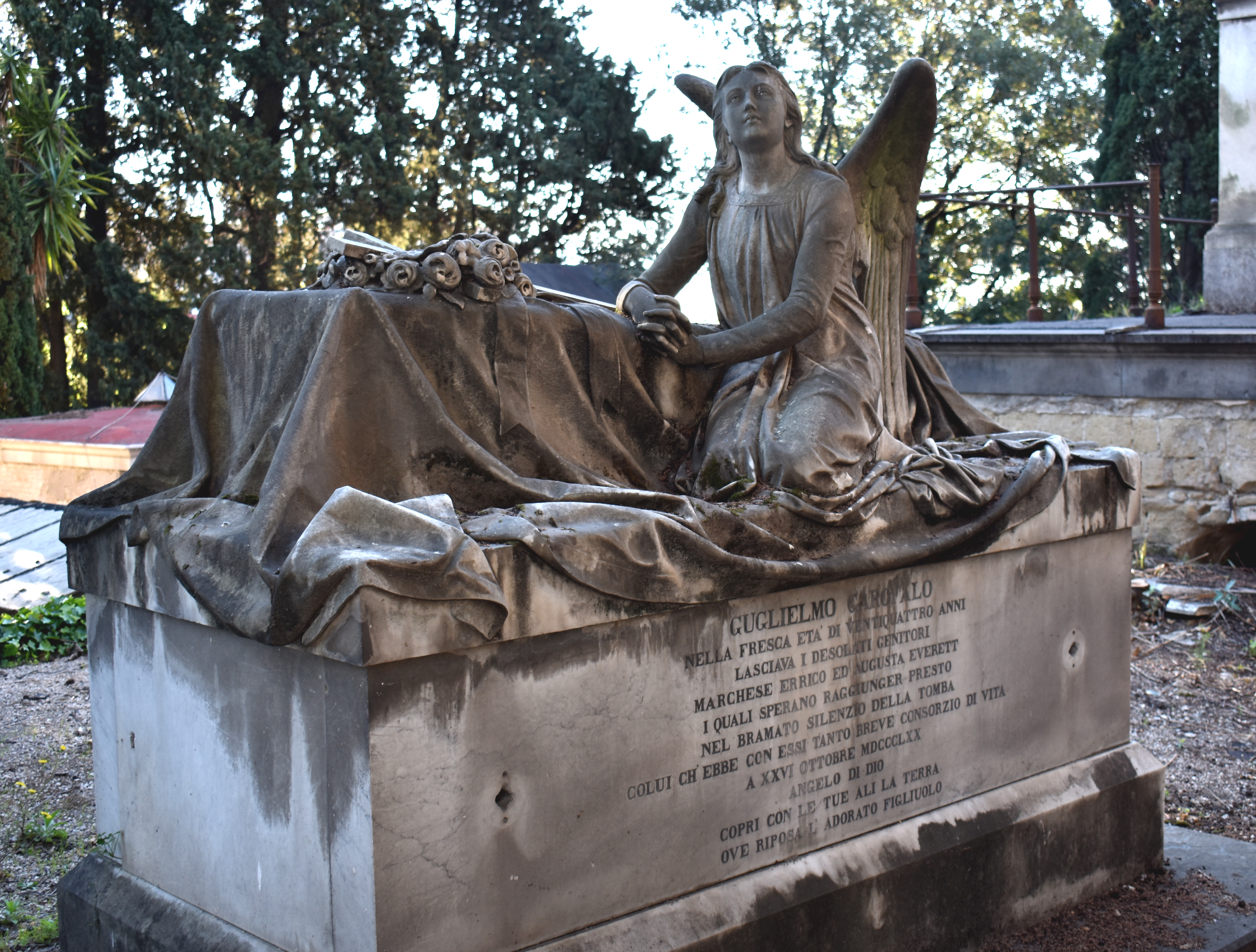
The work of Maciachini includes different stylists suggestions according to the eclectic taste of the age and it joins together the Pisano Gothic and the Lumbard Romanesque style with some inserts imitating the Byzantine style. The entrance square is dominated by the Memorial Chapel Famedio, a successful neologism indicating the temple dedicated to fame and giving hospitality to famous and well-deserving men.The sculptures and building of the Monumental Cemetery show the town historical events and its artistic history from Realism and Eclecticism, to Liberty and Symbolism until the contemporary age, as if it were a real museum in the open air where the main Italian artists are represented.

Address

Piazzale Cimitero Monumentale
20154 Milano

Contacts

Phone: +39 02 884 65600 / 45678 / 45680
Fax: +39 02 884 46774
E-mail: dsc.cimiteromonumentale@comune.milano.it

Web: comune.milano.it/monumentale

Opening hours

Tuesday – Sunday: 8.00 – 18.00
Monday Closed

Office hours 

Monday – Saturday: 8.30 – 12.00
and 13.30 – 16.30

How to get here

Bus: 94
Tram: 2 - 4 - 33 - 10 - 12 - 14
Subway: M2, M5
Railway Station: F.S. Garibaldi

Tourist information

IAT - UFFICI INFORMAZIONE E ACCOGLIENZA TURISTICA
Piazza Duomo, 19/a (City Center)
20121 Milano

Phone: + 39 02 774 04343
Fax: +39 02 774 04333
Email: iat.info@provincia.milano.it
Web: www.visitamilano.it

www.comune.milano.it (City Portal)
www.aeroporti.com (Airports)
www.fs-on-line.com (Italian railwais)
www.ferrovienord.it (Local railwais)
www.atm-mi.it (Subway)
www.taximalpensa.it (Taxi)
www.bicar.it (Car Hire)
www.itwg.com (Hotel reservation)
www.camping.it (Camping)

The Main Cemetery of Mainz (Mainz, Germany)

The Main Cemetery of Mainz (Mainz, Germany)
The main cemetery of Mainz was founded over 200 years ago, yet its roots can be found in pre-roman times.

About the cemetery

When the roman troops built up the "Moguntiacum", the place became a burial site for roman soldiers and citizens. In early medieval times, the bishops of Mainz were buried in this territory, making the valley known as the "Holy Valley". After Napoleon conquered Mainz, its prefect decided that a new burial place had to be set up. This decision was declared law by Napoleon for all French towns. The "Holy Valley" became a burial ground and was chosen to be the place for the new main cemetery of Mainz and in 1803, the first burial took place at the new cemetery. 

The two square kilometres of the cemetery include a large variety of different trees and plant species. The marks of WWII are present on graves of soldiers and victims of the bombs which fell on Mainz during the war. Major factory owners, scientists, musicians, authors and politicians were buried here. Especially the vaults of Kupferberg and Henkell (one of the most important German producers of sparkling wine) and Schott (one of the largest publisher of sheet music world-wide) should be mentioned here. The cemetery reflects the changeful history of a town, druing which its ownership was changedat at least ten times since the cemetery was founded.

Contacts

The Main Cemetery of Mainz
Untere Zahlbacher Strasse
D-55131 Mainz
Germany

e-mail: info@nekropolis-moguntia.de

Tourist information

Touristik Centrale Mainz
Bruckenturm am Rathaus
55116 Mainz

Tel.: +49 06131 286210
Fax: +49 06131 2862155

Email: tourist@info-mainz.de
Website: www.info-mainz.de

Glasnevin Cemetery (Dublin, Ireland)

Glasnevin Cemetery (Dublin, Ireland)
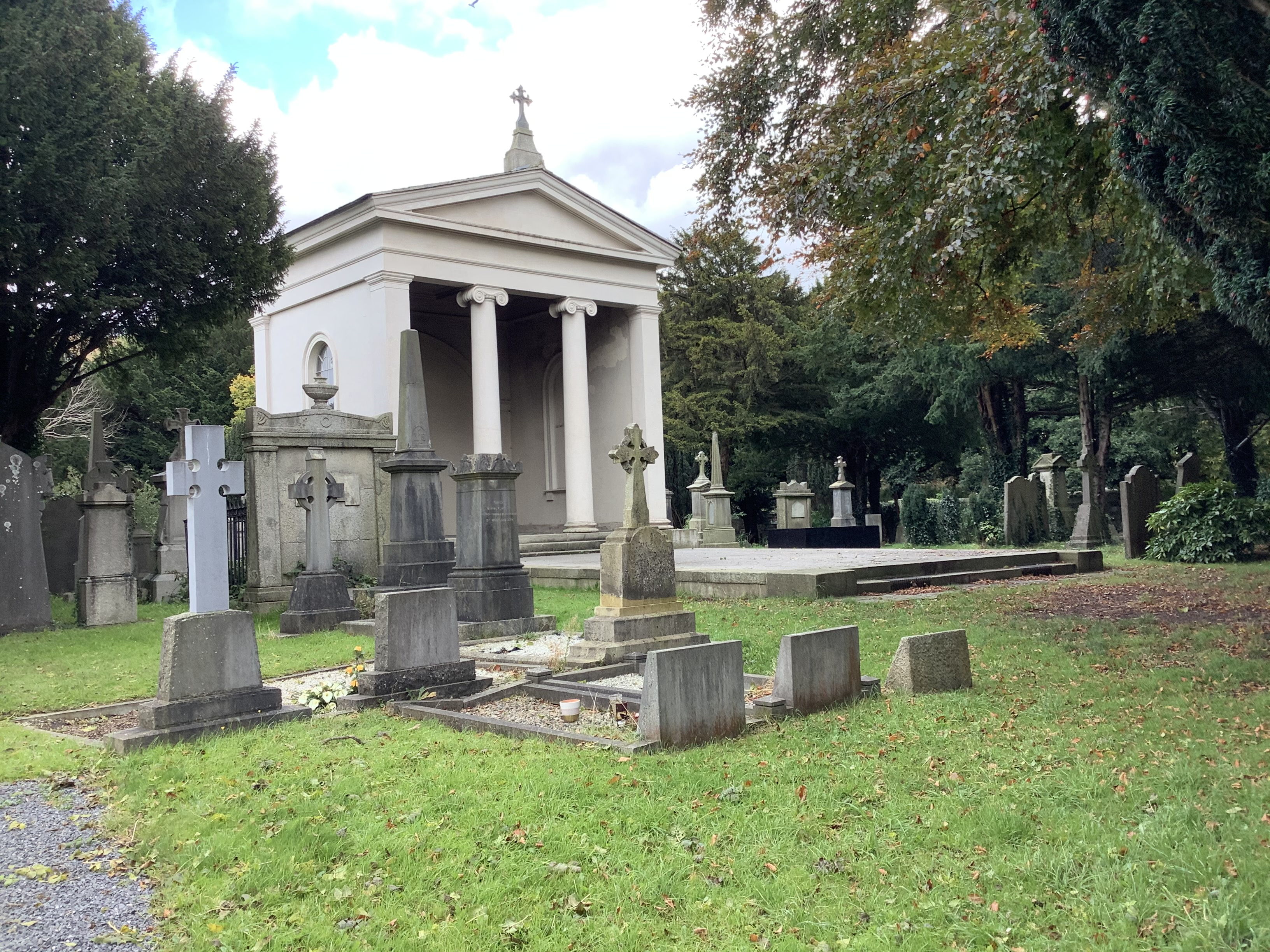
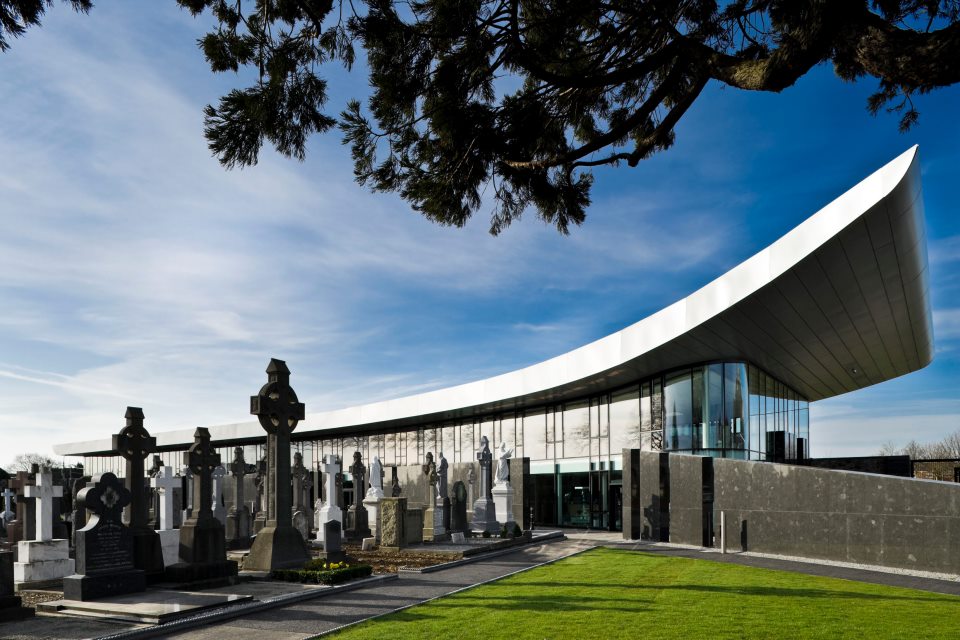
Glasnevin Cemetery was established in 1832 under the direction of Daniel O’Connell for the purpose of burying “people of all religions and non”.

About the cemetery

The Glasnevin cemetery encompasses 124 acres and 1.5 million burials. It has a great national heritage through the social and historical history of the people buried there from all walks of life over 178 years. 

Famous people

Famous people interred there include the founder of the Cemetery - Daniel O’Connell, Charles Stewart Parnell, O’Donovan Rossa, Eamon De Valera, Michael Collins, Countess Markiewicz, Maud Gonne McBride, Gerard Manley Hopkins, Brendan Behan, Christy Brown, Jimmy O’Dea, Luke Kelly, Alfred Chester Beatty, Michael Cusack and Liam Whelan. Less acclaimed people include victims of the Great Famine, the Cholera outbreaks and the Air India crash as well as the babies in the old Angels plot which was renovated and inaugurated by Presi dent McAleese in 2005. 

Architecture

The Cemetery’s most famous architectural feature is the 55 meters high O’Connell Tower, designed by George Petries and made of Wicklow granite, where the remains of Daniel O’Connell are interred in a family crypt directly below the tower. It is still one of the highest structures in Dublin. The crypt and tower have recently been restored in conjunction with the OPW and are open to the public for the first time since 1970. The Mortuary Chapel, designed in the 1870s, is appointed with stone carvings by James Pearse (father of Padraig and Willie).

Design

The opening of Père Lachaise cemetery in Paris in 1815 provided much-needed inspiration for cemetery designers, who had hitherto designed fairly functional cemeteries. With Père Lachaise as an example, the garden cemeteries were initially informally landscaped, with sweeping roads wide enough for carriages, and smaller paths for strolling. Careful planting (particularly of trees) and architectural features that impressed or drew the eye were key features. The whole effect was that of a private, landscaped park, with a central chapel instead of a country house. Unlike churchyards, these cemeteries were independent of a parish church, were located outside the city in what were then suburbs. These cemeteries became known as  'garden cemeteries'.


*Main photo source: www.dctrust.ie

Glasnevin Museum

Finglas Road
Dublin 11
Ireland

Phone: + 353 (0) 1 882 6550
Email: museum@glasnevintrust.ie

Office Opening hours

Mon - Fri: 10.00am to 5.00pm
Sat - Sun: 11.00am to 5.00pm

Glasnevin Cemetery Monuments

Finglas Road
Dublin 11
Ireland

Phone: +353 (0) 1 882 6520
Mobile: + 353 (0) 86 331 3432
Email: momuments@glasnevintrust.ie

Office Opening hours

Mon - Fri: 8.00am to 5.00pm
Sat: 8.00am to 1.00pm

Glasnevin Cemetery

Finglas Road
Dublin 11
Ireland

Phone: + 353 (0) 1 882 6500
Fax: + 353 (0) 1 830 1594
Email: info@glasnevintrust.ie

Website: www.dctrust.ie

Access to Glasnevin Cemetery grounds

Mon - Sun: 9.00am to 6.00pm

Dardistown Cemetery & Crematorium (Dublin, Ireland)

Dardistown Cemetery & Crematorium (Dublin, Ireland)
Dardistown Cemetery was established by Dublin Cemeteries Trust in 1990 to serve the communities of North West Dublin.

About the cemetery

Dardistown Cemetery, located near Dublin airport, was opened in 1990. The cemetery covers 42 acres and is developed as a lawn cemetery. In order to retain the attractive features of older cemeteries, such as Glasnevin Cemetery, Dardistown is divided into sections. Each section is named after saints associated with the locality – for example St.Columba, St. Margaret and St.Doulagh. The entrance to Dardistown is through the original gates and piers for St.Paul’s Section of Glasnevin Cemetery which date back to 1860.

Locality

Dardistown is located in the heart of Fingal whose rich heritage and long history is evident in the many famous buildings, churches, castles, great houses and archaeological sites located in the area. This wealth of monuments, some dating as far back as 5.000 years, reflect the various periods of Fingal’s history from Viking occupation to the diversity of Anglo-Irish history through to modern day Fingal.


*Photo source: www.dctrust.ie

Dardistown Cemetery

Address:
Dardistown Cemetery
Collinstown Cross
Old Airport Road
Cloghran
Co. Dublin

Contacts:
P: + 353 (0) 1 8424677
F: + 353 (0) 1 8424294
E: dardistowncemetery@glasnevintrust.ie

W: www.dctrust.ie

Opening hours:
Mon - Wed 9.30am to 4.30pm
Thurs 9.30am to 4.00pm
Fri 9.30am to 3.30pm

Dardistown Florists

Address:
Collinstown Cross
Old Airport Road
Cloghran
Co. Dublin

Contacts:
P: + 353 (0) 1 8424677
E: florist@glasnevintrust.ie

Opening hours:
Mon - Sun 9.30am to 4.30pm

Dardistown Cemetery Monuments

Address:
Collinstown Cross,
Old Airport Road,
Cloghran,
Co. Dublin.

Contacts:
P: +353 (0) 1 882 6520
M: + 353 (0) 86 331 3432
E: momuments@glasnevintrust.ie

Opening hours:
Mon - Fri 8.00am to 5.00pm
Sat 8.00am to 1.00pm

Goldenbridge Cemetery (Dublin, Ireland)

Goldenbridge Cemetery (Dublin, Ireland)
Goldenbridge is the first cemetery to be opened by Daniel O'Connell and the Dublin Cemeteries Committee in 1828.

About the cemetery

With the passing of the 'Act of Easement of Burial Bills' in 1824, a committee was formed to administer the proposed cemetery. A small plot of land had been acquired for this purpose at Goldenbridge. The cemetery was opened in 1828 and the first burial took place on the 15th October of that year.

Set on just two acres of land, Goldenbridge incorporates many of the classical features that were to dominate the 19th century. With delinated pathways and surrounded by high walls, it is an oasis of tranquility in the hearth of a busy suburb.

Garden Cemeteries

Unlike churchyards, these cemeteries were independent of a parish church, were located outside the city in what were then suburbs. These cemeteries became known as 'garden cemeteries'.

Locality

Inchicore (Irish: InseChór) is a southern inner suburb of Dublin, Ireland, south of the River Liffey and west of the city centre, in the Dublin 8 postal district. The district was originally a village just outside Dublin city until it was swallowed up by the expanding city more than a century ago. It has a strong association with the railways, with the main engineering works for the Irish railway network having been first located there in the nineteenth century.

Address

Goldenbridge Cemetery
St. Vincents Street
Inchicore
Dublin 8

Contacts

Phone: + 353 (0) 1 8301133
Fax: + 353 (0) 1 8301594
Email: info@glasnevintrust.ie

Website: www.dctrust.ie

Visits

Cemetery can be visited by appointment only.

George M. Averoff

(from Wikipedia) George M. Averoff (August 15, 1815, Metsovo – July 15, 1899, al-Raml/Ramleh, Alexandria), alternately Georgios Averof (in Greek: Γεώργιος Αβέρωφ), was a Greek businessman and philanthropist of Aromanian origin.

Born in the town of Metsovo (Epirus, Greece, then Ottoman Empire) Averoff moved to Alexandria while still young. He was known through most of his life for founding numerous schools in both Egypt and Greece.

As a benefactor, he contributed funds for the restoration of the Panathenian Stadium in readiness for the 1896 Summer Olympics. This he did at the request of Crown Prince Constantine. The stadium was refurbished in 1895, its second refurbishment in the 19th century, using white marble from Mount Penteli pursuant to Averoff's request. The cost was initially estimated at 585,000 drachmas but eventually reached 920,000.

He also served as a member of the reception committee for the foreign competitors at the Games.
In gratitude for his contributions, a statue of Averoff was commissioned and placed in front of the Panathenian Stadium. It remains there today.

In addition, a Greek cruiser, the flagship of the Hellenic Navy, which was constructed largely with funds (2,500,000 Gold francs) provided for under his will, was named after him.

Buried at The cemetery of Athenes, A Koimitirio Athinon.

Isaac Manuel Francisco Albéniz y Pascual

Isaac Manuel Francisco Albéniz y Pascual (Spanish pronunciation: [iˈsak alˈβeniθ]) (29 May 1860, Camprodon – 18 May 1909, Cambo-les-Bains) was a Spanish Catalan pianist and composer

Carl Ritter von Ghega

(from Wikipedia) Carl Ritter von Ghega or Karl von Ghega (10 January 1802 – 14 March 1860) was the designer of the Semmering Railway from Gloggnitz to Mürzzuschlag.

Born in Venice as Carlo Ghega in an Albanian family, he studied in Padua, where he took the examination for doctor of mathematics at the age of 18. He began his engineering career with road and hydraulic engineering in Venice. Among other things he contributed to the building of the road over Cortina d'Ampezzo to Toblach. From 1836 to 1840 he was a construction supervisor for the railway track from Brno to Břeclav, the so called Emperor Ferdinand North Railway. During this time, in 1836 and 37 he studied also the railways in England and other European countries. In 1842, entrusted with the entire planning of the future state railway, he made a study trip to North America.

After his return to the state railway he began with the planning of the railway line to the south, from Mürzzuschlag to Graz and Trieste. The crossing of the Semmering was not believed possible, but as early as 1844 he submitted a plan for the crossing of the Semmering, with locomotives without an extra rail for gear wheels. Before the building was fully decided, he began to enforce the construction of locomotives which could overcome such upward gradients. Construction of the Semmeringbahn was begun in 1848, and in 1851, before its completion in 1854, he became a knight (Ritter).

Carl von Ghega was next assigned to the building of a railway in Transylvania, but he could not see this project to its end because of his death in Vienna from tuberculosis.

Grave of Carl Ritter von Ghega

Rudolf Maister, Slovene Division General

Photo from http://www.muzejno-mb.si/
Rudolf Maister nicknamed Vojanov. The Slovene Division General, commander of Maribor in the Slovene army, also a poet and self-taught painter.

Born on March 29th 1874 in Kamnik, Slovenia (Austro-Hungary back then), active in the period from 1890 to 1923. He died on July 26th julija 1934, in Rakek, Slovenia (Yugoslavia at that time). The recipient of numerous military decorations, such as Signum laudis, the order of the white eagle, the order of the star of Karađorđević and the order of Saint Sava.

(from Slovenian governmental portal for children and youth)

More about Rudolf Maister. Burried at cemetery Pobrežje.

Newlands Cross (Dublin, Ireland)

Newlands Cross (Dublin, Ireland)
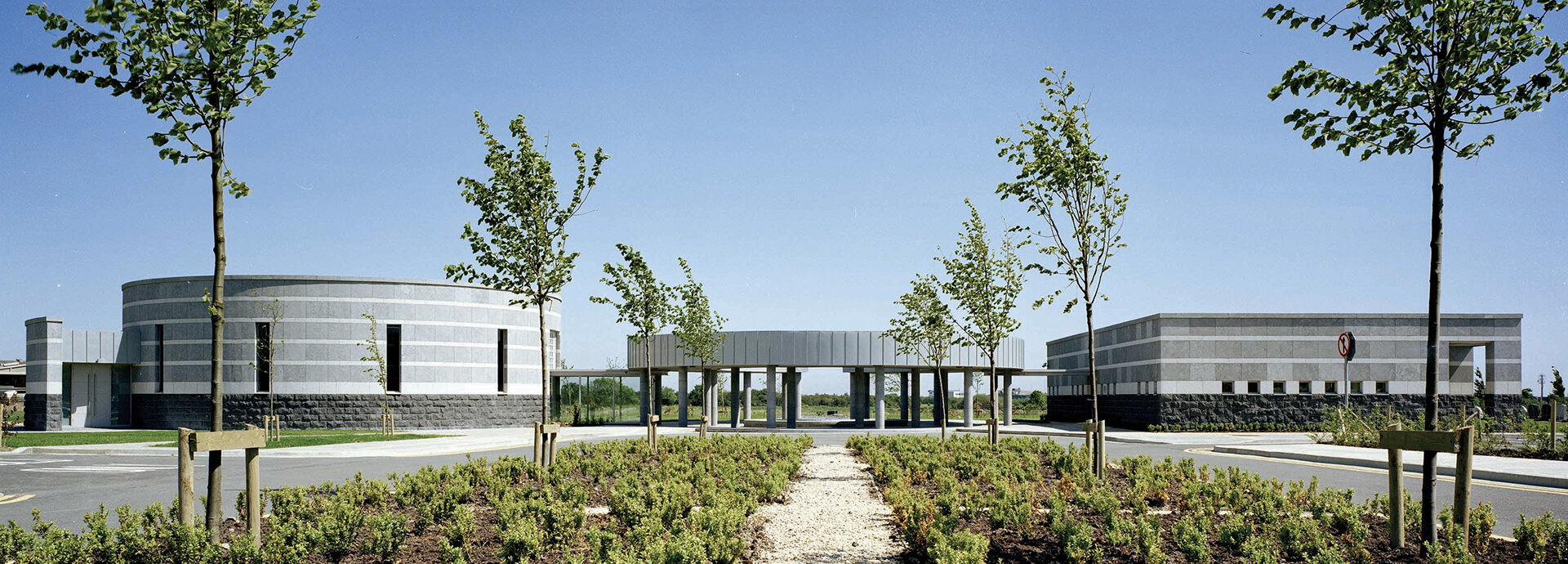
Established in the year 2000, the Cemetery at Newlands Cross fulfils the burial and cremation requirements for west Dublin into the new millenium.

About the cemetery

The new Cemetery forms part of an integrated open space development comprising of 140 acres of parkland, playing pitches, an ornamental lake, and wildflower meadows. The central theme of the landscape composition is the integration of the functions of the cemetery into the activities of the park and the wider community.

Access to the new parkland area is from the existing roundabout along the southern boundary off Belgard Road. This access also serves as an entrance driveway into the cemetery for arrival/set down and car parking. This car park can be used for both park visitors and cemetery users. The car park is off-set along a curving access drive, set in parkland, flanked by weeping silver lime.


*Photo source: www.dctrust.ie

Newlands Cemetery & Crematorium

Ballymount Road
Dublin 24

Phone:+ 353 (0) 1 4592288
Fax: + 353 (0) 1 4592423
Email: newlandscemetery@glasnevintrust.ie

Website: www.dctrust.ie

Newlands Florists

Ballymount Road
Dublin 24

Phone: + 353 (0) 1 4592288
Email: florist@glasnevintrust.ie

Newlands Cemetery Monuments

Ballymount Road
Dublin 24

Phone: +353 (0) 1 459 2012
Email: momuments@glasnevintrust.ie

Palmerstown Cemetery (Dublin, Ireland)

Palmerstown Cemetery (Dublin, Ireland)
The Palmerstown Cemetery was designed as a lawn cemetery, consisting of landscaped graves with smaller black and white marble monuments.

About the cemetery

The parish of Palmerstown (Irish: Baile Phámar), also known as Palmerston, has been known by this name since the twelfth century. At that time, the lands here were held by the Hospital of St. John the Baptist without Newgate, otherwise known as the Palmer's Hospital, from the name of its founder Ailred the Palmer, or Pilgrim.

The Dublin Cemeteries Committee, established by Daniel O'Connell in 1828, has been continuously seeking to open other Cemeteries and Crematoria. In 1978, to meet the needs for the population of Dublin’s south side, Palmerstown Cemetery was opened. Like all the other Cemeteries established by The Dublin Cemeteries Committee after this time, the Palmerstown Cemetery was designed as a lawn cemetery – consisting of landscaped graves, with all graves accessible by paths.

Palmerstown Cemetery is located in a suburban area of Dublin, Ireland, west of the city centre, and it is being used to burry the deceased from the local areas of Palmerstown and Ballyfermot. The cemetery is in sharp contrast to the Victorian Cemeteries at Goldenbridge and Glasnevin, by moving away from the large limestone Celtic Crosses to the smaller black and white marble monuments.


*Photo source: www.dctrust.ie

Palmerstown Cemetery Address

Kennelsfort Road
Palmerstown
Dublin 20
Ireland

Office located at Newlands Cross Cemetery.

Palmerstown Cemetery Contacts

P: + 353 (0) 1 4592288
F: + 353 (0) 1 4592423
E: palmerstowncemetery@glasnevintrust.ie

W: https://www.dctrust.ie/location/palmerstown.html

Opening hours

Mon - Wed: 9.30am to 4.30pm
Thurs: 9.30am to 4.00pm
Fri: 9.30am to 3.30pm

Palmerstown Cemetery Monuments Address

Kennelsfort Road
Palmerstown
Dublin 20
Ireland

Palmerstown Cemetery Monuments Contacts

P: +353 (0) 1 882 6520
M: + 353 (0) 86 331 3432
E: momuments@glasnevintrust.ie

Office Opening hours

Mon - Fri: 8.00am to 5.00pm
Sat: 8.00am to 1.00pm

Getting there

Bus: From City Centre Pearse Street - 25, 26, 66, 67

San Cataldo Cemetery (Modena, Italy)

San Cataldo Cemetery (Modena, Italy)
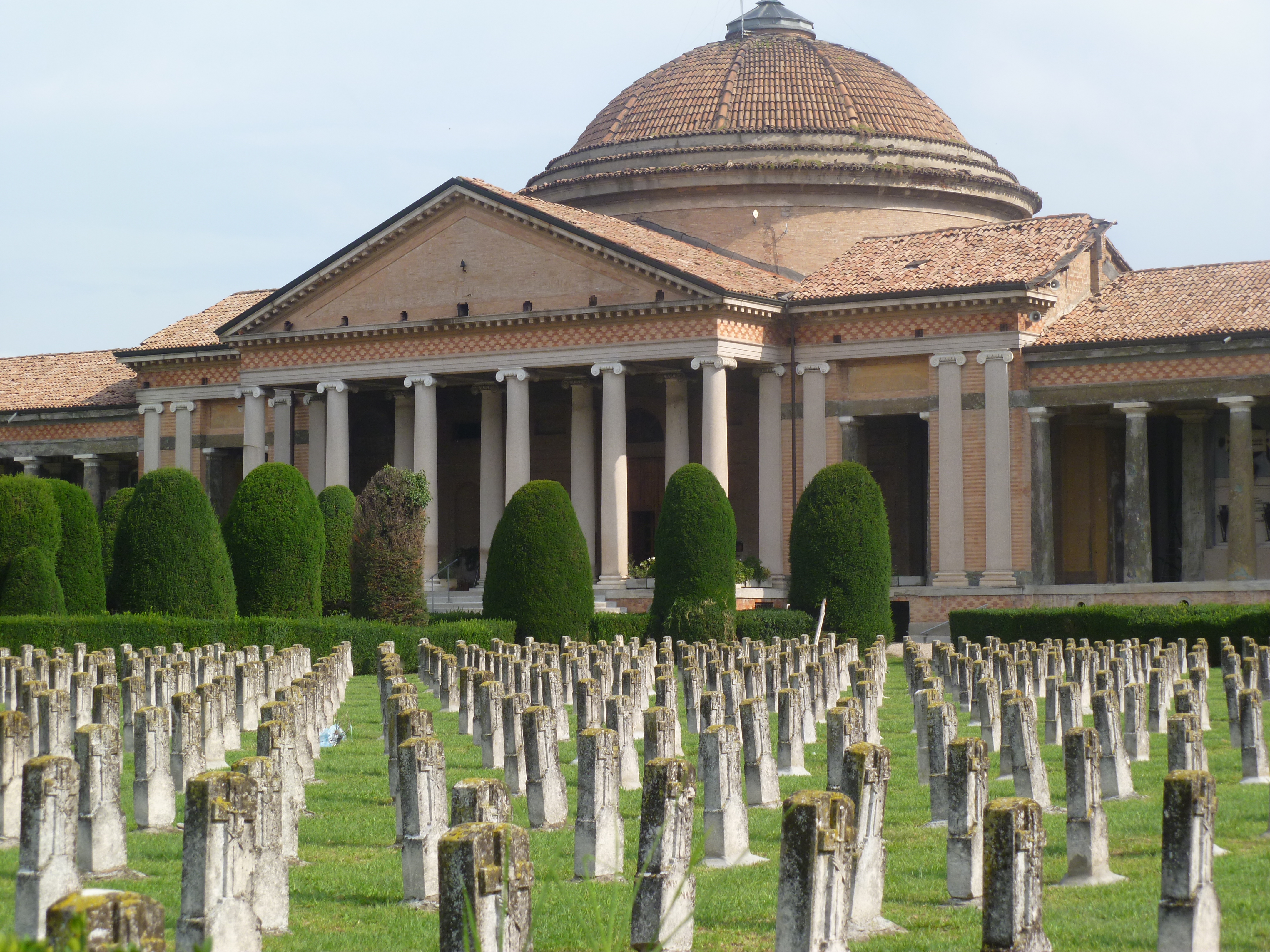
The cemetery of San Cataldo consists both of an ancient and a modern part.

The ancient cemetery

The ancient part of the San Cataldo Cemetery was carried out by the architect Cesare Costa between 1858 and 1876. It contains a lot of handmade artwork of great value.

The modern cemetey

San Cataldo Cemetery (Modena, Italy) The modern part of the San Cataldo Cemetery was built on the basis of the project by the architect Aldo Rossi. The cemetery of Aldo Rossi is an analogical route through the collective images of the "house of the dead".

The building complex is structured in such a way that it confines a wide green space in the center, further marked by a criss-cross of pedestrian paths. The various buildings run parallel to each other towards the central "vertebral" axis. The rhythmic articulation of the openings, framed by the cold neatness of the surrounding walls are to this day interrupted in counterpoint only by the central cubic element destined for the ossuary which, when the works will be completed, will be in visual balance with the conic tower of the common grave. 


*Photo source: old cemetery, new cemetery

Cemetery contacts

San Cataldo Cemetery
Via San Cataldo
41100 MODENA
Italy

Phone: +39 059 334103

Tourist information office

Via Scudari, 12
41100 MODENA
Italy

Phone: +39 059 206660
Fax: +39 059 206659
E-mail: iatmo@comune.modena.it

Web: www.comune.modena.it

Historical Cemeteries of Poggioreale (Naples, Italy)

Historical Cemeteries of Poggioreale (Naples, Italy)
The Poggioreale cemeterial complex experienced a gradual development since the second half of the XVIII century and now covers approximately fifty hectares of the hill by the same name.

Santa Maria del Popolo Cemetery

The component that markes the beginning of the cemetery infrastructural pattern at Poggioreale is the Cimitero di Santa Maria del Popolo, also known as the "366 graves cemetery". It was designed by Ferdinando Fuga, and built in 1762. The cemetery is of extraordinary relevance, as the only known example with cemeterial "Enlightenment buildings".

Santa Maria del Pianto Cemetery

Another basic element of the cemeterial complex in Poggioreale is the Santa Maria del Pianto Cemetery, with the church by the same name -  a XVII century central-plan building, around which, as early as the plague of 1656, corpses were interred.

Monumental Cemetery of Poggioreale

The Monumental Cemetery is the largest (162,873 sqm), most effective and most imposing. It opened in 1838, after several interruptions and some rethinking. The original plan (1825) was designed by Francesco Maresca. After his death, Luigi Malesci (bridge and road engineer) and Ciro Cuciniello (architect for the Royal House) took over.


*Photo source: www.wikimedia.org

Cemetery contacts

Monumental cemetery (Cimitero Monumentale) Via Nuova Poggioreale, 73
I - 80143 Napoli

Tel: +39 081 7957509
Fax: +39 081 7957510
E-mail: ass-periferie@comune.napoli.it

Website: http://www.comune.napoli.it

Tourist Information Office

Azienda Autonoma di Soggiorno Cura e Turismo di Napoli Piazza Plebiscito
1 Palazzo Reale
80132 Napoli - Italia

Phone: +39 081 2525711
Fax: +39 081 418619
E-mail: info@inaples.it

Tourist information websites

Tourist info
http://www.inaples.it

City Portal 
http://www.comune.napoli.it

City buses 
http://www.anm.it

First Cemetery of Athens (Greece)

The First Cemetery of Athens (Athens, Greece)
The First Cemetery of Athens (A Koimitirio Athinon) was founded around 1837, when Athens was also established as the capital city of the modern Greek state.

About the cemetery

The First Cemetery of Athens spreads on the slope of the Ardittos hill, close to the Panathinaiko Stadium. Major Greek figures are buried in the First Cemetery, such as heroes of the Greek Revolution, politicians, poets, artists, etc. 

The style of the cemetery can be traced to the Romantic period. The collection of sculptures hosted in the cemetery can be considered as a most significant and genuine example of the quality attained in marble carving in Greece between 1850 and 1920. Memorial art flourished during the 19th century and marked the rebirth of the new Greek state. All kinds of monuments and ornamental patterns appeared which conveyed the influence of ancient times (stelae, columns, reliefs, sarcophagi, small neoclassical temples). Apart from funerary artworks based on ancient models, some samples can be found of Byzantine and Egyptian patterns, as well as a remarkable number of copper masterpieces.

Address

First Cemetery of Athens
Logginou 3,
Athina 116 36,
Greece

Contacts

Phone: +30 21 0922 1621

Old St. Matthew`s Cemetery (Berlin, Germany)

Old St. Matthew`s Cemetery (Berlin, Germany)
The cemetery was founded in 1856. It is one of Berlin´s most significant graveyards, with more than 60 graves of very important personages.

About the cemetery

Among the famous people buried in this cemetery it is certainly worth mentioning the brothers Jacob and Wilhelm Grimm, the doctor and politician Rudolf Virchow, the educationalist Adolf Diesterweg and the composer Max Bruch.

Many impressive grave architectures and sculptures are of considerable artistic value, created by architects and artist of the Prussian Empire. Some of them are buried here, for example Friedrich Drake, Heino Schmieden and Alfred Messel. 


*Photo source: www.wikimedia.org

Address

Old St. Matthew`s Cemetery
Großgörschenstraße 12-14
D-10829 Berlin
Germany

Contacts

Phone: +49 0307811850
Fax: +49 0307883435
E-mail: kirchhoefe@zwoelf-apostel-berlin.de

Website: www.zwoelf-apostel-berlin.de

Cemeteries route video

Video about the cemeteries route was released these days. Presenting the European cultures, resting in cemeteries.

Cemeteries list, map and publishing

During the AGM and in last few weeks many questions were raised about publishing of your significant cemeteries in the website of ASCE. We have examined two important factors about this:

1. Current status of memberships and databases
2. Best technical possibilities to include and later update the info about cemeteries

Regarding status of memberships, it is important to stress out that current databases (lists of cemeteries, organizations and partners) were a bit outdated. Since the membership has grown significantly in the past few years, many new situations have developed. Some cemetery changed status, management, many people changed their email address, many companies have changed the website.


Since we expect further growth in membership, We have found it important to create a system that will simplify management of all the content regarding cemeteries. No less we find it important to make this data avaliable for research and simple to archive.

With this in mind we have decided for a system of dispersed content. Each member (organization that manages the cemeteries and pays the membership) will receive access to the Google map describing it's cemetery. Access will be granted to the person that is recognized as the administrator within member's organization. If there are more cemeteries a member manages, they can add cemeteries to the map. ASCE secretariat will build first map upon the information we currently have (in the website or otherwise). Each member can then update that information on the map.

After a member updates the map, we will import the map to the main map of Significant Cemeteries of Europe and it will be presented at the map.

We will do the same with photo material. We will produce albums of photos for each cemetery and members administrators will receive access to upload photos and further manage the album (edit annotations, photo geo-position, authors,...). After the albums are updated, we will post them on the website, as well as use the photos from albums for other occassions.

Beside creating a well-maintained content base, we expect following benefits to the members:
  • Maps that can be used anywhere in the internet
When you will finish creating your map, you will be able to use it anywhere - in your website, website of your local tourism office or other relevant website. No additional costs or work. Simply copying the iframe code will be enough.
  • Photos that can be used anywhere in the internet
No more searching for or sending of photos via email. You will easily send the album or particular photos link to those that should use them. Photos can be easily used in other websites, like city's tourism website. And best of all, you are in charge of the photos.


CemeteriesRoute video

Many of members have asked us these days about the progress and availability of the video and promotional magazine of the Cemeteries Route. The project team has informed us that the materials will be available this week in the route's website.

Updating ASCE database

We are in a process of renewing the databases of ASCE. Especially since the association has grown very much in recent years and there are a lot of new members, partners, associates and different projects members, we would like to have a more clear database to easily manage all the realtionships.

Therefore in the next few weeks we will contact you to provide us some further details.

Updating ASCE website


We are in a process of renewing the website communications, as well as establishing a simple but comprehensive online presence. One of the main problems in the past was managing the content of the website. Even though it was built on a very good open source system, editing required a lot of work. All the members were also included in a built-in Google map, but were later not added or updated.

As it has proven during past few weeks, this system is also quite hard to transfer from one country to another - not because of technical difficulty, but because of the learning curve in managing the system by the editors.

This problem can not be overridden just by choosing a different content management system, but by also changing the organization behind it and focusing on importance of each aspect of the website.

Therefore we have decided to focus the web communications in future on:
  • Current news, updates and project information
  • Promoting main (core) projects of ASCE
  • Establishing a cemeteries database with dispersed managing
Renewal plan:
  • Establish simple news and updates blog (done)
  • Establish cemeteries database with dispersed managing (end of November)
  • Arranging all together into ASCE designed website (December)
During the process we will send you detailed information on how to simply include your cemeteries into the system and they will be shown in different segments of the website.