Showing posts with label Porto. Show all posts

The Graveyard of Our Lady of Lapa (Porto, Portugal)

The Graveyard of Our Lady of Lapa (Porto, Portugal)
Lapa Cemetery is the oldest operating private Catholic cemetery in Portugal, founded in 1833 by the Lapa brotherhood.

About the cemetery

Founded in 1833 by the Lapa brotherhood, the Lapa Cemetery is the oldest operating private Catholic cemetery in Portugal, established two years before the Portuguese law on public cemeteries. Initially, it functioned provisionally on a plot of land at the back of its church, with the first burial in the definitive cemetery occurring in 1836. The main construction efforts, spearheaded by businessman João da Silva Ribeiro, took place between 1836 and 1840, and the cemetery was consecrated by 1838.

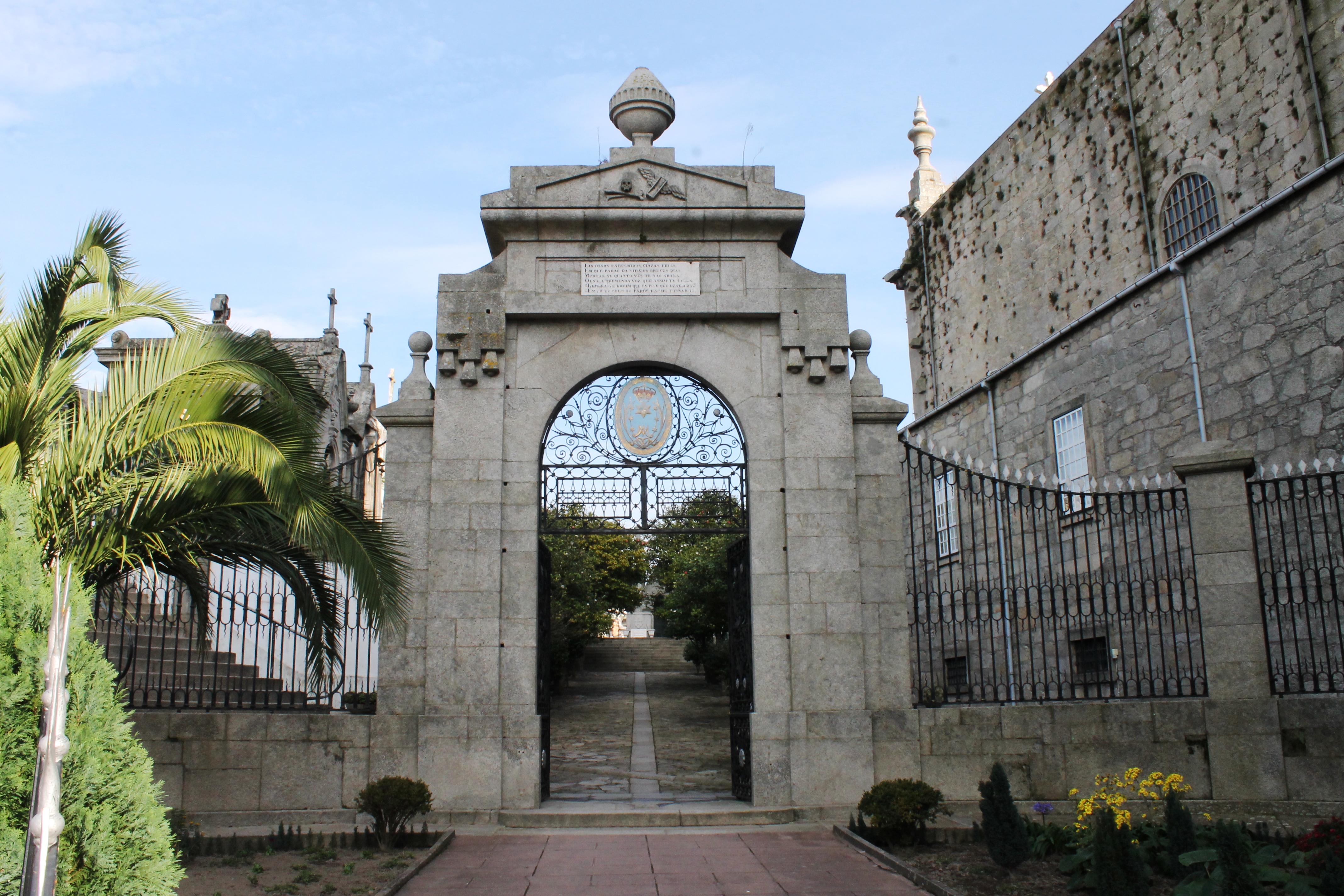
Due to its strong social acceptance, particularly among the wealthier population, the cemetery saw rapid growth. A little over ten years later, the need for expansion arose, and the cemetery was enlarged. Two decades later the cemetery had to be enlarged again and the works were concluded in 1874. The entrance gate was then moved from its original place to where it is today. 

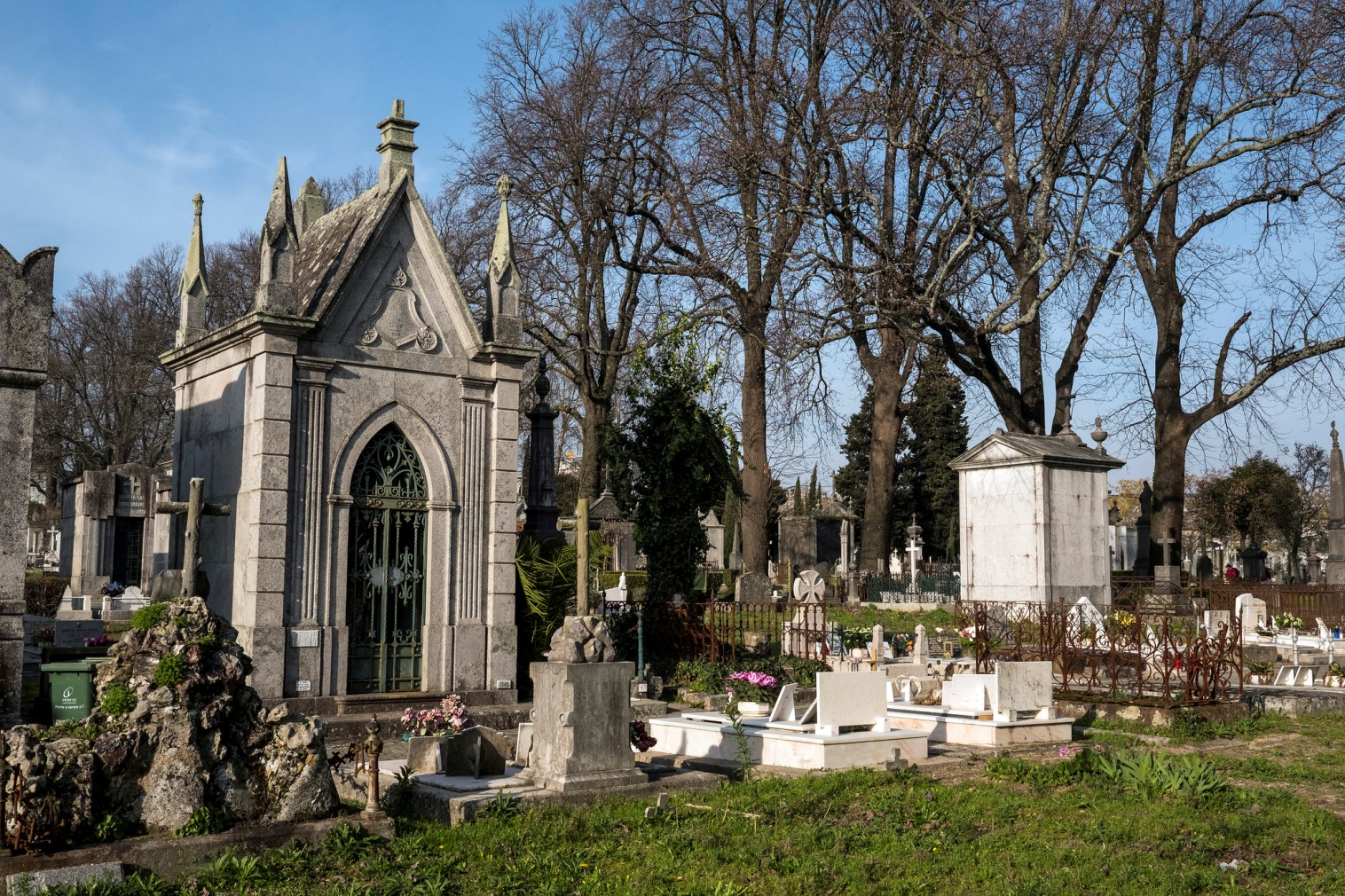
Even though it is not a large cemetery, the Lapa Cemetery holds immense historical and artistic significance, particularly in northern Portugal. Some of the first Portuguese romanticist funerary monuments were erected here from 1839 onwards. Several of its most pompous tombs served as inspiration for other cemeteries over the decades. In fact, from its establishment until the end of the 19th century, the Lapa Cemetery was the favourite burial place of the Porto elite.

The establishment of the cemetery is also linked to the important military event of the Siege of Porto (1832-1833), which played a crucial role in the transition to a constitutional monarchy. Notably, the king responsible for this change, Pedro IV, donated his heart to the city, and a monument inside the church next to the cemetery houses this heart, making the entire complex a highly relevant historical site. 

Today, the Lapa cemetery attracts many local and foreign visitors. Guided tours, events, and school visits are being organised at the cemetery.

Cemetery architectural and landscape design

The cemetery was designed as a sort of "campo santo", with the central plots for monuments in the form of pedestals, obelisks, or others, and the edges for vault-chapels, which thus enclose the space. However, unlike the typical Italian "campo santo" with porticoes and the most important tombs beneath them, in the Lapa cemetery the construction of the vault-chapels on the edges of the cemetery was left to the discretion of the wealthiest families, resulting in a lack of uniformity and, at the same time, a greater diversity in architectural and iconographic terms. This model of cemetery landscape, which was first applied in Portugal precisely in the Lapa cemetery, was then adopted in dozens of other cemeteries in the northern part of the country.

However, the extensions made to the Lapa cemetery in the 1850s and 1870s did not follow this model: in the upper division of the cemetery, monuments are all in rows, with no intervening paths, and may be small chapels or take on other types (this type of layout is an originality of the cemetery and is not found in any other cemetery in Portugal); in the third division, which corresponds to the final enlargement of the cemetery, monuments are aligned with the streets, as is the case in the two large municipal cemeteries in Porto. Eventually, this final model would also contaminate the oldest part of the cemetery.

By 1910 the cemetery had almost come to a standstill, due to the impossibility of making a new enlargement. With the abandonment and subsequent decay of some of the tombs, namely those whose concessionary families had been extinguished, new tombs were erected at the cost of the demolition of other older ones. Throughout almost the whole of the 20th century there was an impoverishment of the Lapa cemetery. Even so, almost all of its largest tombs remained. The alterations that several of them suffered were due to the concession to other families, leading to the disappearance of the old inscriptions and, in some cases, of portraits, as well as funerary artefacts. In other cases, the tombs their original iron railings.

Address

Largo da Lapa no.1
4060-069 Porto
Portugal

Contacts

Cemetery
Phone: (+351) 223 289 317
Email: cemiterio@irmandadedalapa.pt

Management
Phone: (+351) 225 502 828
Email: geral@irmandadedalapa.pt

Website: www.irmandadedalapa.pt/

Basic data

Year of first burial: 1833
Cemetery area: 1,35ha
Number of graves: aprox. 320
Number of burials: aprox. 35.000

Managing organization: Venerável Irmandade de Nossa Senhora da Lapa

Cultural Cycle of Porto Cemeteries 2019

Porto Cemeteries
Numerous cultural activities and events will take place at Porto Cemeteries from May to October 2019.

The first event

The 14th Cultural Cycle of the Porto Cemeteries will begin at the British Cemetery on May 25, 2019, at 3:30 p.m. Historian Joel Cleto will lead a guided tour to commemorate the "210 year anniversary of the birth of Baron de Forrester".

This will be the first of a series of cultural visits to Porto cemeteries, which will take place until October 12, 2019.

Other activities

The new edition of the initiative will include: night tours guided by Francisco Queiroz; music tours conducted by Hélder Macedo Sampaio; theatrical performances by Manuela Cambotas and visits on the theme of  architecture with Ana Maio. Also to be highlighted is a visit entitled "100 years of the birth of Sophia de Mello Breyner Andresen" in the Agramonte Cemetery.

In addition, don`t miss the Raids Photographs Night, which will result in an exhibition with the 10 best works, chosen among the photographs of the participants. Drawing workshops are also planned with Mário Linhares and music concerts about Theaters in Porto.

Along with the discovery and exploration of the two municipal cemeteries (Prado do Repouso Cemetery and Agramonte Cemetery), where most of the activities will be concentrated, the Paranhos Cemetery will also be included this year.

You can find the entire programme HERE.

More information

For more information, visit the website www.cm-porto.pt/ciclos-culturais or call the number +351 225 320 080.

With simultaneous translation in Portuguese Sign Language, the visits will be free, but subject to pre-registration.


WDEC 2015 - Culture cycle of Porto Cemeteries

Agramonte Cemetery (Porto, Portugal)
During the Week of discovering European Cemeteries 2015, several guided tours and other events will take place at the Porto Cemeteries.

The Port and Its Photographers II

Guided tour "The Port and Its Photographers II".

Prado do Repouso Cemetery (Porto, Portugal)

Prado do Repouso Cemetery (Porto, Portugal)
Prado do Repouso Cemetery was opened in 1839, as the first public cemetery in Porto. Today, it is considered as a true open-air museum.

The history of burials in Portugal

The habit of turning the inside of churches into cemeteries dates back almost to the beginning of Christianity, although it was often considered an abuse, since it implied the burial of sinners alongside relics of saints. However, the Catholic Church was never able to prevent this accomplished fact.

The demographic pressure and sanitation issues, in the ideological context of the Enlightenment, were the main factors that made some voices rise against inhumations inside churches, from the 18th century onwards. In Portugal, the first legislative attempts to stop burials inside churches were not successful, mostly because the laicisation of the Portuguese society was quite slow in comparison with some other European countries. Thus, the official creation of the Portuguese public cemeteries occurred only in 1835. However, there were previous experiments and Porto, as was common at that time, was the first to establish cemeteries outside of churches.

In 1833, the Porto Siege generated an extremely difficult sanitation situation in the city and led to an outbreak of a very deadly epidemic: the cholera morbus. Burial sites rapidly filled up, and the situation grew worse due to the soldiers who died fighting the Miguelists.

The Prado do Repouso Cemetery

In December of 1839, the first public cemetery in Porto, Prado do Repouso, was inaugurated, although for about two decades it was not very “modern”. Indeed, on this vast estate, partially transformed into a cemetery, only the poorest inhabitants of Porto were buried. The wealthy and more “enlightened” citizens preferred to be buried in the Lapa private cemetery. If they were more “conservative”, maybe they would prefer being buried in the cemeteries of several other Orders and Brotherhoods that existed in the city. These had cemeteries outside of their churches (partially complying with the 1835 decree), but still next to them and with no modern spatial arrangement.

Considering all these factors, the municipal public cemetery of Prado do Repouso couldn’t possibly become any greater. Local authorities have tried, for several times but unsuccessfully, to stop the privilege of the Orders of having private burials. For this reason, there were serious riots in 1851.

The Private Sections of Municipal Cemeteries

Following the 1855 epidemic, all the cemeteries belonging to the Brotherhoods had to be reopened, although the maintenance of those in no condition was increasingly less consensual. In a lengthy and difficult process, each Brotherhood made a deal with the Porto City Council to acquire private sections in the municipal cemeteries.

The Misericórdia do Porto (Brotherhood of Mercy) was the first to do so, acquiring a lot in Prado do Repouso for that purpose. It was followed by the Ordem do Terço e da Caridade (Order of the Rosary and of Charity), and by the Confraria do Santíssimo Sacramento de Santo Ildefonso (Fraternity of the Blessed Sacrament of Saint Ildephonse).

Cemetery location

Largo do Padre Baltazar Guedes (South and main entranc)
Largo Soares dos Reis (North entrance)
4300-059 Porto
Portugal

Contacts

Tel. +351 22 5371485
Fax: +351 22 5379925
Email: cemiterio-pradodorepouso@cm-porto.pt


*Photo source: https://visitporto.travel/pt-PT/poi/5cd04b4cf979e000011d98f1#/

Cemetery of Agramonte (Porto, Portugal)

Cemetery of Agramonte (Porto, Portugal)
The resting place of a number of eminent figures, such as count Ferreira, sculptor Henrique Moreira, archaeologist António Augusto da Rocha Peixoto, cellist Guilhermina Suggia, filmmaker Manoel de Oliveira and others.

About the cemetery

Only in 1855 does the situation of the Porto cemeteries begins to change, as consequence of the second great cholera epidemic. The civil authorities managed to close the private cemeteries, which were in bad condition, and simultaneously had a new municipal cemetery built rather hastily - Agramonte.

In a first stage, this cemetery was mostly used to bury the cholera victims. Since there were two municipal cemeteries, the population began to see Prado do Repouso as a more dignified cemetery, considering it wasn’t improvised as Agramonte was (whose chapel was made of wood). Furthermore, some “bold people” had already erected monuments in Prado do Repouso.

The Private Sections of Municipal Cemeteries

Following the 1855 epidemic, all the cemeteries belonging to the Brotherhoods had to be reopened, although the maintenance of those in no condition was increasingly less consensual. In a lengthy and difficult process, each Brotherhood made a deal with the Porto City Council to acquire private sections in the municipal cemeteries. With the restructuring of the Agramonte Cemetery, around 1869, other Brotherhoods of the city established their private cemeteries there.

Of the private catholic cemeteries already in existence, only those of Lapa and Bonfim remained in their own location, because although they were not public, their design was urban and modern (especially that of Lapa), standing on elevated ground and reasonably away from houses. Porto now has eight cemeteries with private sections, which is unique in the country.

Address

Rua de Agramonte (main entrance)
Rua João Martins Branco (side entrance, opened only on special occasions)
4150-031 Porto
Portugal

Contacts

Phone: +351 22 6066604
Fax: +351 22 6067583
Email: cemiterio-agramonte@cm-porto.pt

Other information

Tourist information
http://www.portoturismo.pt/pt/default.asp

City Hall site
http://www.cm-porto.pt/