Showing posts with label Eastern cemetery. Show all posts

3rd memorial evening at Eastern Cemetery in Innsbruck

3rd memorial evening at Eastern Cemetery in Innsbruck
In October 2024, the third event of the "Quo Vadis Fundamentum" series took place at the Eastern Cemetery in Innsbruck, Austria.

Memorial evening for Marie von Ebner-Eschenbach

The "Quo Vadis Fundamentum" initiative, launched in 2022, aims to commemorate remarkable individuals who made significant contributions to humanity through memorial evenings at the Eastern Cemetery in Innsbruck.

Following the successful memorial evenings for Edith Stein in 2022 and Charlie Chaplin in 2023, this year's event honored the renowned writer Marie von Ebner-Eschenbach.

The evening attracted many attendees, who were captivated by the performances of actresses Bernadette Abendstein and Petra Knoflach. They brought Marie von Ebner-Eschenbach's words to life through powerful readings of her works. The readings were beautifully enhanced by Michael Cede's flute performance, which created an atmosphere of inspiration and reflection.

Some of Marie von Ebner-Eschenbach's quotes shared during the event included:

  • "If everyone would help each other, everyone would be helped."
  • "Know, those who preach you hate will not save you."
  • "A judgement is easier to refute, a prejudice never."
  • "The right of the stronger is the greatest wrong."
  • "You can’t inspire the mindless, but you can fantasize them."
  • "You have to do good so that it will be in the world."

Photos of the event

WDEC 2024 at the Eastern Cemetery in Oslo

Eastern Cemetery in Oslo
On May 30, 2024, a special event will be held at the Eastern Cemetery in Oslo, where current projects related to environmental sustainability will be presented.

Event significance

The Cemeteries and Burials Agency of Oslo would like to inform the public about their work towards becoming more sustainable and how they meet future climate challenges. By arranging this event, they want to:
  • Create acceptance and attitude change toward transforming cemeteries into wild parks rather than green well-groomed park facilities.
  • Get feedback on the design of gravestones that collect rainwater and emit this water to the grave’s flower bed.
  • Show how they reuse gravestones.
  • Raise their reputation as a locomotive in the industry.
  • Emphasize their responsibility as key contributors to the sustainable management of important city resources.
  • Show that new things can be tested out also in a “conservative” industry.
  • Share their expertise.

Current projects

Ongoing projects that are planned to be present:
  • “Water Fear 2030” project (gravestones that collect rainwater and emit water to the grave’s flower bed)
  • Rainwater collection project at Grefsen Cemetery (both the water tank project and the construction of the swamp area/rain bed)
  • Use of pollinator-friendly plants and test field (flower bed)
  • Flower meadows
  • Other water-saving measures
  • Dead tree trunks
  • Reuse of gravestones
  • Zero-emission equipment

Time and location of the event

Time: Thursday, May 30, 2024, from 11:30 am and throughout the day
Location: The presentations will take place in the Large Chapel at the Eastern Cemetery, and in the areas outside the chapels.

The project Water Fear 2030 will be available at the Eastern Cemetery the whole week (and probably till next summer).

If you have any questions about the event, please contact Wenche Madsen Eriksson at wenche.eriksson@gpe.oslo.kommune.no or + 47 957 05 426.

Examples of gravestones that collect rainwater


*Cover photo source: www.oslo.kommune.no

Events at cemeteries in Rennes

Eastern Cemetery (Rennes, France)
From October 28 to November 1, 2022, the 6th edition of the "Toussaints Musicales Rennaises" took place at the cemeteries in Rennes, France.
A rich and varied program highlighted the beauty of cemeteries in Rennes with:
  • tours in horse-drawn carriages at the Eastern Cemetery (every day from October 28 to  November 1),
  • Jazz concert with the "Singing in the Rennes" trio at the Eastern Cemetery (on Sunday, October 30, 2022, and Tuesday, November 1, 2022, at 3 p.m.),
  • Baroque Music Concert with the quartet "La Pie qui Joue" will perform "Le Souffle et l'Oiseau" at the Northern Cemetery (on Tuesday November 1, 2022, at 3.30 p.m.)
The original flyers (in French) for these events are accessible HERE.

Eastern Cemetery (Rennes, France)

Eastern Cemetery (Rennes, France)
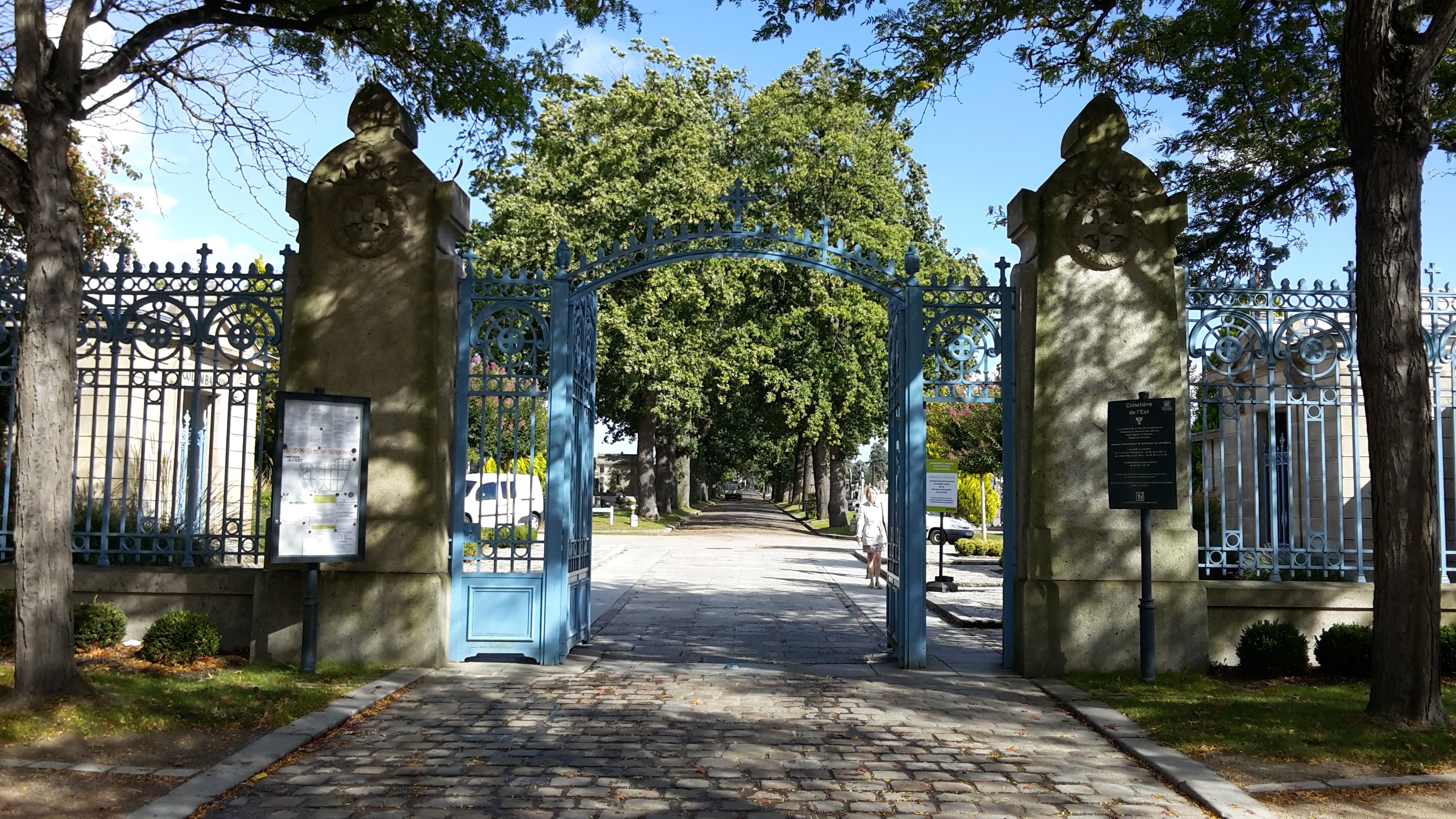
The Eastern Cemetery (“Cimetière de l’Est”) was created in 1887 and it is the largest cemetery in the city of Rennes.

About the cemetery

This contemporary cemetery, where diversity and innovation are keywords, is a true reflection of the modern city of Rennes, its inhabitants and also developments of the funeral practices since the end of the 19th century. The architectural and sociological perspectives aspects of this location are interesting.

In addition to the interesting architectural and sociological aspects of the cemetery, the military heritage is also very important. The German military section and the Commonwealth section show the European dimension of the Eastern cemetery. Every summer, many foreign tourists come to visit these graves.

Furthermore, some important personalities are buried at the Eastern cemetery. One of them is Guy Parigot, a well-known actor theater producer who had a brilliant career in Rennes, in France and also worldwide, mostly in the United States and Canada.

In the middle of the cemetery, one can see a central way planted by bicentenary oak trees on each side, which were offered by the Tsar Nicolas II of Russia. At the main entrance of the cemetery, a room is available for families who want to pay their respect to the deceased and to organize civil funerals.

Basic data

The Eastern Cemetery is owned by the City of Rennes and managed by the City Hall of Rennes and the Funeral Department. At present, it isn’t protected, except through the Eco Label - a quality label for ecological green spaces.

The cemetery covers 163.142 m2 of land and includes 29.000 graves, of which 2.000 are military graves. There are also 1.600 cinerary niches (1.000 places in columbarium, 500 urn tombs, and 100 cinerary places).

The most representative nationalities buried at the cemetery are French and Maghreb (mainly Algerian and Moroccan). The predominant religions present are Catholic, Islamic, Jewish and Buddhist.

Important graves and monuments

The Rallé Chapel
The funeral chapel of Rallé family was created in 1967. It was designed and built by the architect Charles Rallé, son and brother of building contractors, for the family’s burials.

The French Remembrance’s monument
The monument of the national and local association French Remembrance (in French “Souvenir Français”) was created in 1901. This monument was constructed thanks to an initial public offering. It is the work of the architect L. Balle and the marble worker V. Folliot. This is an ossuary for the 1870 War Veterans and also the soldiers deployed in Rennes, died before the First World War. This monument of 31 m2 is a major component of the Eastern cemetery. In front of it, there is a central way bordered by bicentenary oak trees. Behind it, the French remembrance space protects more than 2.000 burials of fallen soldiers of the World War 1.

The Small eastern lighthouse
The small eastern lighthouse (in french “petit phare de l’Est”) was created in 2011.This space mainly receives the remains of lifeless children. It has been designed and built by Stéphane Bernigaud, plastic artist, in collaboration with the Funeral Department of Rennes. On the small eastern lighthouse, there is a fresco with some volutes and naïve arabesques. In this place there are also a tree with tapes, a box to receive some letters, a little memory column. All of those items have been created for deceased children, and for the mourning of their family.

The common grave
The common grave of the Eastern Cemetery was created in 2006. It is the final resting place for much deceased people. This ossuary was inaugurated in October 31, 2006. Philippe Le Ray, a blacksmith and a carver, he created this masterpiece named “The flower of life” (in French “La fleur de vie”), in cooperation with Anne Nazart, a landscape architect who designed the space around it. The Flower of life lies on a blue and red checkerboard made of shale. It is more than 4 meters high and represents all the dignity and respect for their dead people. This creation was promoted by The “Dignity Cemetery” Collective (in French Collectif “Dignité Cimetière”), and also by Rennes city.

Jean Boucher’s grave
The burial place of the sculptor Jean Boucher was created in the 20th century. In this grave are the human remains of the famous sculptor: Jean Boucher (1870-1939), who won the Second Rome Prize of sculpture in 1894 and 1898. His work was marked by an impressive creation of war memorial dedicated to WW1 soldiers, which are located in neighbour communities of Rennes as also in Paris, Verdun, Lyon and Guernsey…Jean Boucher was also popular for teaching. He tutored some famous sculptors such as Paul Belmondo. This grave is ornate by two bronze sculptures of his creation.

More on this LINK.

Innovative spots at the cemetery

  • The White Garden, unique in France, with a successful landscape in terms of meditation for cremated lifeless children.
  • The Common Grave is now seen as a real place for meditation, and not only for an unwelcome place for families.
  • The creation of a "river of dispersal" and a cinerary space with columbaria (influenced by Brittany Region), urn tombs and cinerary fields, is being elaborated. This area is planted with several kind of trees.

For visitors of the cemetery

The virtual tour allows seeing the graves of some personalities, with texts, photographs, videos. The website dedicated to cemeteries of Rennes. It will have a digital platform, online databases, preview of locations and detailed routes, information about funeral services, news… The first online databases version will become operational in the middle of 2015. In its second version, the website shall be provided for e-payment. By the end, there will be a virtual meditation of the dead. For already 15 years, the tourist office of Rennes City offers guided-tours inside the Eastern Cemetery to allow visitors to discover this location.

Programmes of research, conservation and preservation

  • A Heritage census of the Eastern Cemetery is being implemented by the city of Rennes.
  • Gaëlle Clavandier, professor at Saint-Etienne University, and Philippe Charrier, scientist at the CNRS of Lyon ("Centre Max Weber" in Lyon), as part for their research about perinatal bereavement, have contacted the city of Rennes, in relation to the White Garden. With the virtual tour, this project was presented in their class.
  • The student Rozenn HUAULT (University of Rennes 2), in 1989-1990, has written a thesis in sociology: "Life in the Eastern Cemetery of Rennes".
  • In 2007, Guillaume Perrette has obtained a specialty certification "Management of ornamental trees", with his "Analysis of arboreal heritage of the Eastern Cemetery".
  • The Eastern Cemetery is listed on the websites www.tournagesbretagne.com and www.filmfrance.net

Cemetery contacts

Cimetière de l’Est
Place du Souvenir Français
35000 Rennes
France

Tel: (+33) 2 23 62 16 00

Other contacts

Nathalie Bidan (in charge of Funeral heritage)
Address: Northern Cemetery, 36 avenue Gros Malhon, 35000 Rennes, France
Tel: (+33) 2 23 62 10 15
Email: n.bidan@ville-rennes.fr

Eliane Ammi (Funeral Department co-manager, in charge of digital innovation)
Address: East Cemetery, 1 place du Souvenir Français, 35000 Rennes, France
Tel: (+33) 2 23 62 16 00
Email: e.ammi@ville-rennes.fr

Patrice Quénot (Funeral Department manager)
Address: City Hall of Rennes, Place de l’Hôtel de Ville CS 63126, 35031 Rennes, France
Tel: (+33) 2 23 62 10 10
Email: p.quenot@ville-rennes.fr

Eastern Cemetery (Innsbruck, Austria)

Eastern Cemetery (Innsbruck, Austria)
Today, Eastern Cemetery covers an area of approximately 67.700 m2.

About the cemetery

The Eastern Cemetery was built according to the plans of Eduard Klingler between 1912 and 1913

In November 1915 new burial grounds for fallen soldiers were built beyond the cemetery walls to the south and west, and in 1930 these were integrated into the Eastern Cemetery in Pradl.

In 1985 the cemetery was expanded generously towards the southwest with a new sector (Eastern Cemetery 2). The consecration hall is decorated with Nazarene paintings and a painted coffered ceiling.

The soldiers' chapel, which is located in the south of the cemetery, was built in 1916 according to the plans of Theodor Prachensky.

Some of the other important gravesites are:
  • Grave of the lonely - used for the burial of single people or those who want an anonymous grave.
  • Children's field - used for the burial of babies and small children.
  • The bomb victims' grave - contains the remains of 108 victims of air raids in World War II.
  • The anatomy monument - memorial to the persons who donated their bodies to the medical and scientific purposes.


*Photo source: www.wikipedia.org

Cemetery Address

Kaufmannstraße 1 (old part)
Wiesengasse 100 (new part)
Innsbruck
Austria

Cemetery opening hours

November to February: 7.30 - 17.00
March to October: 7.30 - 18.00
April to September: 7.30 - 19:00

Administration Contacts

Kaufmannstraße 1
Innsbruck
Austria

Tel.: 0512/5360-7145

Malmö Eastern Cemetery (Malmö, Sweden)

Malmö Eastern Cemetery (Malmö, Sweden)
The Eastern Cemetery is the largest cemetery in Malmö. Both landscape and buildings were designed by the renowned architect Sigurd Lewerentz.

About the cemetery

The Malmö Eastern cemetery was inaugurated in 1921. The architect Sigurd Lewerentz dedicated a large part of his life to the Eastern Cemetery, creating a prime example of Swedish architecture and its development over time.

The ridge, Hohögsåsen, divides the cemetery into two architectural styles. South of the ridge, the architecture is strictly regular with cut hedges and form trees, while the terrain north of the ridge has invited a design with more free-growing plants and continuous lawns. 

While strolling through the cemetery you will notice the chapel, the crematory, the bell tower and the lush landscape itself,  all designed by Lewerentz. However, his most famous work in the cemetery is probably the flower kiosk -  a simple concrete house where the windows are attached with black sealant that attracts. It was completed in 1965, and was Lewerentz’s last work before he passed away in 1975.


Contacts

Swedish federation of Cemeteries and Crematoria
Sveavagen 116
10432 Stockholm
Sweden

E-mail: kansli@ignis.se
Tel: +46 81 50540
Fax: +46 86 128036

Tourist information

Tourist Information about Sweden House
P.O. Box 7542 SE-103 93
Stockholm
Sweden

Tel: +46 8 789 24 00
Fax: +46 8 789 24 50