Showing posts with label case study. Show all posts

National Pedagogy of Memory Programme in Budapest

Pupils around the Kossuth Maosoleum in the Fiumei Road Cemetery
Case study of the National Pedagogy of Memory Programme at the Fiumei Road Cemetery and the National Park of Mourning in Budapest, Hungary.

About the Programme

The National Pedagogy of Memory Programme is a comprehensive, nation-level educational initiative in Hungary operating at the intersection of experiential learning, history education, and cultural identity. Implemented through a strategic partnership between the National Heritage Institute (NÖRI) and the Klebelsberg Centre, the programme spans 53 national and historical memorials.

The programme directly challenges the common public perception of cemeteries as static spaces of mourning. Instead, it reframes them as dynamic "open classrooms" and cultural landscapes where history comes alive through individual human stories.

For more comprehensive information about the initiative, please visit the official page of The National Heritage Institute.

Case Study

The complete case study is fully accessible on the European Cemeteries Route website.

The published materials encompass the three-level pedagogical methodology, academic attendance figures, detailed 5-point scale statistical evaluations from teachers and students, as well as qualitative student testimonials and multimedia resources.

Event video overviews are also featured here:


Funeral arrangements for minorities and migrants

Jewish Cemetery
Short presentation of the project "Cemeteries and Crematoria as public spaces of belonging in Europe: a study of migrant and minority cultural inclusion, exclusion and integration".

About the research

This HERA-funded CeMi project has researched the issue of cemeteries and crematoria not being inclusive enough regarding minorities and migrants in a modern multicultural Europe. The aim was to find possible solutions for this situation and present lessons for policy makers, politicians, and stakeholders at all levels, that will help to build more inclusive and heritage-sensitive communities.

The study was carried out on the example of 6 European countries: Ireland, Luxembourg, the Netherlands, Norway, Scotland, and Sweden but it could certainly be applied to many other countries in Europe and the world.

You can find out more about the project at this LINK.

Presentation of the results

A public presentation of the study will be held on November 17, 2022, from 1.00 to 2.30, at the Netherlands House for Education and Research (NETH-ER), 22, rue d'Arlon, 1050 Brussels.

The presentation will include the final report on funeral arrangements for minorities and migrants in the aforementioned countries as well as some recommendations for future improvements.

The individual articles are available HERE.

The number of places at the presentation is limited so registration is required.

Animation video about this topic

Researchers worked with animator Stacy Bias to provide an overview of different religious and secular practices in cemeteries and crematoria. The animation video seeks to highlight that the enablement of different ritual and spatial requirements is important for the provision of inclusive public cemeteries and crematoria.


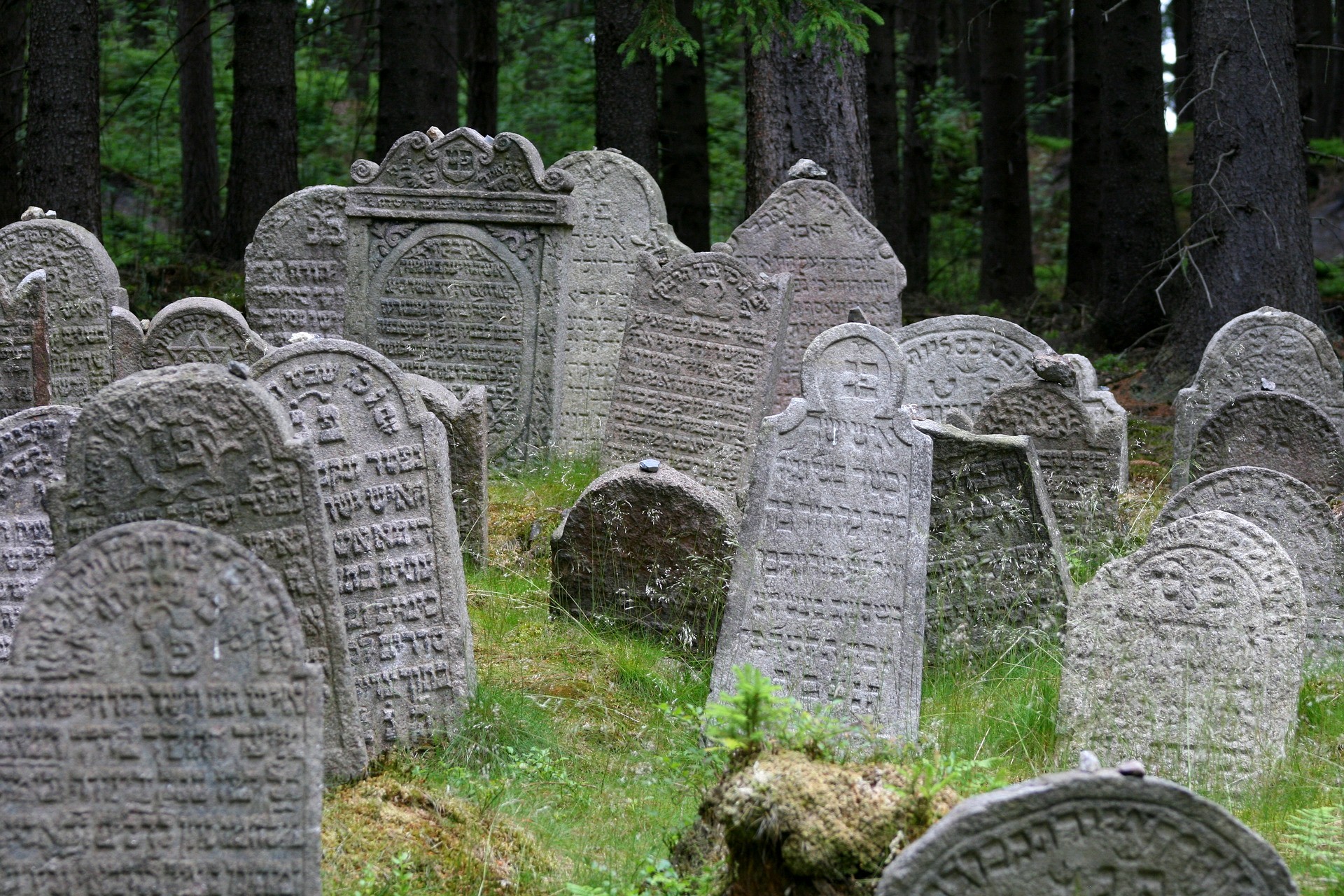
*The cover image is symbolic. Source: Pixabay

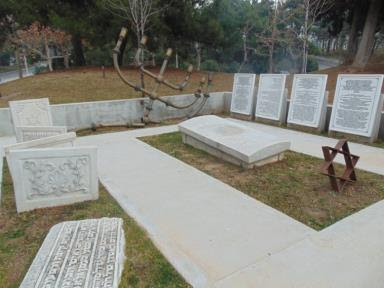
The evolution of the landscape of the Old Jewish cemetery of Thessaloniki: an extreme case of reusage

An interesting case study about the Old Jewish cemetery of Thessaloniki in Greece that was presented at the AGM 2019.
The Old Jewish cemetery of Thessaloniki

Introduction

A landscape can change as radically as to be destroyed and reconstructed even more than once.

Such is the case of the landscape of the Old Jewish cemetery of Thessaloniki in Greece. At first, during the German occupation, the cemetery was destroyed, and afterwards, the area became a large portion of the Aristotle University of Thessaloniki (AUTH).


You can find the original poster with the case study HERE.

Author: Angelina Lagou (Student of Geography at the Harokopio University of Athens)