Showing posts with label Portugal. Show all posts

Lisbon's 4th Cultural Week in Cemeteries

Prazeres Cemetery (Lisbon, Portugal)
From 18 to 26 October 2025, guided tours, thematic walks, night visits, educational workshops, and other engaging activities will take place at Lisbon's cemeteries.

About the event

From 18 to 26 October 2025, Lisbon will host the 4th Cultural Week in Cemeteries, reaffirming the city’s cemeteries as vibrant spaces of memory, heritage, and cultural exchange. Organised by the Lisbon Municipal Cemeteries Division, the initiative combines tradition with innovation, offering the public a unique program of activities.

Event program and partners

Over nine days, visitors will discover the cemeteries of Lisbon—Prazeres, Alto de São João, Olivais, Carnide, and Lumiar—through guided tours, thematic walks, night visits, and the popular "open mausolea afternoons", organised in partnership with Santa Casa da Misericórdia de Lisboa. The program also includes educational activities, such as a philosophy workshop for children and families, encouraging younger generations to reflect creatively on life and death.

In Lisbon, the Cultural Week further includes visits to the British Cemetery, the German Cemetery, the National Pantheon, and the Church of São Roque. Beyond the capital, new partners join this year: the Cemitério da Lapa in Porto and the Museu Funerário Fernando Oliveira in Aveiro, together with a wide network of municipalities across the country. In 2025, the program will involve the cities of Setúbal, Palmela, Vila Franca de Xira, Barreiro, Caldas da Rainha, Figueira da Foz, Santarém, and Torres Vedras, highlighting the richness and diversity of Portuguese funerary heritage.

1st Interdisciplinary Conference on Cemeteries

On 24 October 2025, the program will feature the 1st Interdisciplinary Conference on Cemeteries, a landmark event bringing together academics, researchers, and heritage professionals in Lisbon for a day of dialogue and reflection, open to the wider community.

Additional information and registration

All activities are free of charge, subject to prior registration at cemiterios.visitas@cm-lisboa.pt.

For more information visit www.informacao.lisboa.pt

WDEC 2025 in Lisbon

Alto de São João Cemetery (Lisbon, Portugal)
Explore the legacy of the Portuguese press and help children reflect on life and death through captivating activities at Alto de São João Cemetery during WDEC 2025.

Guided Tour: Figures from the Portuguese Press

On 24 May 2025, at 11:00 AM, a themed guided tour will take place at the Alto de São João Cemetery, commemorating the 100th anniversary of the death of journalist João Chagas - a prominent figure in the Portuguese press and political life of the early 20th century.

The tour will explore the lives and careers of influential journalists buried at this cemetery, tracing the evolution of the Portuguese press through their stories. Visitors will gain insight into the history behind some of the most widely read newspapers of the 19th and 20th centuries, such as Diário de Notícias, O Século, and A Capital, and develop a deeper understanding of the social and political impact of the press in Portugal’s recent history.

Workshop: The skeleton responds

On 25 May 2025, at 11:00 AM, a special philosophy workshop for children will take place at the Alto de São João Cemetery. Designed for children aged 7 to 11 (accompanied by an adult), this engaging session invites participants to explore some of life’s biggest questions, starting with one of the hardest - death.

Part of a series of philosophy workshops for children, this "vital workshop on fatal matters" will take as its starting point the questions collected in previous workshops to seek answers in the cemetery. After visiting the cemetery and observing their surroundings, children and adults will be encouraged to reflect, share their thoughts, and discuss the topic together.

Led by Joana Rita Sousa, the workshop will be conducted in Portuguese and offers a thoughtful, age-appropriate introduction to philosophical inquiry.

Additional information

For any questions regarding the guided tour or the workshop, please contact cemiterios.visitas@cm-lisboa.pt.

Alto de São João Cemetery (Lisbon, Portugal)

Alto de São João Cemetery (Lisbon, Portugal)
Alto de São João Cemetery, the largest cemetery in Lisbon, is a historic site known for its diverse architectural styles, the mausoleums of many notable figures, and as the location of Portugal's first crematorium.

About the cemetery

Crematorium at Alto de São João Cemetery

Established in 1833 at Quinta de São João, the Alto de São João Cemetery initially served Lisbon's eastern side during a cholera epidemic, before Portugal's 1835 law mandated public cemeteries. Land expropriation was complex, finishing only in 1840, with chapel construction beginning in 1841. Gradually, the cemetery expanded to 22 hectares, mostly for temporary burials. Although private mausoleum demand was initially lower than at Prazeres Cemetery, it surged in the 20th century as Prazeres reached capacity. At the same time, the Alto de São João Cemetery began to be associated with the Republican Movement

The construction of the first crematorium in the country began here in 1911, but it was not opened until 1925 due to difficulty in obtaining materials and machinery during the First World War. The crematorium was temporarily closed from 1936 to 1985, with an exception made for Hindu community cemeteries, even during the Estado Novo period. In 1985, the crematorium reopened and remains in use today. In 1941, mass grave burials were abolished, and in 1945, the construction of private tombs was halted, with only a limited number of new tombs built since then.

Landscape and architecture

Alto de São João Cemetery Street 7

Originally designed with a central chapel and rectangular layout, Alto de São João saw less demand for 19th-century mausoleums compared to Prazeres Cemetery, but this changed in the 20th century. The cemetery features similar construction styles to Prazeres, including underground tombs with stelae, columns, obelisks, and neo-classic and neo-Gothic chapel mausoleums, along with unique neo-Manueline designs. In the early 20th century, Art Nouveau tombs became common, as did Portuguese House-style mausoleums with tiled facades depicting saints. By the 1930s, Art Deco mausoleums with colored limestone facades and bas-relief figures gained popularity.

The 1940 cemetery regulations formalized a modernist style with minimal ornamentation and monochromatic facades. Before the 1945 halt in construction, the cemetery's mausoleum layouts created “neighbourhoods” reflecting Lisbon’s urban developments. Overall, Alto de São João showcases Lisbon’s architectural evolution, especially through the 20th century.

Historic significance

Combatants Crypt at Alto de São João Cemetery

Lisbon, being the capital of Portugal, concentrates all its major political, administrative and cultural institutions and, consequentially, its most prominent figures. Naturally, its cemeteries are the final resting place for many of them. It was the cemetery chosen by the republican elite as the location for their family mausoleums and commemorative monuments, especially during the First Republic (1910-1926).

In the 1920s, the cemetery established the plot of Combatants of the Great War, later expanded into a monument to honor all Portuguese soldiers.

Burials and cremations of many notable 20th-century Portuguese figures took place here, spanning the Republic, Estado Novo, and Democratic eras. Furthermore, many of the most important Portuguese sculptors, architects and stonemasons have works displayed in this cemetery (specially from the 20th century). Being the largest cemetery in Lisbon, it continues to carry out daily burials in temporary graves and cremations.

Cultural Week in Cemeteries

Started in 2022 at Lisbon cemeteries and later expanded to surrounding areas, the annual Cemetery Cultural Week features guided tours, exhibitions, concerts, book presentations, online lectures, urban sketching, photography workshops, and more. 

At Alto de São João Cemetery, in addition to these activities, a collaboration with Santa Casa da Misericórdia de Lisboa allows visitors access to normally closed mausoleums, where they can view sculptures, stained glass windows, photographs, and ceramics. Additionally, a commemorative book is being prepared for 2025 to celebrate the 100th anniversary of the country's first crematorium.

Heroes of the Republic Monument at the Alto de São João Cemetery Benefactors of Misericordia de Lisboa Mausoleum at the Alto de São João Cemetery Viscount Valmor Mausoleum at Alto de São João Cemetery Ferreira dos Santos Mausoleum at the Alto de São João Cemetery

Cemetery address

Parada Alto de São João
1900-053 Lisbon
Portugal

Contacts

+351 21 816 1020

Basic data

Year of first burial: 1833
Cemetery area: 22ha

Prazeres Cemetery (Lisbon, Portugal)

Prazeres Cemetery (Lisbon, Portugal)
Its historical and cultural significance, along with its scale and serene environment, make the Prazeres Cemetery one of the the most visited tourist cemeteries in Portugal.

About the cemetery

Prazeres Cemetery Gates

Founded in 1833 around the hermitage of Our Lady of Prazeres, the Prazeres Cemetery was established to serve Lisbon's west side alongside Alto de São João Cemetery. In a period of high mortality generated by a cholera epidemic that led to the interruption of burials in the interior of the churches, this cemetery preceded the law of 1835 that forced the establishment of public cemeteries in Portugal. 

The cemetery’s management was transferred from royal oversight to Lisbon’s City Council (CML) in 1834. Over time, the cemetery expanded southward to meet the high demand for family mausoleums. In 1869, a new chapel replaced the original hermitage. Though Catholic in affiliation, the cemetery maintained a secular policy, allowing civil and evangelical burials. By the 1870s, it included an autopsy room for forensic use, as Lisbon had no city morgue until 1899. Due to the space used for monuments, temporary burials ceased by the 1930s.

Landscape design and architecture

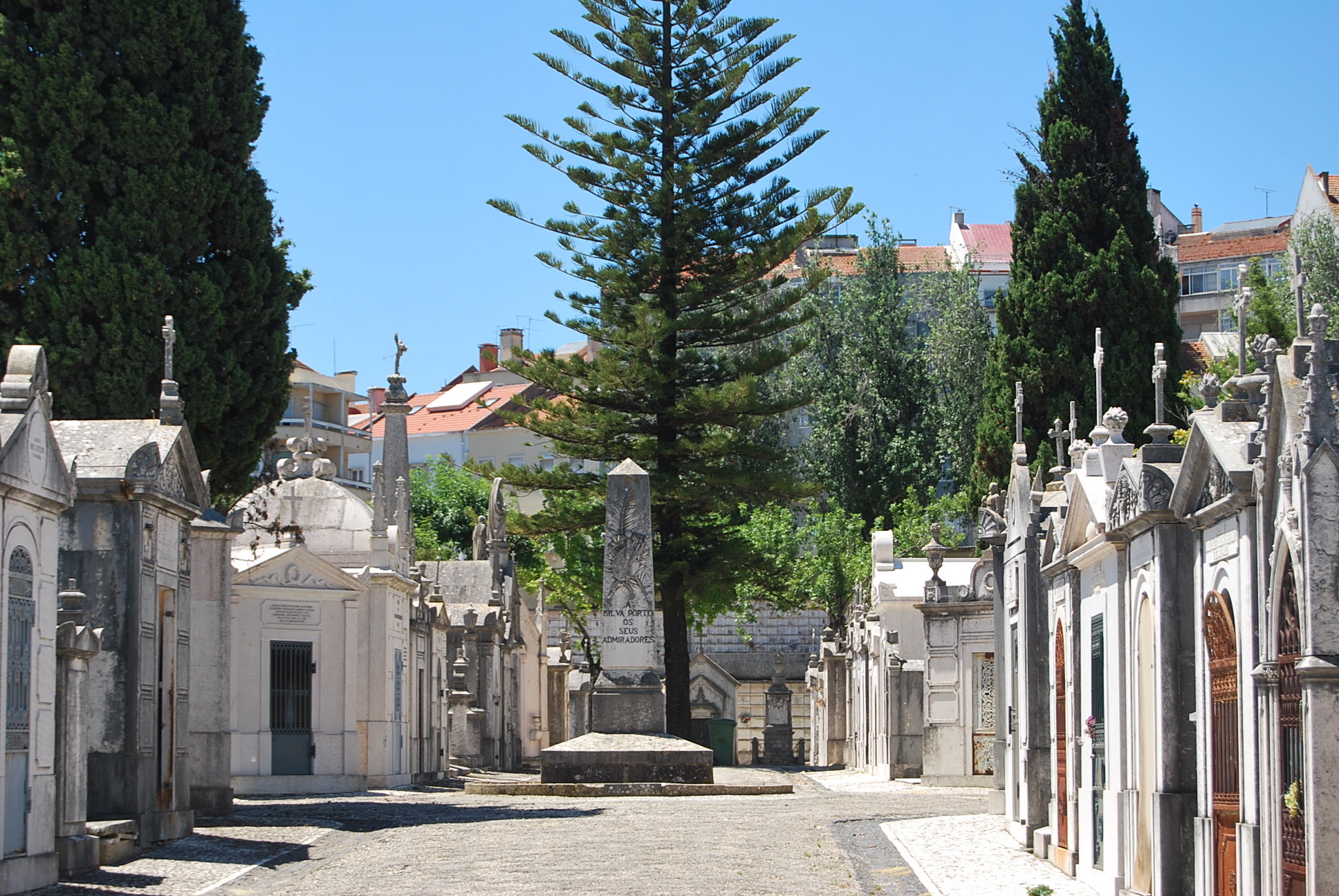
Prazeres Cemetery ChapelPrazeres Cemetery streets 2

Designed with a pentagonal plan, Prazeres Cemetery initially included temporary graves and underground sepulchres. Influenced by Paris's Père Lachaise Cemetery, the first private mausoleums were built in 1839, decorated with stelae, columns, and obelisks. The Palmela Mausoleum pyramid, built in 1848, became Europe’s largest private mausoleum.

Chapel mausoleums became common in the 1860s, featuring neo-classical, neo-Gothic, and various other historicist styles. In buildings from the beginning of the 20th century we will find Art Nouveau influence - not only in the buildings, but also in their decorations, such as stained glass windows, wrought iron doors, railings, and tiles. At the same time, the Portuguese House mausoleums were being constructed, marked by their roofs made of red clay tiles (or limestone carved in the shape of a tile roof), their porches, shutter doors and corner windows.

The reduction in available space slowed down the construction of mausoleums in the cemetery, but nevertheless, we can also find some modernist mausoleums, with straight lines and almost no ornamentation, contrasting the neoclassical mausoleums of the 19th century. Although mausoleum construction ended in 1945, a few notable contemporary pieces are still present. The cemetery, mostly shaded by dark green cypress trees, reflects an architectural evolution spanning three centuries.

Historic significance

Lisbon, being the capital of Portugal, concentrates all its major political, administrative and cultural institutions and, consequentially, its most prominent figures. Naturally, its cemeteries are the final resting place for many of them. As one of the first public cemeteries in Lisbon, Prazeres Cemetery became a prestigious burial place, chosen by aristocratic families and housing many notable Portuguese figures from the 19th and 20th centuries.
Some remains, like those of the poet Fernando Pessoa, the writer Aquilino Ribeiro or the Fado singer Amália Rodrigues., were later moved to the National Pantheon or the Jerónimos Monastery. Artists and writers are especially honored at the Prazeres Cemetery, with dedicated plots and monuments. Prazeres also has public monuments honoring firefighters and police officers (PSP), and features work by prominent Portuguese sculptors, architects, and stonemasons.

Palmela Mausoleum interior at the Prazeres Cemetery Firefighters Mausoleum at the Prazeres Cemetery Sousa Viterbo Mausoleum at the Prazeres Cemetery Prazeres Cemetery streets 8

Cemetery address

Praça São João Bosco 568
1350-297 Lisbon
Portugal

Contacts

Phone: +351 21 817 3780

Basic data

Year of first burial: 1833
Cemetery area: 12ha
Approximate number of graves.: more than 7.000 mausoleums, 1.500 perpetual graves and 5.000 municipal tombs
Approximate number of yearly burials: 150 burials and 350 ashes

Lisbon's 3rd Cultural Week in Cemeteries

Alto de São João Cemetery (Lisbon, Portugal)
Between October 5th and 13th, 2024, guided tours, concerts, workshops, virtual talks, and other activities will take place at Lisbon's cemeteries.

About the event

From October 5th to October 13th, 2024, the city of Lisbon will host the 3rd Cultural Week in Cemeteries, an initiative dedicated to valuing and promoting Portugal's rich cemetery heritage. This unique event features a diverse program of guided tours, workshops, and special activities designed to engage the public with the historical and cultural significance of cemeteries.

Program

This year's program includes a series of new guided tours that will take place in Lisbon's cemeteries, as well as at the Museum of Lisbon and the Monastery of São Vicente de Fora, where special tours focused on the themes of burials and cemeteries are planned.

To commemorate the Proclamation of the Portuguese Republic Day on October 5th, the Municipal Newspaper Archive will conduct a tour that explores the legacy of Portugal's First Republic and honors the Republicans laid to rest at the Alto de São João Cemetery.

The British Cemetery and the German Cemetery will also participate in the event, providing both guided and self-guided tours. A special "Open Day" at Prazeres Cemetery, in collaboration with the Santa Casa da Misericórdia de Lisboa, will allow visitors to explore several mausoleums and appreciate their interiors, featuring stained-glass windows, altars, old photographs, memento mori, and beautifully carved coffins.

A highlight of the week will be a concert-guided tour within the Palmela Mausoleum, recognized as Europe’s largest private mausoleum. Attendees will enjoy musical compositions from the 19th century, contemporary to the life of the First Duke of Palmela, the mausoleum's architect.

The program also includes a Philosophy for Children workshop, inviting families to engage in thoughtful discussions about death, and a Death Cafe where participants can converse openly about mortality while enjoying tea, coffee, and cakes.

Furthermore, several municipalities surrounding Lisbon, including Loures, Palmela, Setúbal, and Vila Franca de Xira, are once again contributing to the event with guided tours, musical moments, and virtual talks.

Additional information and registration

All events and tours are free of charge, but registration is required. To register, please send an email to cemiterios.visitas@cm-lisboa.pt.

For the full program and additional information, visit the organizer's website.


.

WDEC 2024 at Lisbon's Cemeteries

Prazeres Cemetery (Lisbon, Portugal)
In May 2024, you can take part in three guided tours at Prazeres Cemetery in Lisbon, Portugal.

Guided tours at Prazeres Cemetery

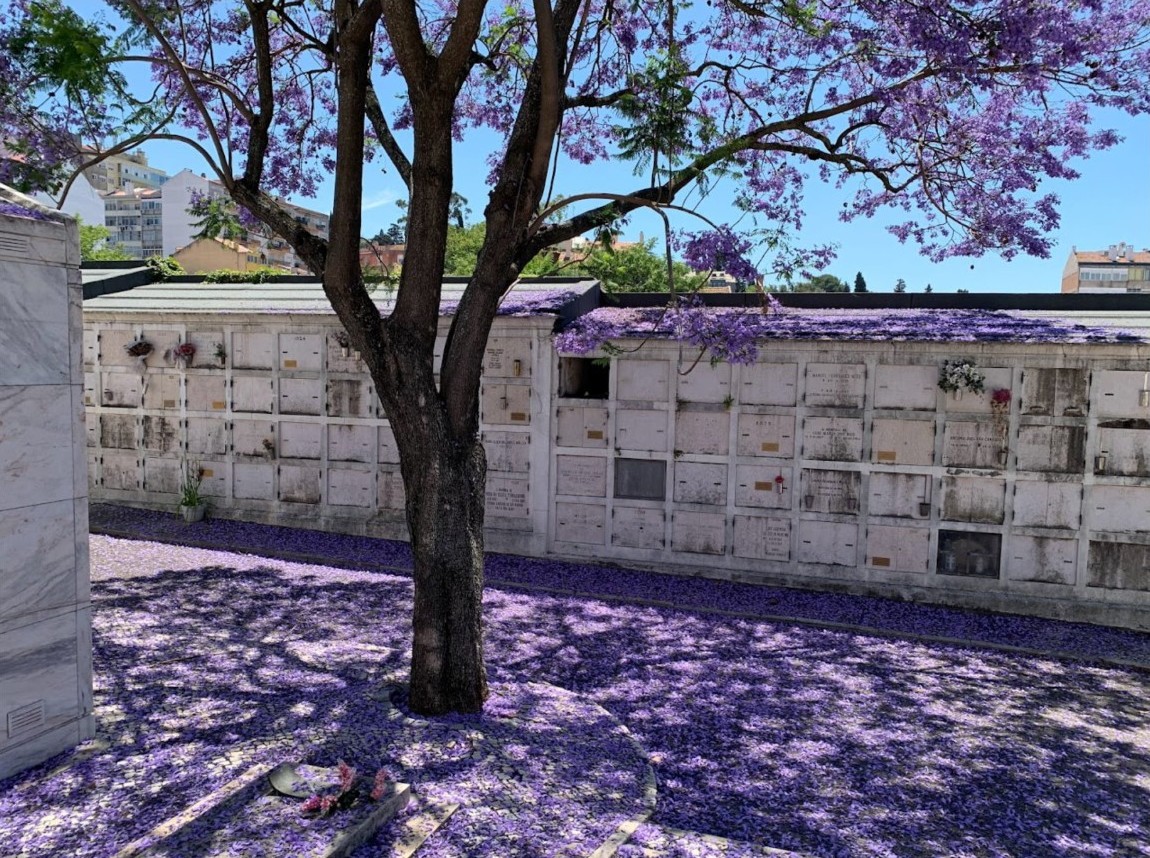
In May and June, jacaranda trees paint the city of Lisbon in shades of purple. In the city's cemeteries, the jacaranda trees cover the mausoleums and graves with their purple flowers, creating a magical atmosphere.

In this first year of participation in the Week of Discovering European Cemeteries, the Lisbon City Council proposes a series of visits that culminate in a weekend dedicated to jacarandas and their history.

  • Saturday, 11 May 2024, at 11:00 am - Poets and Writers at Prazeres Cemetery (free guided tour);
  • Saturday, 18 May 2024, at 10:30 am - Funeral Architecture at Prazeres Cemetery (free guided tour);
  • Saturday, 25 May 2024, at 11:00 am - Jacaranda Weekend at Prazeres Cemetery (free guided tour).
We invite everyone to visit and discover Lisbon's cemeteries in this special week.

For guided tours in English, please contact cemiterios.visitas@cm-lisboa.pt.


Lisbon's 2nd Cultural Week in Cemeteries

Lisbon 2nd Cultural Week in Cemeteries
Between 7th and 15th October 2023, guided tours, concerts, photo exhibitions, workshops, virtual lectures, and other activities will take place at Lisbon's cemeteries.

About the 2nd Cultural Week in Cemeteries

Lisbon City Council's Cemetery Management Division, in partnership with various entities and associations linked to cemetery art and heritage, is organising the 2nd edition of Cultural Week in Cemeteries, to be held between 7th and 15th October 2023. This edition will be extended to the municipalities of Loures, Setúbal and Vila Franca de Xira, which have also joined the initiative.

Program

As in the previous year, there will be guided tours of Lisbon's cemeteries, including the British and German cemeteries. The highlight of this edition will be five new themed tours, comprising one for pre-school children.

The program will also include concerts, photographic exhibitions and workshops, virtual lectures, night visits and other activities. There will be Open Days, where participants will be able to go inside mausoleums and other cemetery buildings that are not usually accessible to the public. 

Overall, there will be more than 30 different activities, all free of charge but require prior registration by email. The program of all events can be found HERE.

For any further information, please contact cemiterios.visitas@cm-lisboa.pt.


The Graveyard of Our Lady of Lapa (Porto, Portugal)

The Graveyard of Our Lady of Lapa (Porto, Portugal)
Lapa Cemetery is the oldest operating private Catholic cemetery in Portugal, founded in 1833 by the Lapa brotherhood.

About the cemetery

Founded in 1833 by the Lapa brotherhood, the Lapa Cemetery is the oldest operating private Catholic cemetery in Portugal, established two years before the Portuguese law on public cemeteries. Initially, it functioned provisionally on a plot of land at the back of its church, with the first burial in the definitive cemetery occurring in 1836. The main construction efforts, spearheaded by businessman João da Silva Ribeiro, took place between 1836 and 1840, and the cemetery was consecrated by 1838.

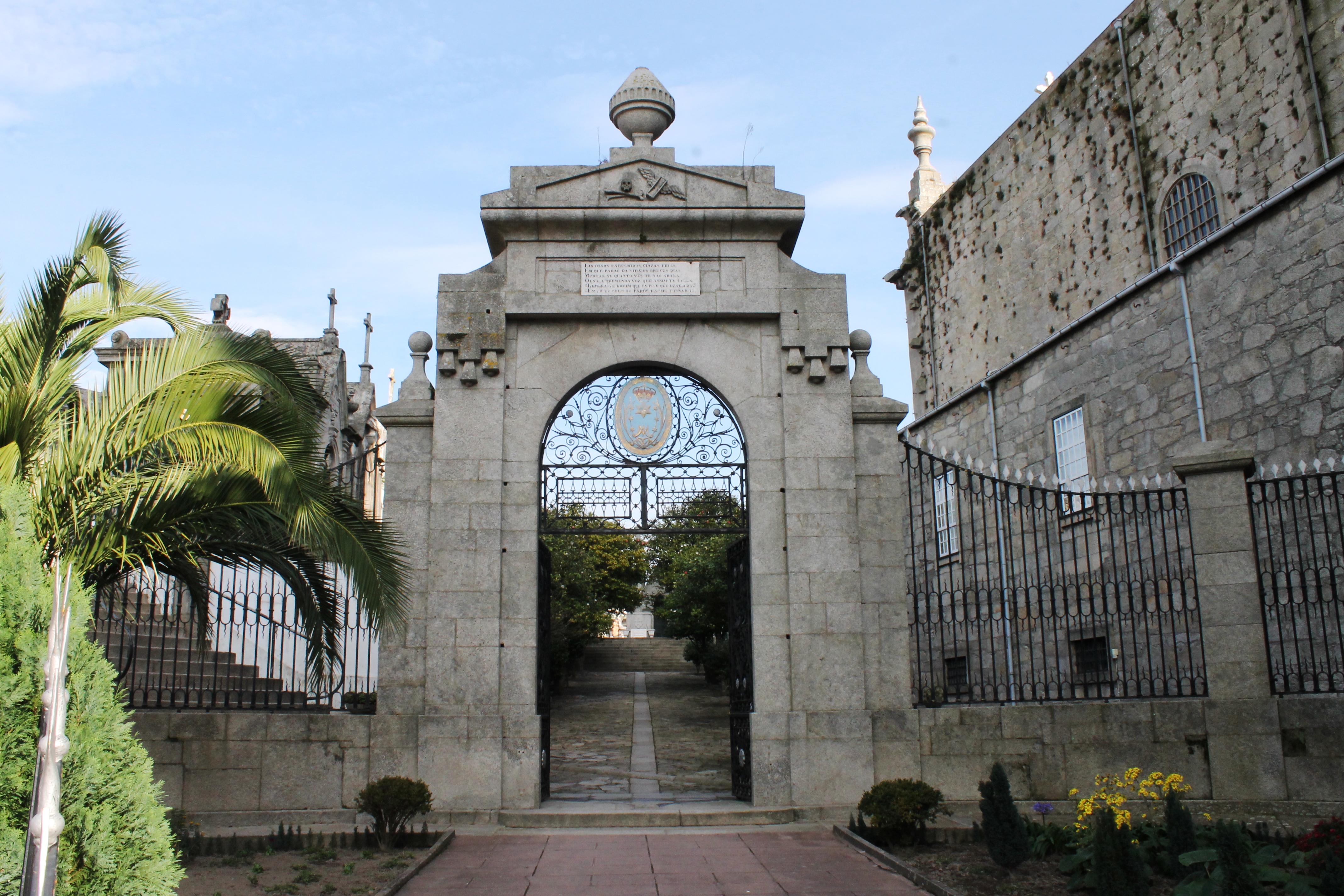
Due to its strong social acceptance, particularly among the wealthier population, the cemetery saw rapid growth. A little over ten years later, the need for expansion arose, and the cemetery was enlarged. Two decades later the cemetery had to be enlarged again and the works were concluded in 1874. The entrance gate was then moved from its original place to where it is today. 

Even though it is not a large cemetery, the Lapa Cemetery holds immense historical and artistic significance, particularly in northern Portugal. Some of the first Portuguese romanticist funerary monuments were erected here from 1839 onwards. Several of its most pompous tombs served as inspiration for other cemeteries over the decades. In fact, from its establishment until the end of the 19th century, the Lapa Cemetery was the favourite burial place of the Porto elite.

The establishment of the cemetery is also linked to the important military event of the Siege of Porto (1832-1833), which played a crucial role in the transition to a constitutional monarchy. Notably, the king responsible for this change, Pedro IV, donated his heart to the city, and a monument inside the church next to the cemetery houses this heart, making the entire complex a highly relevant historical site. 

Today, the Lapa cemetery attracts many local and foreign visitors. Guided tours, events, and school visits are being organised at the cemetery.

Cemetery architectural and landscape design

The cemetery was designed as a sort of "campo santo", with the central plots for monuments in the form of pedestals, obelisks, or others, and the edges for vault-chapels, which thus enclose the space. However, unlike the typical Italian "campo santo" with porticoes and the most important tombs beneath them, in the Lapa cemetery the construction of the vault-chapels on the edges of the cemetery was left to the discretion of the wealthiest families, resulting in a lack of uniformity and, at the same time, a greater diversity in architectural and iconographic terms. This model of cemetery landscape, which was first applied in Portugal precisely in the Lapa cemetery, was then adopted in dozens of other cemeteries in the northern part of the country.

However, the extensions made to the Lapa cemetery in the 1850s and 1870s did not follow this model: in the upper division of the cemetery, monuments are all in rows, with no intervening paths, and may be small chapels or take on other types (this type of layout is an originality of the cemetery and is not found in any other cemetery in Portugal); in the third division, which corresponds to the final enlargement of the cemetery, monuments are aligned with the streets, as is the case in the two large municipal cemeteries in Porto. Eventually, this final model would also contaminate the oldest part of the cemetery.

By 1910 the cemetery had almost come to a standstill, due to the impossibility of making a new enlargement. With the abandonment and subsequent decay of some of the tombs, namely those whose concessionary families had been extinguished, new tombs were erected at the cost of the demolition of other older ones. Throughout almost the whole of the 20th century there was an impoverishment of the Lapa cemetery. Even so, almost all of its largest tombs remained. The alterations that several of them suffered were due to the concession to other families, leading to the disappearance of the old inscriptions and, in some cases, of portraits, as well as funerary artefacts. In other cases, the tombs their original iron railings.

Address

Largo da Lapa no.1
4060-069 Porto
Portugal

Contacts

Cemetery
Phone: (+351) 223 289 317
Email: cemiterio@irmandadedalapa.pt

Management
Phone: (+351) 225 502 828
Email: geral@irmandadedalapa.pt

Website: www.irmandadedalapa.pt/

Basic data

Year of first burial: 1833
Cemetery area: 1,35ha
Number of graves: aprox. 320
Number of burials: aprox. 35.000

Managing organization: Venerável Irmandade de Nossa Senhora da Lapa

Cultural Cycle of Porto Cemeteries 2019

Porto Cemeteries
Numerous cultural activities and events will take place at Porto Cemeteries from May to October 2019.

The first event

The 14th Cultural Cycle of the Porto Cemeteries will begin at the British Cemetery on May 25, 2019, at 3:30 p.m. Historian Joel Cleto will lead a guided tour to commemorate the "210 year anniversary of the birth of Baron de Forrester".

This will be the first of a series of cultural visits to Porto cemeteries, which will take place until October 12, 2019.

Other activities

The new edition of the initiative will include: night tours guided by Francisco Queiroz; music tours conducted by Hélder Macedo Sampaio; theatrical performances by Manuela Cambotas and visits on the theme of  architecture with Ana Maio. Also to be highlighted is a visit entitled "100 years of the birth of Sophia de Mello Breyner Andresen" in the Agramonte Cemetery.

In addition, don`t miss the Raids Photographs Night, which will result in an exhibition with the 10 best works, chosen among the photographs of the participants. Drawing workshops are also planned with Mário Linhares and music concerts about Theaters in Porto.

Along with the discovery and exploration of the two municipal cemeteries (Prado do Repouso Cemetery and Agramonte Cemetery), where most of the activities will be concentrated, the Paranhos Cemetery will also be included this year.

You can find the entire programme HERE.

More information

For more information, visit the website www.cm-porto.pt/ciclos-culturais or call the number +351 225 320 080.

With simultaneous translation in Portuguese Sign Language, the visits will be free, but subject to pre-registration.


WDEC 2015 - Culture cycle of Porto Cemeteries

Agramonte Cemetery (Porto, Portugal)
During the Week of discovering European Cemeteries 2015, several guided tours and other events will take place at the Porto Cemeteries.

The Port and Its Photographers II

Guided tour "The Port and Its Photographers II".

Prado do Repouso Cemetery (Porto, Portugal)

Prado do Repouso Cemetery (Porto, Portugal)
Prado do Repouso Cemetery was opened in 1839, as the first public cemetery in Porto. Today, it is considered as a true open-air museum.

The history of burials in Portugal

The habit of turning the inside of churches into cemeteries dates back almost to the beginning of Christianity, although it was often considered an abuse, since it implied the burial of sinners alongside relics of saints. However, the Catholic Church was never able to prevent this accomplished fact.

The demographic pressure and sanitation issues, in the ideological context of the Enlightenment, were the main factors that made some voices rise against inhumations inside churches, from the 18th century onwards. In Portugal, the first legislative attempts to stop burials inside churches were not successful, mostly because the laicisation of the Portuguese society was quite slow in comparison with some other European countries. Thus, the official creation of the Portuguese public cemeteries occurred only in 1835. However, there were previous experiments and Porto, as was common at that time, was the first to establish cemeteries outside of churches.

In 1833, the Porto Siege generated an extremely difficult sanitation situation in the city and led to an outbreak of a very deadly epidemic: the cholera morbus. Burial sites rapidly filled up, and the situation grew worse due to the soldiers who died fighting the Miguelists.

The Prado do Repouso Cemetery

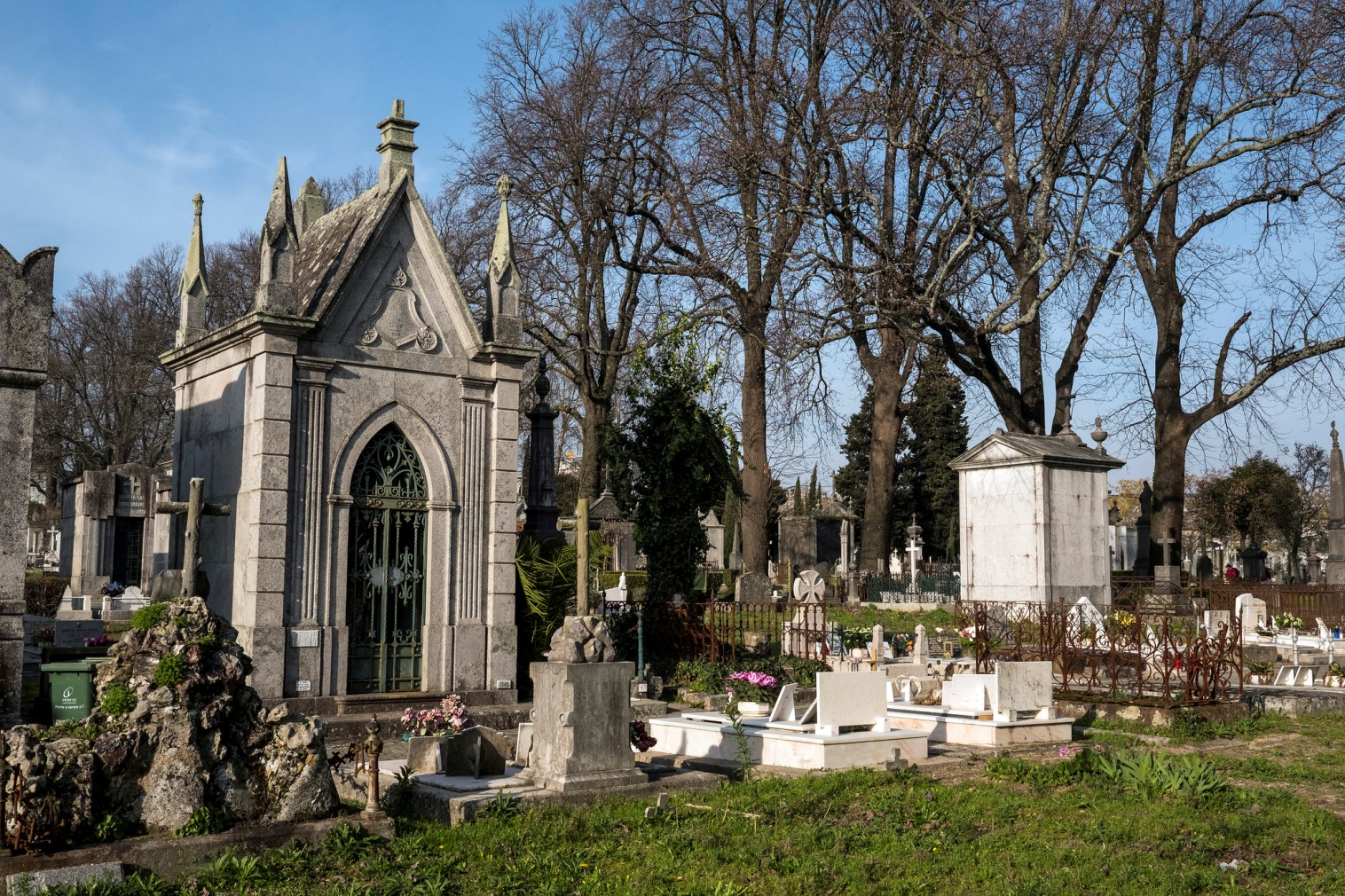
In December of 1839, the first public cemetery in Porto, Prado do Repouso, was inaugurated, although for about two decades it was not very “modern”. Indeed, on this vast estate, partially transformed into a cemetery, only the poorest inhabitants of Porto were buried. The wealthy and more “enlightened” citizens preferred to be buried in the Lapa private cemetery. If they were more “conservative”, maybe they would prefer being buried in the cemeteries of several other Orders and Brotherhoods that existed in the city. These had cemeteries outside of their churches (partially complying with the 1835 decree), but still next to them and with no modern spatial arrangement.

Considering all these factors, the municipal public cemetery of Prado do Repouso couldn’t possibly become any greater. Local authorities have tried, for several times but unsuccessfully, to stop the privilege of the Orders of having private burials. For this reason, there were serious riots in 1851.

The Private Sections of Municipal Cemeteries

Following the 1855 epidemic, all the cemeteries belonging to the Brotherhoods had to be reopened, although the maintenance of those in no condition was increasingly less consensual. In a lengthy and difficult process, each Brotherhood made a deal with the Porto City Council to acquire private sections in the municipal cemeteries.

The Misericórdia do Porto (Brotherhood of Mercy) was the first to do so, acquiring a lot in Prado do Repouso for that purpose. It was followed by the Ordem do Terço e da Caridade (Order of the Rosary and of Charity), and by the Confraria do Santíssimo Sacramento de Santo Ildefonso (Fraternity of the Blessed Sacrament of Saint Ildephonse).

Cemetery location

Largo do Padre Baltazar Guedes (South and main entranc)
Largo Soares dos Reis (North entrance)
4300-059 Porto
Portugal

Contacts

Tel. +351 22 5371485
Fax: +351 22 5379925
Email: cemiterio-pradodorepouso@cm-porto.pt


*Photo source: https://visitporto.travel/pt-PT/poi/5cd04b4cf979e000011d98f1#/

Cemetery of Agramonte (Porto, Portugal)

Cemetery of Agramonte (Porto, Portugal)
The resting place of a number of eminent figures, such as count Ferreira, sculptor Henrique Moreira, archaeologist António Augusto da Rocha Peixoto, cellist Guilhermina Suggia, filmmaker Manoel de Oliveira and others.

About the cemetery

Only in 1855 does the situation of the Porto cemeteries begins to change, as consequence of the second great cholera epidemic. The civil authorities managed to close the private cemeteries, which were in bad condition, and simultaneously had a new municipal cemetery built rather hastily - Agramonte.

In a first stage, this cemetery was mostly used to bury the cholera victims. Since there were two municipal cemeteries, the population began to see Prado do Repouso as a more dignified cemetery, considering it wasn’t improvised as Agramonte was (whose chapel was made of wood). Furthermore, some “bold people” had already erected monuments in Prado do Repouso.

The Private Sections of Municipal Cemeteries

Following the 1855 epidemic, all the cemeteries belonging to the Brotherhoods had to be reopened, although the maintenance of those in no condition was increasingly less consensual. In a lengthy and difficult process, each Brotherhood made a deal with the Porto City Council to acquire private sections in the municipal cemeteries. With the restructuring of the Agramonte Cemetery, around 1869, other Brotherhoods of the city established their private cemeteries there.

Of the private catholic cemeteries already in existence, only those of Lapa and Bonfim remained in their own location, because although they were not public, their design was urban and modern (especially that of Lapa), standing on elevated ground and reasonably away from houses. Porto now has eight cemeteries with private sections, which is unique in the country.

Address

Rua de Agramonte (main entrance)
Rua João Martins Branco (side entrance, opened only on special occasions)
4150-031 Porto
Portugal

Contacts

Phone: +351 22 6066604
Fax: +351 22 6067583
Email: cemiterio-agramonte@cm-porto.pt

Other information

Tourist information
http://www.portoturismo.pt/pt/default.asp

City Hall site
http://www.cm-porto.pt/