Showing posts with label project. Show all posts

Renewal of the Quality Seal for educational activities

Schools on Cemeteries in Barcelona
Cementiris de Barcelona renewed its Quality Seal for educational activities with an Educational Project that was reviewed and approved by the Technical Secretariat of the Pedagogical Innovation Council (CIP).

Cemeteries as learning spaces

Cemeteries represent a historical and artistic legacy that is fundamental for understanding the social and cultural evolution of the populations that preceded us. At the same time, they allow us to better understand the present that surrounds us and help students develop a critical perspective on the world around them.

The social value of cemeteries lies in their representation of the collective memory that unites us as a society and in the understanding of death as a natural part of life. Likewise, aware of the link that cemeteries have with the territory that surrounds them and the people who live there, Cementiris de Barcelona collaborates with schools and districts to nurture a sense of neighbourhood belonging and respect for its heritage.

About the Educational Project

The Educational Project considers the various skills outlined in the school curriculum, aiming to provide pupils and teachers with additional tools to share knowledge and understand different situations from both the past and the present. To effectively address the needs of the curriculum, it focuses on specific competencies that Barcelona Cemeteries, as an organisation, is capable of contributing.

Firstly, the six vectors of Barcelona’s new basic education curriculum have been taken into account. These vectors are designed to foster a society that is critical, sustainable, digital, more equitable, feminist, and democratic. For this reason, three of the six vectors have been considered as the fundamental basis of the Educational Project: competency learning, gender perspective, and global awareness combined with emotional well-being.

On the other hand, the transversal competences of the new curriculum have also been taken into account, particularly civic competence, entrepreneurial competence, personal, social and learning to learn competence and digital competence. Of these, Cementiris de Barcelona's Educational Project includes citizenship competence and personal, social and learning to learn competence.

The T900 project: A bridge between generations

T900 project at Certosa Monumental Cemetery in Bologna
The T900 project, promoted by the Associazione Amici della Certosa di Bologna, aims to preserve the memory of the Certosa Monumental Cemetery in Bologna through art.

A place of memory

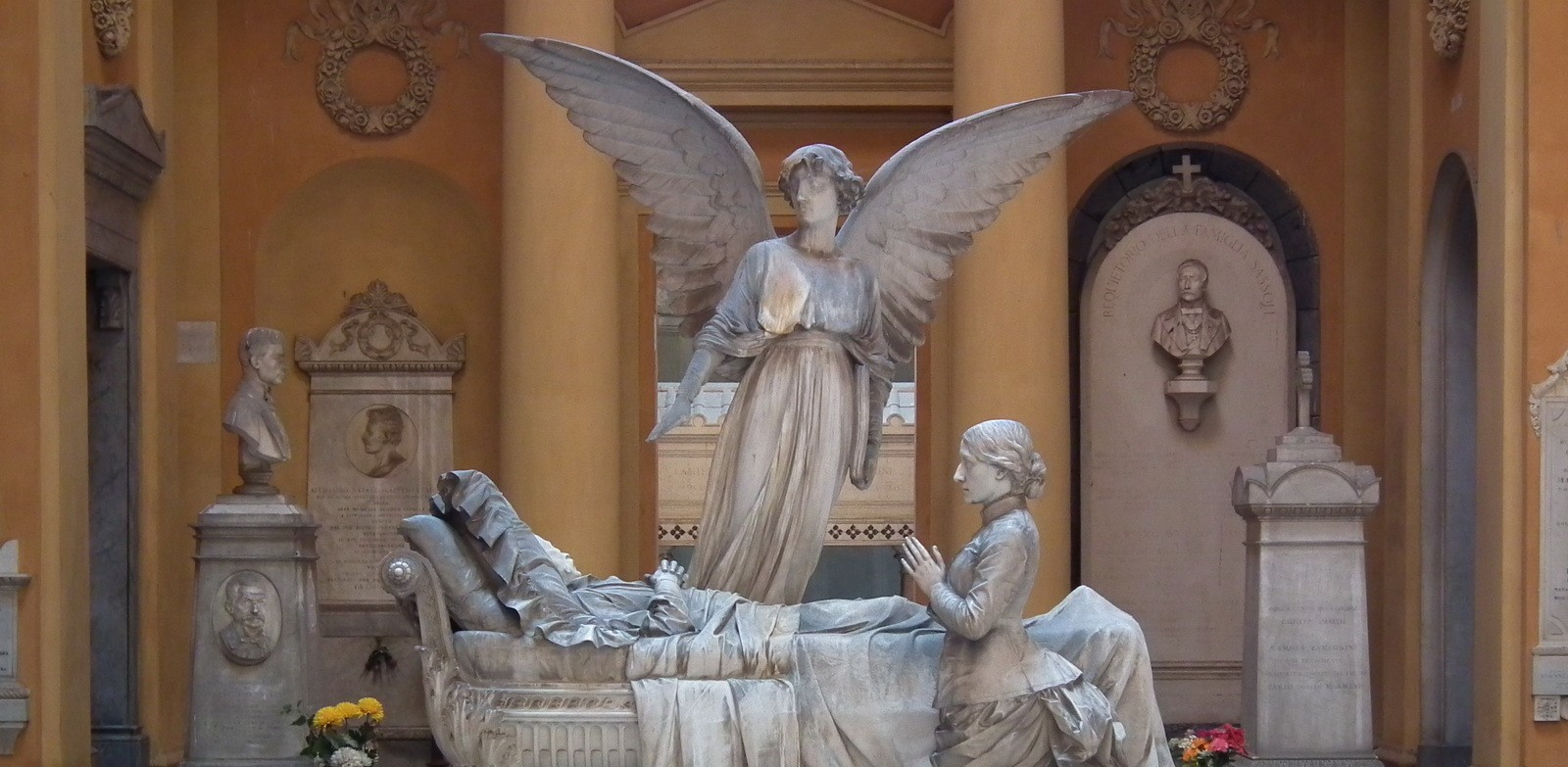
The Certosa Monumental Cemetery, which houses many of the Bologna families of the past, is an architectural work of great artistic and historical value. The tombs found here, true funerary artistic works, are designated MONUMENTUM, in Latin REMEMBRANCE, a place of memory and testimony for future generations.

About the T900 project

The project promoted by the Associazione Amici della Certosa di Bologna, focusing on individual significant tombs from the 20th century, aims to create a bridge between the past, present, and future, and to preserve over time the MEMORY that has been entrusted to us.

Through the active and direct participation of students, members of the Association, and Bologna citizens, a pilot project has come to life, aimed at increasing awareness of a growing number of funerary monuments. T900, conceived and coordinated by architect Francisco Pérez Amitrano, Vice President of the Association, has benefited from the collaboration of the Museo civico del Risorgimento of the Municipality of Bologna.

It has been presented at the Certosa with new itineraries, coinciding with the Week of Discovering European Cemeteries at the end of the school year.

Public presentation and archiving

In 2024, for the second consecutive year, students and teachers from the high school Liceo Artistico F. Arcangeli of Bologna, along with researchers and photographers from the Association, publicly presented their participation in the "Tombs ’900" project: students with graphic drawings and renderings of the tombs, and members with archival research and high-quality photographic documentation.

The collected materials are preserved by the Associazione Amici della Certosa with a dual intent: to build a growing archive for the benefit of the community and to foster in young students the MEMORY of their city.

Schools on Cemeteries

The Associazione Amici della Certosa di Bologna actively participates in the ASCE Schools on Cemeteries project and the T900 project is an excellent example of how to involve schoolchildren and youth in learning and preservation of cultural heritage in cemeteries through art.

The Pedagogical Suitcase project at Barcelona cemeteries

Schools on Cemeteries in Barcelona
In 2024, Cementiris de Barcelona has expanded its educational services by introducing the Pedagogical Suitcase project, designed to bring funeral culture into schools.

Offering educational activities in schools

Cementiris de Barcelona is an active participant in the ASCE Schools on Cemeteries project and a member of Barcelona City Council's Pedagogical Innovation Council. 

Since 2013, they have been offering educational activities in schools to bring pupils closer to the funerary heritage of the cemeteries, reflecting Barcelona's historical evolution. Over the last few years, these activities have been developed and adapted to meet the needs of the school curriculum. 

In 2020, as a result of the Covid-19 epidemic, they took a step forward by creating three additional activities, allowing young people to express the concept of death from an artistic and creative perspective through the study and research of cemeteries. During this challenging time, there was a growing need to naturalise death and break existing taboos, which led many schools to turn to their pedagogical activities.

Own educational project

Barcelona is a city rich in cultural and museum offerings, and the range of educational activities provided by cultural organisations in schools is wide and varied. In response to this, Cementiris de Barcelona developed its own educational project aimed at all levels of education. This initiative enables the development of a range of basic skills to complement school education.

The cemeteries of Poblenou and Montjuïc, listed as monumental cemeteries by the Council of Europe and part of the European Cemeteries Route, offer students the opportunity to learn about the most important historical, social and cultural events in the history of Barcelona and its most illustrious figures.

These programs also encourage a critical view of societies and their organisations, promote open conversations about death, and foster respect for artistic and cultural heritage.


Collection of Hearses and El Fossar de la Pedrera

Another of the outstanding spaces in which educational activities are carried out is the Collection of Hearses, a unique heritage site in Europe. Here, visitors can explore the evolution of funeral rituals to better understand the change in mentality towards the concept of death, as well as learn about gender roles within the funeral world, particularly focusing on the role of widows.

Additionally, within Montjuïc Cemetery lies one of the main memorials to the victims of Franco's regime in Catalonia, El Fossar de la Pedrera. This site offers an opportunity to delve into one of the most impactful episodes in recent history, the Spanish Civil War, raising students' awareness of the violence that can be inflicted by the state.

The diversity of activities and the historical and heritage value of the cemeteries have also attracted schools from France, Germany, Belgium, and Italy, who have brought their pupils to explore Barcelona's cemeteries.

The Pedagogical Suitcase project

In 2024, Cementiris de Barcelona has expanded its educational services by introducing the Pedagogical Suitcase during the current academic year. This set of pedagogical tools is designed to bring funeral culture into schools and address bereavement among younger students.

The activities are structured for classroom learning and can be followed by visits to the cemetery, allowing students to experience firsthand what they have learned in class and gain a deeper understanding of their role in society.

The goal of these activities is to help students engage with a reality that affects everyone equally, while understanding that, although death is a universal event, there is a great diversity of ways to approach and experience it.

Additionally, the program familiarises students with different religious traditions, encourages them to reflect on their own lives and values, and helps them develop better emotional management by exploring the range of emotions that bereavement can evoke.

"Cimitero dal Vivo": a unique way to discover Ravenna's Historic Cemetery

Ravenna's Historic Cemetery
An innovative format that includes a digital game R-Tales, a new digital map, and a live show with music, theater, and performance.

Cemeteries as living spaces

Ravenna's Historic Cemetery

Playing in a historic cemetery may seem transgressive, but you can do it, you must. This was precisely the goal set by Panda Project's "Cimitero dal Vivo" (eng. "Cemetery Live"), winner of the PNRR TOCC Call for Proposals Digital Transition Cultural and Creative Bodies funded by the European Union - Next Generation EU.

In December 2022, Emilia Romagna was the first region in Italy that passed a law for the "Recognition and Enhancement of Monumental and Historic Cemeteries", with the aim of ensuring the enhancement, preservation and promotion of these assets, encouraging their use by citizens.

In England, cemeteries are living places, where it is possible to walk, read, study or have a picnic with friends. The northern European cemeteries provide a different way of being with the deceased. The Assistens Cemetery in Copenhagen, for example, is not experienced as a place of sadness but of recreation, and it is not uncommon to see people sunbathing.

About the project
The "Cimitero dal Vivo" project

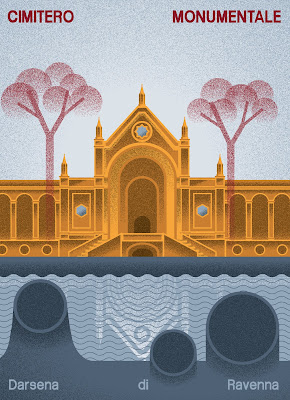
The "Cimitero dal Vivo" project, carried out in 2024, aims to regenerate the entire Darsena district and is based on an innovative format for visiting Ravenna's Historic Cemetery that makes use of new digital tools and immersive audio. The project created the urban digital game R-Tales, a new digital map, and a live show that combines music, theater, and performance creating a unique and unforgettable experience.

How does the game work? Davide Leone, Soc. Coop U'Game, explains: "The purpose of the R-Tales game is to help a mysterious soul find himself by confronting four exciting missions that recount as many important events in the city's history. You will discover, through the deceased voices of the main characters the adventure of Giuseppe Garibaldi and the exploits of Romolo Gessi, the mystery of Dante's bones, the quarrel between the most important orchestra conductor of the time and Giuseppe Verdi over the love of a soprano."

The map and urban game are part of a series of interactive online paths that take us through emotional-collective memories to discover the characters buried at the cemetery who made the city's history, such as Luigi Rasi and Filippo Mordani. They immerse us in the mysteries hidden among the graves and the artistic wonders of the Monumental Cemetery.

The importance of the project

Press conference about the project

"Monumental places in our city have always inspired artists," says Ravenna Culture Councillor Fabio Sbaraglia, "They have stimulated projects capable of placing diverse spot lights on spaces we are fond of or used to hang out at. Panda Project, with a special look and a deep and conscious respect, investigates the history of our historic cemetery through a project that embraces the entire dock area and connects with the urban regeneration experiences that our city has undertaken over the years."

"Historic cemeteries are magical places and they are free: A historical, cultural and green heritage that must be enhanced and not left to decay. We need to change the paradigm: we must give historic cemeteries a new meaning and people a new way of approaching them and approaching death," explains Delia Trice of Panda Project.

Matteo Pini of Spazi Indecisi, who created the project's graphic identity and the new mapping, tells of their involvement: "The sensations conveyed by the Historic Cemetery immediately pushed the work of Spazi Indecisi toward a concept related to contrasts: the most recurrent dualism (life/death) is materialized symbolically through the anomalous, borderline location that contrasts monumental and industrial architecture, widening the point of view, nature and anthropization, land and water. The intention is to highlight the cemetery's values of memory, rest and tranquility, in which the natural presence of trees and water mitigates that of some Gothic novel settings, arousing in the visitor a sense of fascination rather than disquiet. Hence the choices of lettering, more friendly than austere, and of a high-contrast color palette, which combines cool tones of blue with the industrial buildings, and warm tones of yellow and red with the cemetery. Also evident between the lines is a reference to the heraldic colors of the city of Ravenna and an admiring reference to "Deserto Rosso" (M. Antonioni, 1964) in the choice of the color of the pine trees."

Project participants

A great contribution to the project was that of Sguardi in Camera, an association specializing in private visual archives (family films and photographs). For the "Cimitero dal Vivo" project, it oversaw the research and collection of oral testimonies of teenagers.

Frame Lab - UniBo and Penelope Muratori, who worked on text verification, writing and video material creation for the project, produced a narrative in images that takes us inside the experience created by the game.

Link to the video: https://vimeo.com/910792719

Panda Project contacts:

info@pandaproject.it
+39 347 0743593

Accessibility of cemeteries

Accessibility of cemeteries
Share your examples of good practices regarding accessibility challenges in your cemetery.

The objective of the Association of Significant Cemeteries in Europe (ASCE) is to raise European citizen awareness of the importance of significant cemeteries. We encourage people to visit and explore cemeteries, learn about them, and in this way, start seeing them as places of life that carry a rich cultural heritage. For this to be possible, cemeteries must be accessible to everyone - including people with disabilities or reduced mobility.

The COCEMFE's project

The Spanish Confederation of People with Physical and/or Organic Disabilities (COCEMFE) Asturias is currently working on a project, in which they try to make a cemetery area located in a natural space as accessible as possible for people with disabilities and/or reduced mobility, so that all citizens can make use of this new public space.

Since this is a very important topic that should be exposed more often, we are reaching out to our ASCE and European Cemeteries Route members as well as all other cemetery managers. On behalf of the COCEMFE, we are asking you to share your examples of successful practices regarding accessibility challenges in your cemeteries. We encourage you to provide insights into how you have overcome these issues, ensuring maximum accessibility for all cemetery visitors. Additionally, suggestions for further improvements on this field are welcomed.

Share examples of good practices

If you believe that your cemetery has implemented effective solutions to facilitate easy access for individuals with disabilities and mobility impairments, please contact David Fernández González from the Oficina Técnica de Accesibilidad at accesibilidad@cocemfeasturias.es.

We hope that as many of our members as possible can serve as exemplary models in promoting accessibility on cemeteries!

The longest outdoor gallery in Vienna

Vienna Central Cemetery
A large photo exhibition, created as part of the project "Biodiversity in the Cemetery", is now on display at the Vienna Central Cemetery.

About the exhibition

Animals at the Vienna Central Cemetery

Vienna Central Cemetery now offers a new attraction: Peter Hanke, City Councillor for Finance, Economy, and Vienna Municipal Utilities, along with Renate Niklas, the Managing Director of Friedhöfe Wien GmbH, opened the longest outdoor gallery in Vienna. It shows animal photographs that were created as part of the research project "Biodiversity at the Cemetery".

The research project was initiated more than two years ago by the University of Vienna in collaboration with Friedhöfe Wien GmbH. Over time, extensive data on animals, plants, and fungi were collected, and fascinating photographs were produced. The exhibition of these images now makes the diverse wildlife on the city's cemeteries visible to all visitors of Vienna Central Cemetery.

Importance of cemeteries for city's climate

Animals at the Vienna Central Cemetery

"The area of the 46 municipal cemeteries constitutes about 1.2% of the entire city's area. This is roughly equivalent to the size of the 20th district of Vienna. The design of these areas has a significant impact on the city's climate and also serves as an important habitat. We are proud to protect the areas of the 46 municipal cemeteries and the animals that inhabit them to the best of our ability. Vienna's longest outdoor gallery shows in pictures the extent of biodiversity on Vienna's cemeteries," emphasized Hanke.

Renate Niklas expressed her gratitude for the excellent collaboration with the University of Vienna and project leader Thomas Filek: "The interim results underscore the importance of detailed design even in these spaces. People who have a grave on our cemeteries, plant and maintain it with greenery, make a significant contribution to flora and fauna, as well as the city's climate."

Sustainability measures have been derived from the research results, such as the creation of deadwood corners for insects and small animals. The gallery itself is also sustainable: The scaffolding was crafted from local larch wood anchored in the ground with earth spikes.

Excursion with an educational mission

Animals at the Vienna Central Cemetery

The images displayed in the gallery highlight the growing importance of protected habitats and retreats for animals in an increasingly urbanized environment. All people – Viennese residents, families, school and kindergarten groups, as well as tourists – can visit the gallery until approximately mid-2024. Admission is free.

The longest outdoor gallery in Vienna begins at the entrance to Gate 2 at Vienna Central Cemetery. It leads along two green strips to the Cemetery Church of Saint Karl Borromäus.

The cooling potential of cemeteries

The gallery as a destination for excursions emphasizes that cemeteries are more than just burial sites. Their design has a significant impact on the environment, from reducing tropical nights to the potential for rainwater infiltration. Recently, the results of an AIT study on the cooling potential of cemeteries were published. More information is available HERE.

Participation in an international workshop

Certosa Monumental Cemetery (Bologna, Italy)
In 2022, European Cemeteries Route participated in an international workshop entitled "Cultural Routes of the Council of Europe: Cultural Heritage, Landscape and Tourism".

About the workshop

The Teaching Project inaugurated with the workshop entitled “Cultural Routes of the Council of Europe: Cultural Heritage, Landscape and Tourism” is based within a consolidated international network of contacts acquired with Italian and foreign universities as part of the scientific and teaching activities of the University Network for Cultural Routes Studies under the patronage of the European Institute of Cultural Routes of the Council of Europe.

The workshop took place between July and October 2022 with the aim to address, through a multidisciplinary and interdisciplinary perspective, the theme of the Cultural Routes of the Council of Europe, which in their specificity represent a crucial node in the active interpretation of cultural heritage and are strategic tools for guiding processes of territorial and landscape valorization. The activities also involved the collaboration of lecturers from other universities and from numerous national and international institutions and associations, as well as public administrations.

The workshop lasted a total of 75 hours and was organized in three main modules: lectures, site visits days, and project activities.

European Cemeteries Route at the workshop

Manager of European Cemeteries Route, Mr Dušan Vrban, gave a presentation at the workshop about the added value of stories in managing cultural tourism on the example of cemeteries and European Cemeteries Route.

He also highlighted the different marketing approaches that are being implemented by European Cemeteries Route in that context and can be applied in various fields.

The topic of the presentation is also elaborated in his article in the workshop's publication that you can download below.

Online publication

The outcomes of this successful international workshop are presented in an online publication which is available for download at this LINK.

The publication intends to summarise what matured during the opening experience of the Teaching Project, collecting some reflections of the lecturers and invited guests who have offered their contribution regarding the seminar days, together with the outcome of the students’ final projects.

The volume is therefore structured into three main parts: short essays, collects a photo diary of site visits days, and students’ final project proposals. 

Development of the project in the future

The workshop represented the first event of a growing teaching project that intends to become a summer school, held on an annual or biennial basis, with the involvement of other university members of the network and open to international students.


*Source: Introduction text from the workshop publication by Silvia Beltramo, www.academia.edu 

Final event of the FAB Routes project

FAB Routes project
On November 29, 2022, the final event of the project "FAB Routes: Digital Skills to Promote EU Cultural Routes" will be held in the city of Forlì, Italy.

Invitation to the event

On behalf of the ATRIUM route of the Council of Europe we would like to inform you that on November 29, 2022, from 9.30 to 12.30, the final event of the FAB Routes project will be held in the Hall of Constellations ("Sala delle Costellazioni") in the former aeronautical college, today Morgagni Classical High School ("Liceo Classico Morgagni") in Viale Roma 2, Forlì, Italy. 

The event will include the inauguration of the Council of Europe Routes exhibition and the presentation of the project results. A guided tour to the dissonant heritage present in the city centre of Forlì is also scheduled. 

About the FAB Routes project

"FAB Routes: Digital Skills to Promote EU Cultural Routes" is a KA202 - Strategic Partnerships for vocational education and training project, co-funded by the Erasmus + programme under the Cooperation for innovation and the exchange of good practices call.

The general objective of the project is to design a new training methodology and educational module aimed at fostering and enriching the knowledge and transversal competences of the staff members and operators of the EU Cultural Routes (CRs) recognized by the Council of Europe, in order to improve CRs management and promotion in the field of sustainable and cultural tourism.

You can find more about the project HERE.

Funeral arrangements for minorities and migrants

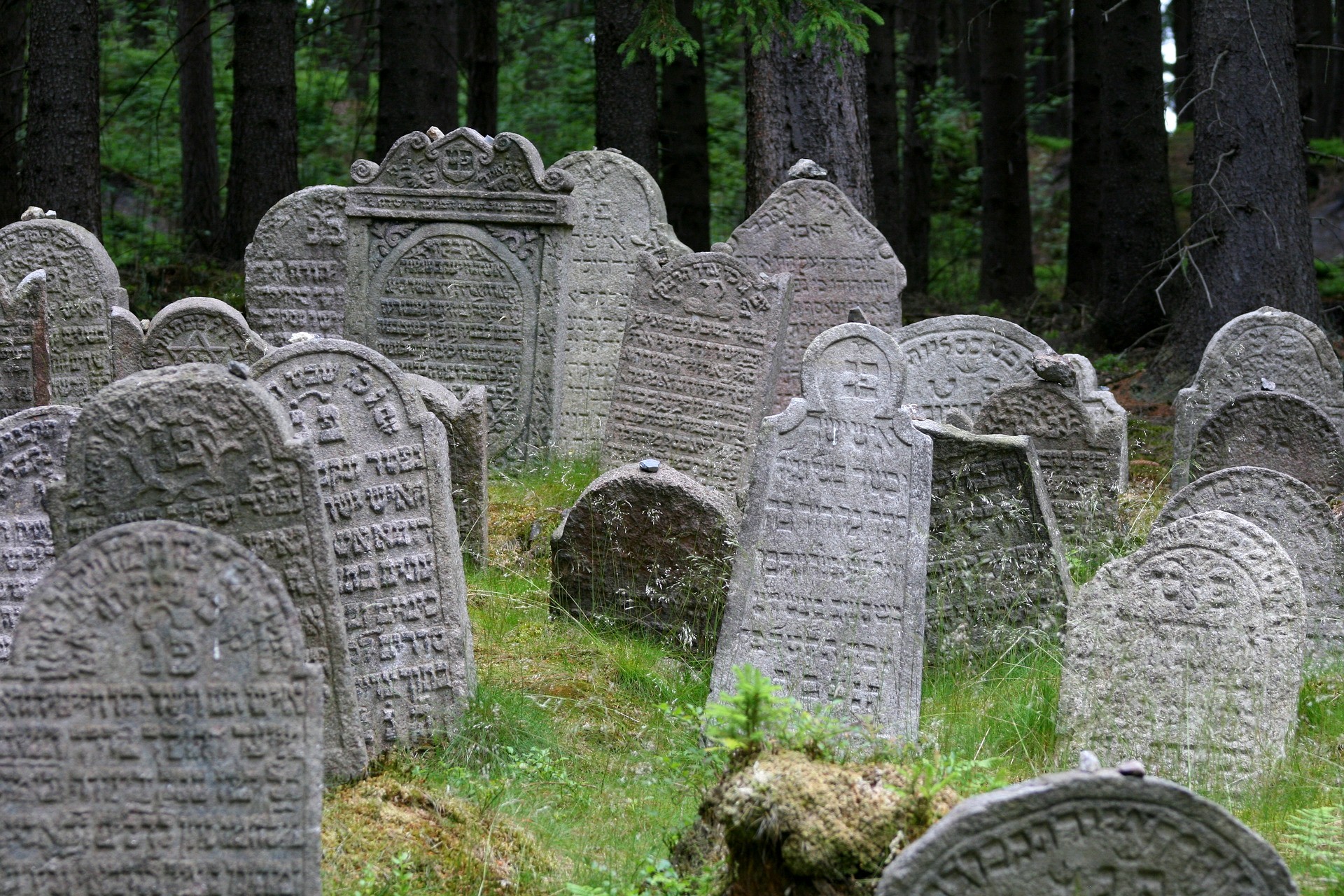
Jewish Cemetery
Short presentation of the project "Cemeteries and Crematoria as public spaces of belonging in Europe: a study of migrant and minority cultural inclusion, exclusion and integration".

About the research

This HERA-funded CeMi project has researched the issue of cemeteries and crematoria not being inclusive enough regarding minorities and migrants in a modern multicultural Europe. The aim was to find possible solutions for this situation and present lessons for policy makers, politicians, and stakeholders at all levels, that will help to build more inclusive and heritage-sensitive communities.

The study was carried out on the example of 6 European countries: Ireland, Luxembourg, the Netherlands, Norway, Scotland, and Sweden but it could certainly be applied to many other countries in Europe and the world.

You can find out more about the project at this LINK.

Presentation of the results

A public presentation of the study will be held on November 17, 2022, from 1.00 to 2.30, at the Netherlands House for Education and Research (NETH-ER), 22, rue d'Arlon, 1050 Brussels.

The presentation will include the final report on funeral arrangements for minorities and migrants in the aforementioned countries as well as some recommendations for future improvements.

The individual articles are available HERE.

The number of places at the presentation is limited so registration is required.

Animation video about this topic

Researchers worked with animator Stacy Bias to provide an overview of different religious and secular practices in cemeteries and crematoria. The animation video seeks to highlight that the enablement of different ritual and spatial requirements is important for the provision of inclusive public cemeteries and crematoria.


*The cover image is symbolic. Source: Pixabay

Best practices award 2022

Best practice award 2022
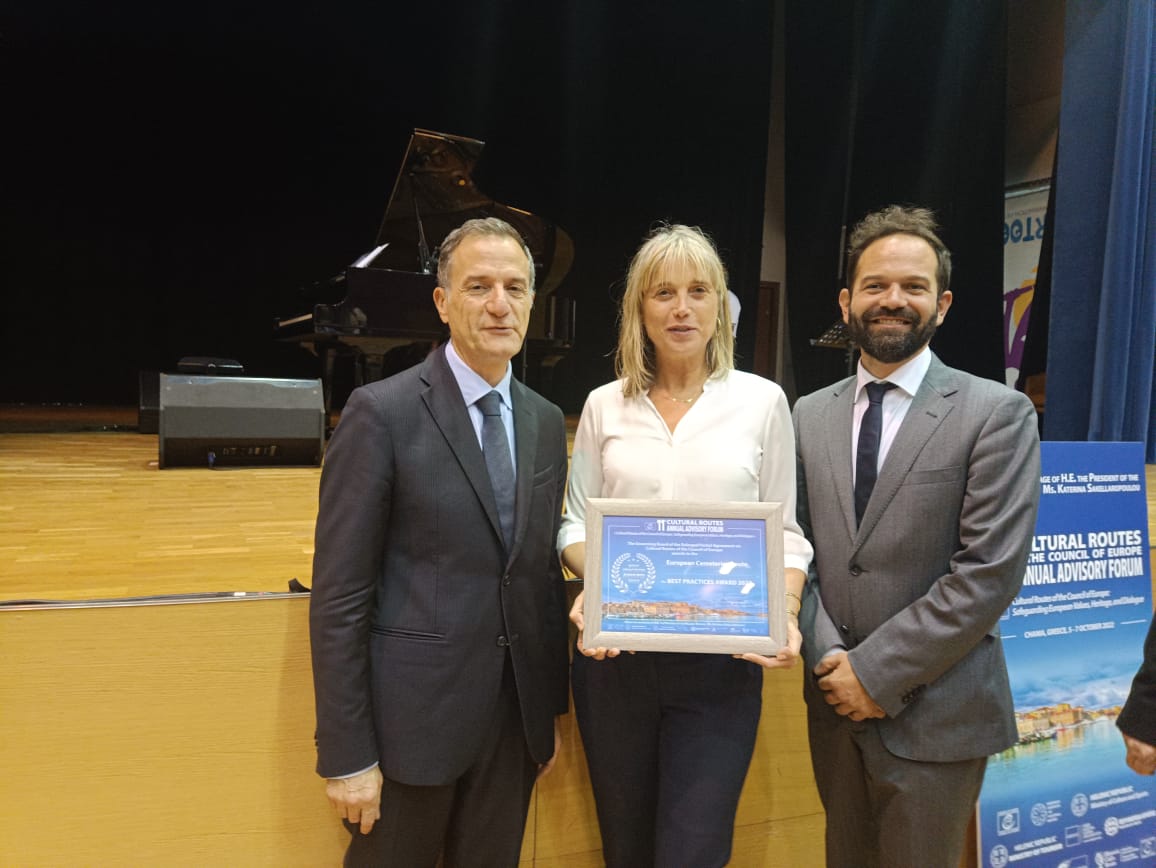
European Cemeteries Route received the Cultural Routes Best Practices Award by the Secretariat of the Enlarged Partial Agreement on Cultural Routes of the Council of Europe (EPA).

About the Cultural Routes Best Practices Award

The call for the “Cultural Routes Best Practices Award” was launched in 2022 by the Secretariat of the Enlarged Partial Agreement on Cultural Routes of the Council of Europe (EPA) in order to give recognition to best practices implemented by the certified Cultural Routes of the Council of Europe.

Award for Schools on cemeteries project

European Cemeteries Route received this exceptional award for the "Schools on cemeteries project", which has been implemented and developed for many years by European Cemetery Route members across Europe.

The ASCE president, Mrs Lidija Pliberšek, received the award certificate at the 11th Cultural Routes Annual Advisory Forum, that took place from 5th to 7th October 2022 in Chania, Greece.

The award is an important acknowledgement of the importance of the project. Thus, it will be further promoted and developed by the route management.

You can find more infromation about the project and the award itself HERE.


*On the photo from left to right: Mr. Stefano Dominioni (Executive Secretary of the Enlarged Partial Agreement on Cultural Routes of the Council of Europe and Director of European Institute of Cultural Routes), Mrs. Lidija Pliberšek (ASCE president and director of Pogrebno podjetje Maribor) and Mr. Julien Vuilleumier (Chair, Governing Board of the Enlarged Partial Agreement on Cultural Routes of the Council of Europe (EPA)).

WDEC 2022 in Varaždin

Varaždin Cemetery (Varaždin, Croatia)
As part of the Week of Discovering European Cemeteries 2022, the Electromechanical School in Varaždin has implemented a project that combines mathematics, historical heritage and the Varaždin Cemetery.

Combining mathematics and history

Students of the first grade of the Electromechanical School in Varaždin (Croatia), majoring in media technician, joined the research of the Varaždin Cemetery as a topic for applying to the "Mathematics+" competition. The result was an interesting blend of mathematics and history.

About the project

After visiting the State Archives in Varaždin, students got the idea to statistically process data from the Registry of the Dead of the Parish of St. Nicholas in the period 1891-1896. The research was conducted through several days of work in the archive.

The aim of the research was to find out the average age of death of Varaždin people from the end of the 19th century, the most common causes of death, and to analyze data by age groups, gender and time period.

Varaždin Cemetery Students at Varaždin Cemetery Varaždin Cemetery

Project video

After the research, a promotional video about the cemetery was made in cooperation with the second grade students, also in the field of media technicians. The video itself shows the valuable heritage and special atmosphere of the Varazdin cemetery.

Project: School to school in remembrance

School to school in remembrance
On the basis of cultural days for schools at Maribor cemeteries in Slovenia, the "School to school in remembrance" project was developed.

2019: Drago Kobal primary school to Bojan Ilich primary school

Drago Kobal primary school to Bojan Ilich primary school

On March 26, 2019, the students of Drago Kobal primary school introduced their peers from Bojan Ilich primary school to European cemeteries and the path of sports legends of Maribor at the Pobrežje cemetery.

A special part was dedicated to the presentation of a sports legend Josip Primožič - Toš, which was presented by the students of Drago Kobal primary school as part of the Week of Discovering European Cmeteries 2018.

2020: Drago Kobal primary school to Maks Durjava primary school

Drago Kobal primary school to Maks Durjava primary school

On September 25, 2020, former students of Drago Kobal primary school passed on their knowledge of European cemeteries and the legends of Maribor to the students of Maks Durjava primary school.

Students presented the medical legend Klara Kukovec. They walked to her grave, viewed a documentary exhibition about her life and work, which is located next to the chapel at the Pobrežje cemetery, and also walked to the family tomb of Maks Durjava.

2021: Bojan Ilich

In 2021, the students of Bojan Ilich primary school will continue with the project "Reviving Maribor Legends". In cooperation with Pogrebni podjetje Maribor, they will present the life journey and interesting things related to Bojan Ilich.

2022: Max Durjava

In 2022, it will be the turn of the Maks Durjava primary school students, who will also present the person after whom their school is named. They will resurrect the Maribor legend, Maks Durjava, whose family tomb is located at the Pobrežje cemetery.

Project: Reviving Maribor legends

Edvard Glaser
The aim of the project is to discover and revive some outstanding personalities that rest at Maribor cemeteries and in doing so include the students of local schools.

The legends from Maribor

Outstanding achievements, passion and the unstoppable will are the characteristics of some of the historical figures of the city of Maribor. People would often describe them with the phrase "He was a legend.". With this expression, they would want to go beyond the usual descriptions like "He was great.", "He was really good.", "He was outstanding.".

"To be a legend" in slang means to be extraordinary, but at the same time something more. Almost incomparable to others due to some of their characteristics that stood out in the context of their life period.

Today, many of those great personalities rest at the Pobrežje Cemetery, and the aim of the project "Reviving Maribor legends" is to discover and revive them by including the students of local schools. The project initiator is Pogrebno podjetje Maribor.

So far, two paths were created at Pobrežje Cemetery as part of the project - Reviving sports legends and Reviving medical legends of Maribor.

Reviving Maribor sports legends

Josip Primožič - Tošo

Usually humble, kind, funny, full of strength and eternal romantic. His life path was closely intertwined with his love for gymnastics, fine arts and, above all, his family.

Josip Primožič - Tošo was a gymnastic legend of Maribor, who was presented for the first time as part of the Symbols project.

In 2018, a cultural day for the Drago Kobal primary school was held at the Pobrežje Cemetery, and while exploring the cemetery, we found that the teachers and elementary school students of this school had done a thorough research on Josip Primožič and collected a lot of material about him and his life.

The importance and interestingness of his life path convinced us to revive this legend together as part of the Week of Discovering European Cemeteries 2018.

You can find some other Maribor sports legends presented HERE.

Reviving Maribor medical legends

Dr. Klara Kukovec

Dr. Klara Kukovec - the doctor who immigrated to Maribor from Ukraine. She was the first woman with a private medical practice in Maribor and overall an important personality of her time with many achievements to point out.

On September 27, 2019, a special tour was held at Pobrežje Cemetery, which included:

      • Presentation of the life story of dr. Klara Kukovec through a theatrical performance by the students of Drago Kobal primary school.
  • Opening of a documentary photography exhibition about Klara Kukovec in front of the chapel in the southern part of the Pobrežje Cemetery.
  • A guided walk through Pobrežje Cemetery, following the "path of dr. Klara Kukovec".  Students of Drago Kobal primary school took on the role of cemetery guides with the help of the mobile guide ARtour.
You can find some other Maribor medical legends presented HERE.