Showing posts with label Romania. Show all posts

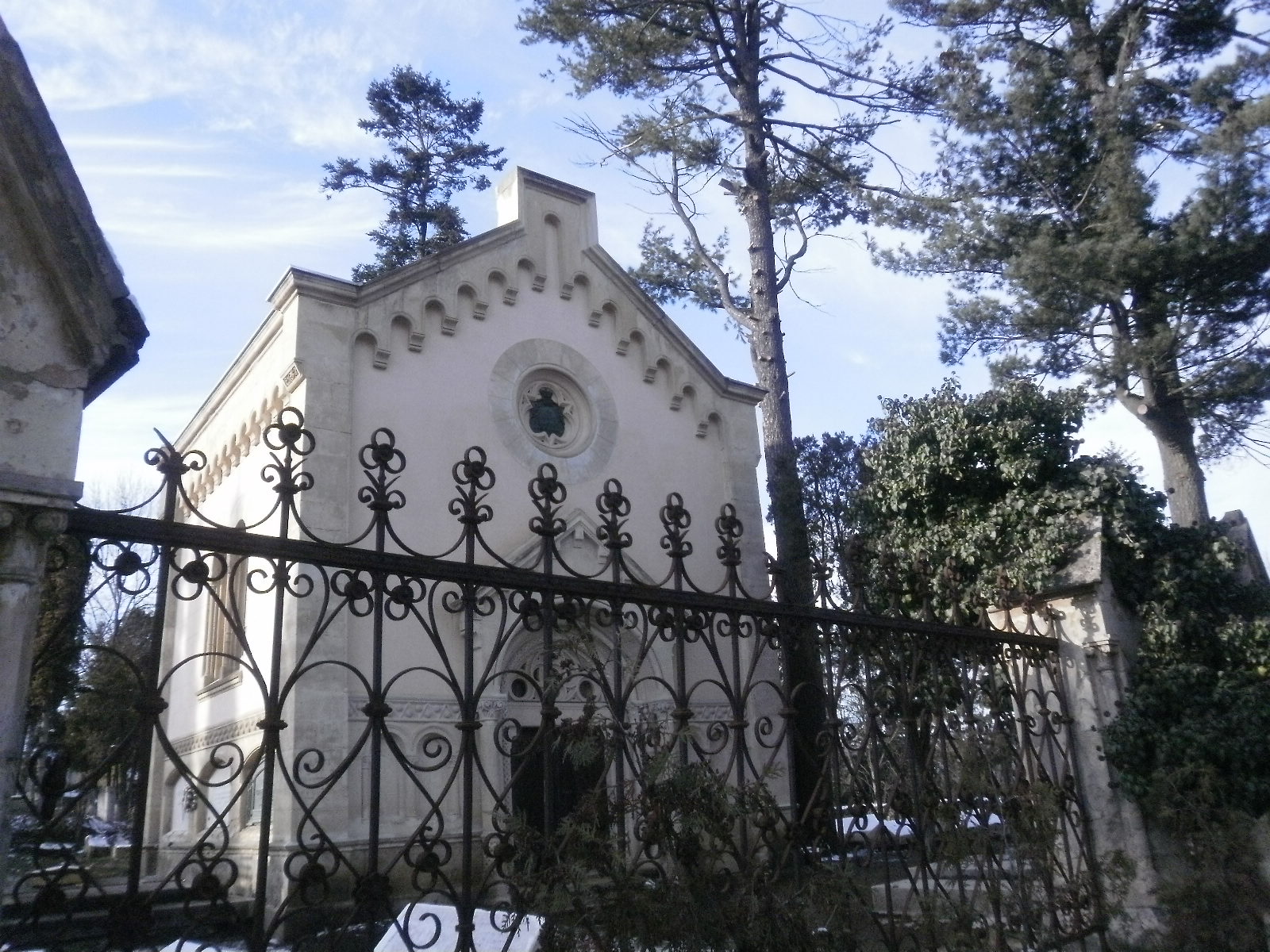
Armenian cemetery (Botoșani, Romania)

Armenian cemetery (Botoșani, Romania)
The Armenian Cemetery in Botoșani is a cultural and historical treasure, offering a unique insight into the evolution of this important community in Romania.

Historical and cultural context

The Armenian community in Botoșani, which has roots dating back to the medieval period, played a significant role in the city's economic, cultural, and social development. Adhering to Christianity as their state religion since 301, the Armenians established the first Armenian church in Botoșani—St. Mary’s Church in 1350—around which they built a school and the original Armenian cemetery. By the late 19th century, the cemetery was relocated from the Armenian quarter to its current site on Eternitatea Street, alongside an Orthodox cemetery. The Armenian cemetery remains a testament to the community’s rich heritage, preserving the memory of many notable figures from Botoșani's Armenian history.

Funerary architecture and art

The funerary monuments in the Armenian Cemetery are remarkable for their architectural and artistic style. The graves are often decorated with elaborate sculptures, inscriptions in Armenian, and specific religious symbols. These artistic elements offer insight into the traditions and values of the Armenian community, making it a point of interest for historians, anthropologists, and art enthusiasts. Each monument tells a story, providing clues about the life and legacy of those buried there.

Some of the most notable monuments are:

  • Funeral Monument of Cristea David (1802-1883) and Flora Goilav (1818-1907),
  • Funeral Monument of Christea Manea Loizanu,
  • Jon J. Ciomac funeral monument,
  • Dr. Andrei Manea funeral monument,
  • Gheorghe Christea Goilav funeral monument.

Education and public awareness

The Armenian Cemetery stands as an open-air museum and plays a crucial role in educating the public about the cultural and historical diversity of Botoșani. By organizing guided tours, workshops, and cultural events, the cemetery becomes a place of learning and reflection. These activities help raise awareness and appreciation of Armenian cultural heritage among both locals and visitors.

Community interaction

The peaceful and solemn atmosphere of the cemetery offers a conducive space for meditation and remembrance, being a place where people can reflect on life, history, and traditions. But it is not just a place of memory but also a meeting point for the community. Commemorative events and religious ceremonies bring together members of the Armenian community and those interested in its history and culture. These interactions strengthen social ties and preserve cultural traditions.

International perspectives

International collaborations, such as the visit by representatives of the Ministry of Culture in Poland and students of Armenian descent, highlight the importance of the Armenian Cemetery in Botoșani in a global context. These collaborations not only promote the exchange of knowledge and best practices but also strengthen cultural and historical ties between different nations.

Cemetery address

10 Eternității Street
710321 Botoșani
Romania

Contacts

CNIPT Botosani
(Botoșani National Center for Tourist Information and Promotion)

Phone: +40 231 519 519
Website: visit@visitbotosani.ro

Basic data

Year of first burial: 1881
Cemetery area: 2ha
Approximate number of graves: 378
Approximate number of yearly burials: 5

"Eternitatea" Cemetery of Galati (Galati, Romania)

"Eternitatea" Cemetery of Galati (Galati, Romania)
Through the monuments, inscriptions, architecture and landscape, the "Eternitatea" [„Eternity”] Cemetery of Galati is a reminder of past historical events and a representative of Romanian culture.

About the cemetery

The “Eternitatea” cemetery was established by the City Hall of Galati following the implementation of the Law for burials, which was issued in 1865 by the Government led by Mihail Kogalniceanu; it claimed that no cemetery should be built next to churches and monasteries, but at least 200 meters from the outskirts of cities.

Construction began in 1865. There are two buildings, with one of the rooms being intended to serve as an Orthodox chapel. The cemetery systemization plan included from the very beginning a particular place for the construction of a church. In May 1866, the building where the temporary chapel was set to function was already raised with the roof having been installed, but it still needed the flooring installed and the walls plastered.

„Assumption of the Blessed Virgin Mary” Church (1913)

The cemetery - with a total area of 22 hectares - was divided into 9 plots proportional to the following religious denominations: Orthodox, Catholic, Calvinist, Protestant, Armenian, Lipovan, Muslim and Jewish. The ninth plot was intended to be used for suicides.

The consecration of the graveyard church, dedicated to the Assumption of the Blessed Virgin Mary, was celebrated in February 1913. Near the Church, there are graves belonging to notable personalities, which stand out for both their artistic and historical-monumental value.

The "Eternitatea" Cemetery is also the place where monuments were built in memory of Romanian and foreign heroes who fell on the battlefield in World War I and World War II, but also during the Romanian Revolution of December 1989. The most imposing monument is the Heroes Mausoleum, followed by the Romainian Heroes Memorial, French Heroes Memorial, German Heroes Memorial, Soviet Heroes Memorial.

Important graves and monuments

Heroes Mausoleum (1925-1927)

Heroes Mausoleum
The Heroes Mausoleumwas built in honor of the Romanian heroes who fell on the battlefield in the Romanian War of Independence (1877-1878) and in the First and Second World War. The mausoleum was built between 1925-1927, according to the plans of Mihail Popescu, chief architect of Galati City Hall at the time.

World War II Heroes Memorial (1941-1945)
By the eastern end of the cemetery, we encounter the Heroes Memorial, which was designed by sculptor Gheorghe Terescenco. It has the shape of an approximately 6 meters tall rectangular column, built using reinforced concrete and covered in marble. At the top of the column there stands a 2 meters cast stone eagle with its wings spread holding a cross in its beak. The monument was inaugurated on October 25, 1997.

Romanian Heroes Graveyard The 1989 Romanian Revolution Heroes Memorial
In front of the mausoleum, next to the French heroes’ graveyard, we encounter the Graveyard of the Heroes of the 1989 Romanian Revolution. The memorial, in the shape of a white marble obelisk was designed by architect Aurel Pop and built in 1990. The inscription reads ”Honor to our heroes”.

The French Heroes Graveyard
The graveyard of French heroes is located to the west of the Heroes Mausoleum. Here lie the remains of 61 French soldiers and 9 Algerian soldiers who were part of the Berthelot mission. The graves of French heroes are guarded by swords in the shape of a cross, while those of Algerian heroes are adorned with monuments displaying Arabic inscriptions.

German Heroes MemorialThe German Heroes Memorial
In the eastern part of the cemetery we discover both the Memorial and the graves of German War heroes, with an imposing granite cross in its central part. Some interesting words can be read here by passers-by: "Remember them and the victims of all wars, their fate compels us to understanding".

The Soviet Heroes Memorial
In the central part of the cemetery we encounter the Memorial and graveyard of the World War II Soviet Heroes. Built in the shape of an obelisk, the monument displays an inscription which reads: "Eternal glory to the soldiers of the Soviet army who gave their lives in the fight for the liberation of humanity from fascist slavery", written in both Russian and Romanian.

Public figures burried in ”Eternitatea” Cemetery

Tomb of Vincenzzo Fanciotti
  • Charles Cunningham (1801-1860): the former vice-consul and later consul of the British Kingdom in Galati and Braila.
  • Vincenzzo Fanciotti (1824-1886): the owner of a commercial house that exported grain and contributor to the construction of the "Alexandru Ioan Cuza" Commercial School.
  • Gheorghe Fulger (1832-1899): a large rural landowner and merchant, president of the interim commission and mayor of Galati from March 1883 to April 1884, member of the county committee, elected to the Fourth College in February 1880 and candidate for the Romanian Senate in 1888.
  • Aristide Papadopol (1838-1917): a rich merchant who remained in the history of Galati not through his pecuniary wealth but through his love of art.
  • Ioan D. Prodrom (1867-1952): a philanthropist and politician from Galati.
  • Nicolae Mantu (1871-1957): one of the most appreciated Romanian painters

You can find more about the important graves, monuments and public figures burried in ”Eternitatea” Cemetery HERE.

Cemetery location

221 George Cosbuc Street,
800552, Galati,
Romania

Cemetery contacts

Ionuț Pucheanu
e-mail: ionuț.pucheanu@primariagalati.ro
phone: +40 0236307700

Vergiliu Vals
e-mail: vergiliu.vals@primariagalati.ro

Cristi Ochiu
e-mail: cristi.ochiu@primariagalati.ro

Cristina Zanfir
e-mail: cristina.zanfir@primariagalati.ro

Basic cemetery data

Managing organization: City Hall of Galati
Ownership: City Council of Galati

Number of graves: 26.684
Cemetery size in m2: 213.996 m2
Cemetery type: religious, military

Central Cemetery of Cluj-Napoca (Romania)

Central Cemetery of Cluj-Napoca (Romania)
The central Cemetery of Cluj-Napoca was established in the 16th century. Today it is among the largest cemeteries in South - Eastern Europe and a true outdoor museum.

About the cemetery

The reason for the establishment of the Central Cemetery of Cluj-Napoca was the tragic show of death caused by plague in 1585. Then, the "Council of 100 men", who were the city authority, decided that funerals of those who were killed by the deadly malady, no longer could take place inside the city. At the same time, the older central cemetery, situated near the Church of St. Michael, became too small.

Since then, the Central Cemetery of Cluj-Napoca has become a true outdoor museum that accommodates nearly five centuries old graves. The oldest tombstone is from Central Lutheran Cemetery, dating back to the year 1599. In the southern part of the cemetery there are buried heroes of the First and Second World War and of the 1989 Romanian revolution. Unfortunately due to lack of funds for restoration, many of the tombstones are in a state of deterioration.

The large number of personalities who found their eternal rest at the Central Cemetery, and the diversity of represented religions, transformed it in a real "Pantheon of Transylvania". The predominant religions are Orthodox, Roman Catholic, Reformed, Unitarians, Lutheran, Greek Catholic, Evangelical, Jewish, Pentecostals, Baptists and Adventists. The most representative nationalities buried at the cemetery are Romanians, Hungarians, Germans.

Today, the Central Cemetery of Cluj-Napoca is an open and still functional cemetery with funerals taking place there every day. Extended over an area of 220.000 m2, the Central Cemetery is among the largest cemeteries in South - Eastern Europe, containing approximately 33.000 graves. Stylish tombstones of the nobles makes the cemetery one of the most visited locations in Cluj.

For more information about the cemetery check out the brochure available on THIS LINK.

Basic data

The Central Cemetery of Cluj-Napoca is owned by the Local Council of Cluj-Napoca and managed by the City Hall of Cluj-Napoca (Area of public administration of cemeteries services). It is protected by the Directorate for Culture and National Heritage Cluj (public institution with legal personality, is public service of the Ministry of Culture and National Heritage in Cluj). Programmes of research, conservation and preservation of the cemetery are being carried out by the Directorate for Culture and National Heritage Cluj in collaboration with associations and foundations.

Important graves and monuments

Emil Racovita (1868-1947)
Explorer, biologist, speologist. He conquested the Antarctica together with Amundsen, being the first man who succeed to reach the South Pole. He founded the institute of bio-speleology, the first of its kind in Cluj and worldwide. Was academician from 1920 and President of the Romanian Academy between 1926-1929.

Ion Agârbiceanu (1882-1963)
It was a prolific writer, journalist, poet and politician of Greek Catholic religion. Director of Patria and Tribune newspapers in Cluj, poet and dean of Cluj, secretary general "Astra", senator and vice president of the Senate, member of the Romanian Academy from 1955. He passed away at Cluj in May 28, 1963.

Banffy Gyorgy II (1746-1822)
Governor of Transylvania between 1787 - 1822, raised the most beautiful baroque building in Transylvania, the current Banffy Palace.

Csere Janos Apaczai (1625-1659)
Doctor of technology and mathematician, wrote "Hungarian Encyclopedia". Adept of Descartes and Copernicus tried to impose the puritanism in the education system in Transylvania. Rackoczi II appointed professor at Alba Iulia was removed depending precisely because of the differences of vision caused by puritanism. Arriving in 1655 in Cluj, he took over the local college professor, followed by many of the students at Alba Iulia. He died only 34 years old at Cluj.

Samuel Brassai (1880-1897)
Recognized as the last "wise" of Transylvania because of the many areas where he excelled like: math, Patagonia, linguistics, philosophy, music, essays. He died at Cluj in vulnerable age 97 years.

Adriano Marino (1921-2005)
Essayist, literary critic and historian. Doctor in letters, Assistant Professor at the Department of History George Călinescu modern Romanian literature at Bucharest University, quadruple Union Prize winning writer, has written numerous studies on literary, historical, philosophical, etc. He was dissident of communist regime and was imprisoned from political considerations for nine years ('49 - '57) and later was deported for six years in Bărăgan.

Address

The Central Cemetery of Cluj-Napoca
Avram Iancu Street 24-26
400083 Cluj-Napoca
Romania

Contacts

Camelia Fărcaș
Email: camely74@yahoo.com
Tel: (+40) 0264 594 420 or
(+40) 0749 27 29 31

Emilia Botezan
Email: emilia.botezan@primariaclujnapoca.ro
Tel: (+40) 0742 21 82 77

AGM 2015: Photo glimpses

AGM 2015: Photo glimpses
Photos from the Annual General Meeting and Conference 2015 in Bucharest, Romania.

So many moments, so many details. To remember.

AGM 2015 was a remarkable event full of friendly smiles, knowledge exchange, networking and art. Observe and enjoy the moments we went through together.

  1. Photo glimpses
  2. SC meeting
  3. AGM
  4. Conference, Day 1
  5. Conference, Day 2
  6. Visit of Bellu
  7. Dinner

AGM 2015 report

AGM in Bucharest, Romania
On September 24th, the Annual General Meeting took place at Gabroveni Inn in Bucharest, Romania.

With 100 participants from 18 countries at the meeting and conference, event reached the high standards of our annual gatherings.

In 3 days we held AGM, conference, additional workshop of Symbols project and experienced personal hospitality of our friendly hosts.

Thanks to presidency, steering committee and exceptional organizational efforts of our host, City of Bucharest, all the participants could have developed new ideas.

AGM was preceeded by Lidija Pliberšek, president of ASCE and all steering committee members were present or forwarded their votes to other members. During the AGM several things were outlined and discussed:

1. Financial Report

Financial report for 2014. A very well balanced finances statement provides secure future for general work of ASCE. Surplus of previous years is notable in financial assets of ASCE.

2. Communications

ASCE communications efforts were outlined with notable natural rise of website and social channels growth. Members were invited to participate in maintaining communications by becoming website editors or social media managers. All interested members can send email to admin@significantcemeteries.org to participate.

3. European Cemeteries Route Developments

Developments on European Cemeteries route were presented:

  • Mobile guide ARTOUR transitioned to mobile learning platform and now offers the members possibility to create their own routes and tests, use the map at their website and much more.
  • New poster was developed and exposed in Belgrade city center.
  • New website of Institute of cultural routes was presented where our route is now more visible and presented in many more details. Presidency worked hard with the institute to include all the members while much work is to be done further to fully use the powers of their website.
  • A workshop is planned in 2016 to get the members of the route work more tightly together on promotional aspects of the route in future.

4. Cultural Projects

Week of Discovering European Cemeteries leaves much impact in international audience and this is visible even in search trends across globe. This year members increased their activities and in further years we want to establish even more common communications regarding this project.

Let's see ASCE (Cemetery entrances) project continues and we have prepared a video of entrances photo we have gathered in 2015. All members are invited to send us their photos as described in the project description.

5. Membership Expansion & Reevaluations

New members of ASCE and their Significant cemeteries were presented. Expanding the knowledge:


Results of reevaluation tests 2015 were presented with 2 members being proposed for exclusion.

6. Election Results

Elections 2015 took place with 9 candidates for Steering Committee and 1 candidate for president. Elections report is available here. Members voted and elected:

For president:

CountryTownNameElected for
SloveniaMariborLidija PliberšekPresident

For Steering Committee:

CountryTownNameElected for
AustriaViennaBeatrix CzipetitsSC member
GermanyBerlinMartin ErnerthSC member
GermanyBerlinOlaf Ihlefeldt - not elected
GreeceSkiathosThodoris Tzoumas - not elected
ItalyBolognaMelissa LamaidaSC member
NorwayOsloWenche ErikssonSC member
SerbiaBelgradeBojana KisinSC member
SpainBarcelonaJordi ValmanaSC member
United KingdomLiverpoolJohn MoffatSC member

7. Conclusions

AGM 2015 sparkled new energy in our lives. We grew once more with so many new members and projects that continue growing. Our mission is fulfilled with each year we continue this devoted work. So we look into our future with pride and enthusiasm. Because next year in Dublin we will present more new results from our work. The projects we work on together.

8. Photo Gallery

Photo glimpses from AGM and conference are availableHERE.

AGM 2015: Change of venue

AGM 2015: Change of venue
The venue for the Annual General Meeting and Conference 2015 has been changed. The event will now take place at Gabroveni Inn.

Dear AGM attendees,

we are informing you that there is an important change to the AGM 2015 venue. Instead of Novotel hotel, we have managed to acquire a much more interesting historical place in the old city center of Bucharest: Gabroveni Inn (84 - 90 Lipscani Street).

It is a special building renewed in 2014 by the Bucharest City Hall. It is a 5 minutes walk from the Novotel hotel and we are sure that we will enjoy it very much.

Everything else regarding the program and timings remains the same and we are looking forward to seeing you all next week in Bucharest.

Elections candidates 2015

Elections candidates 2015
We present you the list of candidates for president and Steering Committee 2015.


According to ASCE charter and calls for candidates we have prepared the list of candidates for Steering Committee and president.

Elections will take place at AGM 2015 in Bucharest at 11:00.

You can see the candidates on the embed map below by clicking on their icons or in the following list. Please note that each member has a presentation in the link attached to their name.

List is presented by alphabetical order by countries and within country by name.

CountryTownNameCandidate for
AustriaViennaBeatrix CzipetitsSC member
GermanyBerlinMartin ErnerthSC member
GermanyBerlinOlaf IhlefeldtSC member
GreeceSkiathosThodoris TzoumasSC member
ItalyBolognaMelissa LamaidaSC member
NorwayOsloWenche ErikssonSC member
SerbiaBelgradeBojana KisinSC member
SloveniaMariborLidija PliberšekPresident
SpainBarcelonaJordi ValmanaSC member
United KingdomLiverpoolJohn MoffatSC member


AGM 2015: Programme

AGM 2015: Programme
Programme of the Annual General Meeting and Conference 2015, taking place from 24 to 26 September in Bucharest, Romania
Title of the conference: "Foreigners in Significant Cemeteries".

AGM and Conference will take place at Gabroveni Inn from September 24th to 26th.

You can sign up for AGM here. Programe below is a draft version and may be modified in following months.

You can click on this link (iCal) to add the programme to your personal calendar.

Calendar view
    Close

    AGM 2015: Sign up

    AGM 2015: Sign up
    It's time to sign up for the Annual General Meeting and Conference 2015, taking place from 24 to 26 September in Bucharest, Romania.

    Join us for amazing 3 days in Bucharest.

    After the Annual General Meeting of our association an interesting conference will follow titled Foreigners in Significant Cemeteries. Check the programme at this page.

    Sign up is now closed. In case you have a special reason to participate anyway, please send us an email.

    AGM 2015: Hotel reservations

    AGM 2015: Hotel reservations
    Accommodation information for the ASCE Annual General Meeting and Conference 2015 in Bucharest, Romania.

    This year's Annual General Meeting (AGM) will take place from 24th to 26th of September 2015 at the Gabroveni Inn.

    Members of ASCE who attend the AGM had a special price at Novotel hotel in Bucharest.

    Booking under special price was closed on 21 August 2015.

    Elections call 2015

    Elections call 2015
    Call for candidates for Steering Committee and president of ASCE.
    4 years have passed since Annual General Meeting (AGM) in Vienna in 2011 when current president and steering committee members were elected for managing our association.

    At AGM in Bucharest new elections will take place and all members have the right to candidate for steering committee or presidency.

    Note: candidacy is possible for ASCE members only!

    In order to apply you should follow the procedure:

    Applying for Steering Committee

    To apply for steering committee of ASCE you should fill out the form at this link. Please note that you must keep the format and design. Do not use your own designs or change the font sizes. The form will be presented to all members with voting rights in the same format as it is prepared.

    Applying for president

    To apply for president of ASCE you should fill out the form at this link. Please note that there are 3 slides and you may use any format and design. You will have 5 minutes time for presentation to members at AGM.

    Sending your form

    You should send your filled out form to secretariat@significantcemteries.org by June 30th 2015.

    AGM 2015: Call for papers

    AGM 2015: Call for papers
    The theme of the ASCE Conference 2026 is "Foreigners in Significant Cemeteries".

    Conferene theme: Foreigners in Significant Cemeteries

    The goal of the conference is to make connections far from home and to help us find the tracks of some of our ancestors.

    They transformed the national into international or they adapted themself and became local symbols. In battles or peace our great-grandfathers searched for love, money or glory in exotic places.

    Probably we don’t know their true value because they are strangers for us. Artists, politicians, soldiers or just common people rest in foreign ground. There is a story behind them and there is a grave who tells it.

    Also a monument may be a foreigner. Different mind created it, stranger hands made it. What is outlandish for a place, unique and honoured for its weirdness, may be common for the place it came from.

    Travel with a word from your cemetery and who knows what story emerges in Bucharest?

    Call for papers

    Call for papers will be open until June 30th 2015.

    Due to limited schedule we will not be able to accept all the proposed papers for presentation. The editorial board will check and select the most representative abstracts and will invite the authors to present their work at the conference.

    The main criterion is to have a diversity of stories covering the main subject of the conference. So, please be as clear as you can in the abstract you present, describing in a few lines the story you find interesting to share with us.

    AGM 2015 Editorial board:

    AGM 2015: Save the date

    AGM 2015: Save the date
    The next AGM and Conference will be held from 24 to 26 September 2015 in Bucharest, Romania.

    Foreigners in Significant Cemeteries
    September 24th to 26th 2015 | Bucharest, Romania

    In exile forever or adopted by a new country, a foreigner has always an exotic story which brought freshness and new meanings in local customs.

    A foreigner in a cemetery could be someone who lived abroad and is now resting in a cemetery far away from home, among strangers or soldiers who rest in the ground they came to conquer or to defend.

    A foreigner in a cemetery could be an artist or an architect who designed funeral monuments for people from other parts of Europe.

    A foreigner in a cemetery could be an imported monument, brought by someone to  decorate the family tomb.

    Each foreigner has a story waiting to be revealed in one of the amazing lectures we’re expecting at AGM 2015!

    AGM 2015: Invitation video

    AGM 2015: Invitation video
    Join us at AGM 2015 and discover the impressive city and cemeteries of Bucharest.

    So many stories and impressions await for us at Bellu cemetery and city of Bucharest at the AGM and Conference 2015.

    Watch the invitation video and reserve the schedule in your calendar.

    International seminar in Cluj-Napoca, Romania

    International seminar in Cluj-Napoca
    An international seminar will take place from 15th to 17th May 2014 in Zsigmond János Unitarian College in Cluj-Napoca, Romania.
    The seminar is formed around the theme of “Eternal mementos of transience preserving heritage values in historical cemeteries”. It will begin with a guided tour at the Házsongárd Cemetery and continue with several interesting lectures given by many important guests.

    Some of the main topics are:
    • Significance of historical cemeteries: sites of historical memory and outstanding cultural heritage values
    • Managing historical cemeteries - preserving the historical appearance and individual values
    • Managing historical cemeteries - case studies
    • Instruments for preserving and promoting cemetery values

    You can find the entire seminar program HERE.

    Call For Papers

    for the  international symposium organised to debate topical issues on significant historic cemeteries, share best practices and experiences.

    Bellu Cemetery (Bucharest, Romania)

    Bellu Cemetery (Bucharest, Romania)
    The so called “Bellu’s Garden of Souls” is the largest and most famous cemetery in Bucharest.

    About the cemetery

    The Bellu Cemetery was founded on the domain of an orchard with oranges donated to the state by a rich minister called Bellu and on the territory of the Vacaresti monastery which had three windmills. The necessity of its existence came with the European politics of urbanism and hygiene, adapted also by the Romanian administration, during the Turkish occupation. 

    It was concived as an Orthodox Cemetery, but has also some exception like the occult monument dedicated to the genius child of a Romanian writer Bogdan Petriceicu Hasdeu, who died at 17th years old in Paris. From May 1850 the cemetery starts the delimitation of the new cemeteries area for the Ortodoxs, Catholics, Armenians, Protestants, Jewishs, Turkishs.

    The first “inhabitants” of the “Souls Garden” were brought from other cemeteries situated around the churches. Bucharest developed as a city of neighborhoods, called “mahalale”. The city civic center was the church, and so also the cemetery was a public space. With the dislocation of cemeteries, outside the limits of the urban area, the public activity around them was reduced.

    Today, the cemetery occupies 220,000 sqm and become the most important gallery of the Romanian historical personalities. Here lies the most famous Romanian poet Mihai Eminescu; the Romanian folkloric singer Maria Tanase; important ministers, writers, actors, architects, bankers, etc.

    The Romantic sculptures gave the impressions of a very vivid sculptural patrimony, because of their very realistic execution and details. The architectural patrimony consists in:
    • decorated sepulchers in Neogothic, Art Deco style
    • in the chapel made by the architect Orascu also buried in this cemetery,
    • in the three mausoleums made by the architect Ion Mincu, the promoter of the Neo Romanian style, whose name was borrowed by to the University of Architecture of Bucharest.

    The solemnity and the beauty of the funeral monuments become a part of a unique atmosphere, becoming part of a universe where the green vegetation hosts the eternal mourning, transforming it into bird song. Today visiting Bellu is an escape in a green island, a hospitable “garden of souls”, in the middle of a crowded city.


    *Photo source: www.ro.wikipedia.org

    Address

    Bellu Cemetery
    Calea Șerban Vodă 249, sector 4,
    Intrarea Serelor nr.1, sector 4,
    040214 Bucharest
    Romania

    Contacts

    Tel: 004021-6363-571
    Fax: 004021-3344-254
    Email: sesizare@accu.ro

    Website: http://www.accu.ro