Showing posts with label Mauro Felicori. Show all posts

New historic cemeteries recognized and funded by Emilia-Romagna region

Certosa Monumental Cemetery (Bologna, Italy)
Emilia-Romagna recognizes nine new historic cemeteries and approves funding for 23 cultural projects in 2024, allocating a total of 137.180 euros.

Nine new historic cemeteries

Nine new monumental and historic cemeteries have been recognized by the Emilia-Romagna Region in Italy, adding to the 22 identified in the first recognition campaign of 2023. Additionally, 23 funding requests have been approved for cultural promotion activities in 2024, with a total funding amount of 137.180 euros.

The regional government has completed the process initiated with the call for recognizing new "Monumental and Historic Cemeteries of Emilia-Romagna" and granting financial support to the recognized entities for cultural promotion activities conducted in 2024.

“We continue the path started for the recognition of significant cemeteries as elements of the regional cultural heritage to be safeguarded and enhanced,” explains Regional Councilor for Culture, Mauro Felicori. “We want to support restoration and conservation projects, as well as increase the enjoyment of this part of the regional cultural heritage that goes beyond memory.”

Managers of burial sites with the minimum mandatory requirements defined by regional law 21 of 2022 could apply for recognition. Requirements include the presence of historically and artistically significant buildings and monuments, sites of collective memory where cultural activities were already conducted from 2021 to 2023 to promote awareness, and public access for at least 150 days per year for municipalities with more than 15.000 inhabitants, and at least 75 days per year for municipalities with fewer than 15.000 inhabitants.

Twenty-six applications were received, three of which requested recognition only, six requested both recognition and funding, and 17 requested funding only from already recognized cemeteries. The nine newly recognized cemeteries this year are: in the province of Bologna, the Casaglia Cemetery in Marzabotto; in the province of Ferrara, the Cento Cemetery and the Cento Jewish Cemetery; in the province of Forlì-Cesena, the Cesena Cemetery, the Forlimpopoli Cemetery, and the Crocesanta Cemetery in Bagno di Romagna; in Modena, the San Cataldo Cemetery and the Vignola Cemetery; in Rimini, the Riccione Cemetery.

Of the received requests, 15 are from municipalities and unions of municipalities, 7 from private law entities, and 4 from associations. The territorial distribution is as follows: 5 requests from the province of Bologna, 4 each from the provinces of Ferrara, Forlì-Cesena, Modena, and Reggio Emilia, 2 each from Ravenna and Rimini, and 1 from Parma.

Projects

Among the funded projects are those of the San Cataldo Cemetery in Modena, with the creation of a digital map and an audio guide for visitors; the Piratello Cemetery in Imola (Bo), with the expansion of existing multimedia routes and the addition of new themes: women's stories, famous figures, wars, architecture, and botany; the Guastalla Cemetery (Re), involving young researchers and developing a new guide and a series of theatrical visits; the Cento Jewish Cemetery (Fe), with an integrated program of archival research, guide training, and guided tours, as well as the restoration design of tombstones; the Crocesanta Cemetery near Bagno di Romagna (FC), with the recovery of a community memory site included in a network of trails and a cultural tourism circuit.

The grants, covering up to 80% of eligible expenses, are a maximum of 8.000 euros per project. The published notice online lists the complete ranking, indicating the accepted applications and the assigned contributions.

For further information, please write to CimiteriMonumentaliStorici@regione.emilia-romagna.it.


*Text source: press release by Barbara Musiani
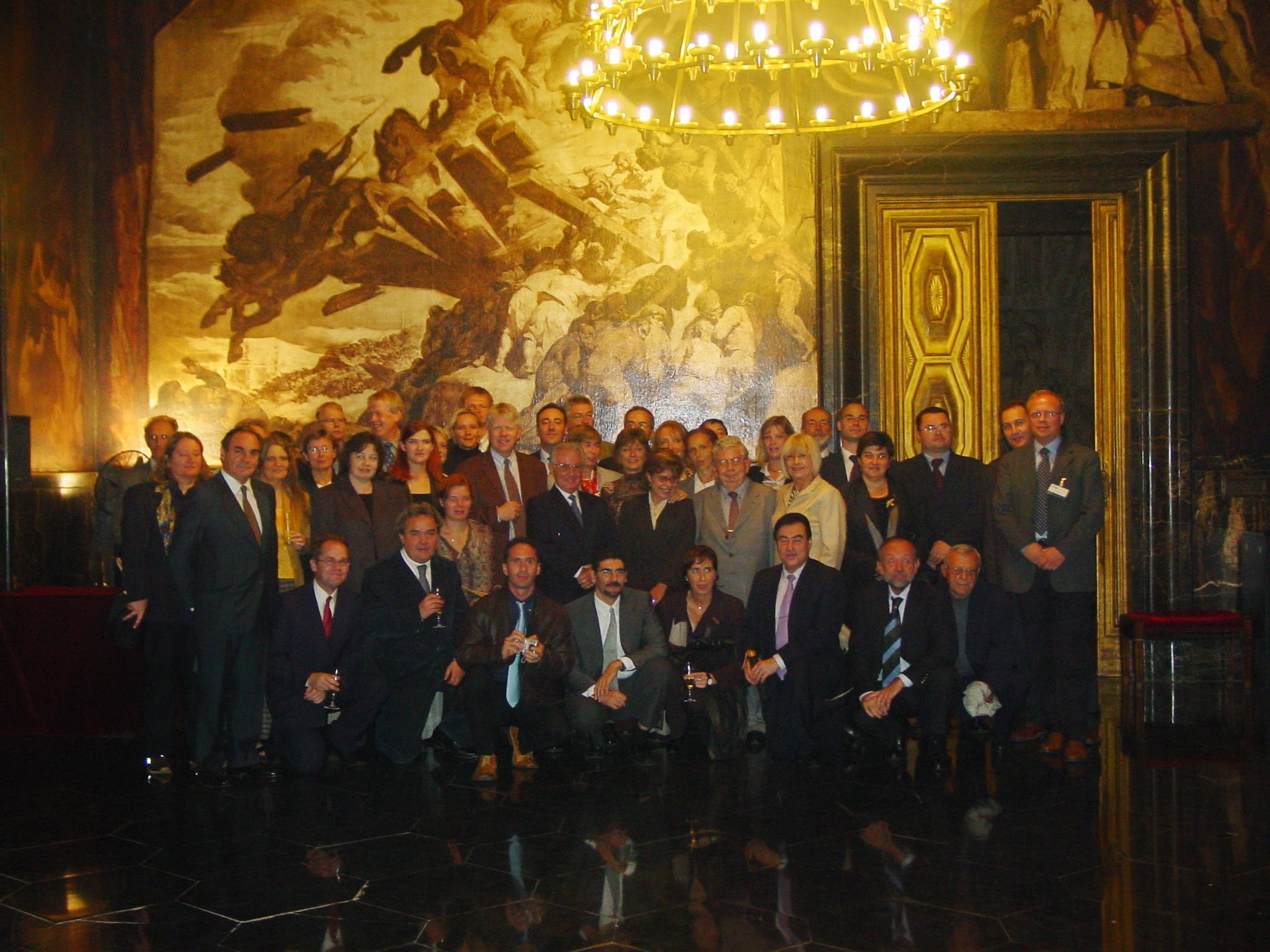
The establishment of ASCE and its significance

ASCE Meeting in 2003
ASCE was the first European organisation that dealt with cemeteries as a cultural asset rather than as burial grounds.

The idea of starting something new

At the end of 1999, my mixed fortunes as a civil service manager in the cultural sector who always tried to do his job with pride and competence, landed me with a job move to the Certosa di Bologna, the cemetery of my city. It was meant as a punishment but it later proved to be an extraordinary opportunity. 

When confronted with a new challenge, I would usually consider the best European examples in the field to copy them or, better, adapt them to the situation in Italy. But this time I drew a blank. I found that, sadly and inexplicably, there was no European organisation that dealt with cemeteries as a cultural asset rather than as burial grounds. I therefore resolved to set one up. 

Bringing together like-minded people

I would say that our "club", the Association of Significant Cemeteries in Europe (ASCE) is one of the first children of the internet. Indeed, I began browsing existing sites, collecting e-mail addresses, looking for a few names. Then I called a first meeting, sending invitations by e-mail. We met over dinner, on a balmy Italian evening in a beautiful street in the city centre that was closed to traffic, with a final downpour by way of blessing. It was an immediate success, so great was the need to meet among European researchers, scholars, and culturally aware officials who had realised the importance of cemeteries in the history of art and architecture, and in themselves as summaries, microcosms of the history of cities and countries. 

The following meeting, again in Bologna, saw the birth of ASCE, which succeeded in drawing together all those brilliant minds, and over these past twenty years has radically changed the public perception of burial grounds, bringing them fully into the cultural circuits, and rescuing them from the mixture of ignorance and superstition to which they had been relegated. From the outset, the contribution of Eastern European countries, at the time recently freed from Soviet rule, was extremely important.

Team effort that led to great successes

In addition to launching this association, I was its president for seven years. It was an intellectual, political and personal adventure, which to me is summed up by the friendly faces of Tamara, Ilme, Indre, Audrone, Martin, Gunnar, Anders, Maria Luisa, Giulio, Lidija and many others that I would like to meet again, under the expert guidance of Franco Sborgi, Ornella Selvafolta, Paride Caputi and Paolo Giordano.

I share with Anders the great satisfaction of receiving the Europa Nostra Award and with Maria Luisa Yzaguirre the recognition of cemeteries as a Cultural Route of the Council of Europe.

Long live ASCE!


Mauro Felicori
founder of ASCE and its first president


*You can find the original article HERE.

In memory of Professor Franco Sborgi


October 31 2014 marks the first anniversary of the passing of Franco Sborgi, Professor of Contemporary History at the University of Genova, Italy.

Book: Lo splendore della forma. La scultura negli spazi della memoria

Lo splendore della forma. La scultura negli spazi della memoria
Discover how European funerary and memorial sculpture has shaped cultural memory and the history of modern sculpture over the last two centuries.

About the book

The book "Lo splendore della forma. La scultura negli spazi della memoria" (Eng. The splendor of form. Sculpture in the spaces of memory) by Mauro Felicori and Franco Sborgi is available online.

The book presents the most comprehensive and updated review of the studies on the history of sculpture in European cemeteries.

By buying the volume, you will receive the pdf file of the book "Gli spazi della memoria. Architettura dei cimiteri monumentali europei" (Eng. Spaces of memory. Architecture of European cemeteries) for free.

From Canova to Fontana. The greatness of funerary sculpture in Europe and the future of the post-Napoleonic cemetery complex

The conference will take place at 'Salone di Rappresentanza' in 'Palazzo Tursi', via Garibaldi 9, Genova, Italy, on Thursday 6 June 2013, h. 6 pm.
On the occasion of the publication of the proceedings of ASCE Annual General Meeting held in Verona in 2006 ("Lo splendore della forma. La scultura negli spazi della memoria") by Mauro Felicori and Franco Sborgi, Luca Sossella Editore.

Welcome greetings by:
- Elena Fiorini, Assessore a Legalità e Diritti, Comune di Genova
- Carla Sibilla Assessore a Cultura e Turismo, Comune di Genova


With the interventions of:
- Mauro Felicori
- Leo Lecci
- Franco Sborgi